Volunteering is more than giving time—it is about rewriting destinies. Across the bustling streets and growing neighborhoods of Noida, hundreds of children walk into learning centers every morning with books that may be borrowed, uniforms stitched with care, and stomachs often waiting for the first proper meal of the day. These children belong to communities where access to education, nutrition, and opportunities for women’s empowerment is limited. Yet, when volunteers step in, armed with compassion and determination, these gaps begin to close.
This blog explores how volunteer-driven efforts in Noida’s education NGOs are shaping real stories of change. From improving literacy and providing nutritious meals to empowering mothers with skills, the intersection of education, nutrition, and women’s empowerment has proven to be transformative. Along the way, we will also see how organizations like One Hand for Happiness learning subtly integrate all three dimensions to create a holistic model of upliftment.
In India, an estimated 33 million children are out of school, many of them from urban slums and rural communities. In Noida’s underserved neighborhoods, children face additional barriers: limited access to quality schools, financial instability, and a lack of basic educational resources like books, stationery, and uniforms.
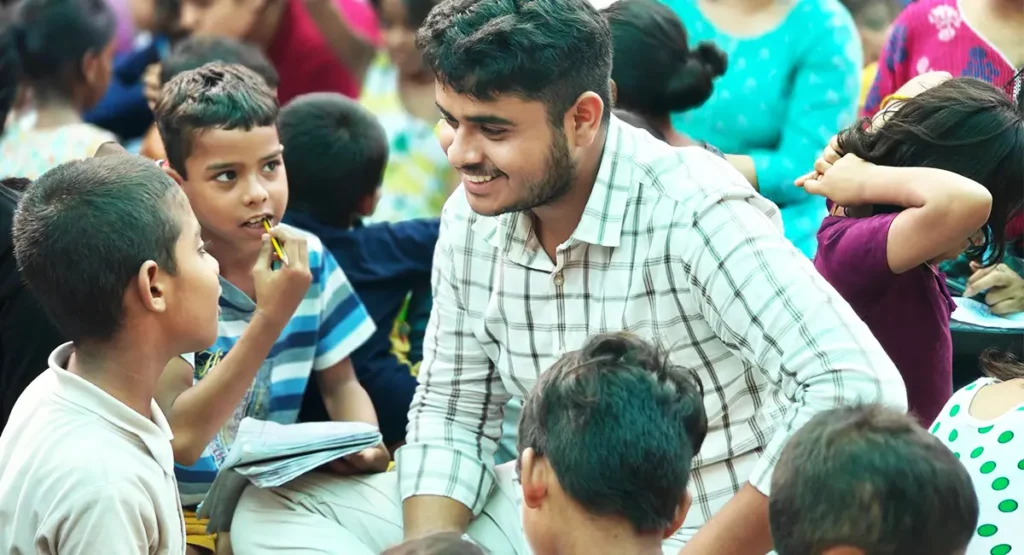
Volunteers help fill this void. A volunteer at an NGO in Noida for teaching doesn’t just teach alphabets or multiplication tables—they bring confidence, curiosity, and hope into the lives of children. For instance, when 9-year-old Aarti first came to a child education NGO in Noida, she struggled to even write her name. Six months of consistent attention from volunteers, coupled with free access to books, turned her into a fluent reader of Hindi and English stories.
These are not isolated moments. Volunteer stories from Noida NGO often highlight how even two hours a day can create lifelong skills for children who might otherwise be forced into early labor.
The link between nutrition and education is undeniable. Research by UNICEF shows that children who receive daily balanced meals perform better academically and are more likely to stay in school. Yet, malnutrition continues to affect over 35% of children under five in India.
This is where community-driven programs make a difference. Some NGOs in Noida run mid-day meal programs, ensuring children receive at least one wholesome meal a day. These meals not only improve classroom focus but also act as a strong incentive for parents to send their children to school.
Consider the story of Rohit, a 7-year-old boy who attended school irregularly because his family couldn’t afford daily meals. After the local kids’ welfare NGO introduced mid-day meals, Rohit became a regular student. Volunteers recall how his health improved within months—his once lethargic demeanor replaced by energy and curiosity.
By combining education with nutrition, these education NGOs in Noida nurture both body and mind.

Empowering mothers directly impacts the education and welfare of children. A woman with skills, knowledge, and confidence ensures her children stay in school longer, eat better, and dream bigger.
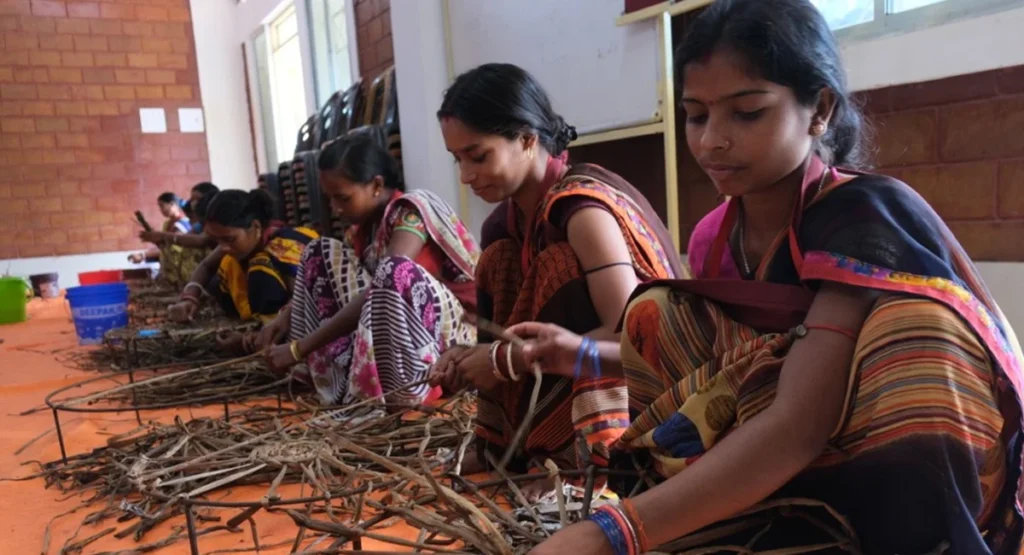
In the slum areas of Noida, many women struggle with limited literacy, early marriages, and low-paying jobs. NGOs focused on women’s empowerment offer tailoring classes, literacy programs, and financial literacy workshops. By equipping mothers with skills, these NGOs not only improve household income but also give women a voice in their children’s future.
One touching example comes from Sushma, a mother of three, who joined a sewing skills program supported by volunteers. With her new income, she could afford school supplies and uniforms for her daughters. More importantly, she became a role model—her eldest daughter now dreams of becoming a teacher, inspired by her mother’s journey.
Through parent engagement NGO Noida initiatives, volunteers help bridge the gap between school and home, ensuring education doesn’t end at the classroom door.
Children growing up in underserved areas often lack adult role models outside of their immediate families. Volunteers provide that much-needed inspiration. Their presence shows children what is possible—whether it is pursuing higher education, joining the workforce, or simply believing in their potential.
A kids’ welfare NGO in Noida reported that children who interacted regularly with volunteers were 25% more likely to express interest in higher education compared to those who didn’t. Volunteers often share their personal journeys, narrating how perseverance helped them achieve success. These stories spark curiosity and hope among children who otherwise see a narrow set of possibilities.
While most NGOs in Noida for volunteering focus on education, the ripple effect goes beyond classrooms. When children learn and mothers are empowered, entire communities shift. Literacy levels rise, child labor decreases, and health indicators improve.
Take the case of a learning center supported by One Hand for Happiness programs. Volunteers not only taught children but also engaged with mothers through health and hygiene workshops. The result was a significant improvement in sanitation practices the community, reducing seasonal illnesses among kids.
Volunteers often mention how they enter thinking they are giving—but walk away realizing they have gained more: perspective, gratitude, and lifelong relationships.
This research validates what volunteers and communities already feel in their hearts: education, nutrition, and empowerment are intertwined levers of progress.
While some NGOs specialize in education, others in nutrition or women’s empowerment, the most sustainable impact arises when these programs converge. A holistic model often includes:
NGO healthcare partnerships and education collaborations often show that a combination of small interventions results in outsized community change.
These stories show how diverse volunteer backgrounds—from students to homemakers to professionals—bring unique strengths to Noida’s learning centers.
Without fanfare, some NGOs quietly integrate education, nutrition, and empowerment into community work. One Hand for Happiness learning exemplifies this holistic approach, where volunteers and programs combine to create lasting change. By supporting slum kids with books, meals, and uniforms, while also engaging parents—especially mothers—through skills training, they demonstrate how one hand extended in kindness can ripple into many hands lifted in progress.
Post-pandemic, inequality in education widened further. UNICEF reports that India saw the longest school closures globally, severely impacting children from disadvantaged communities. The need for volunteers is now greater than ever—to rebuild learning gaps, provide nutritional aid, and create safe, encouraging spaces for children.
As more individuals join an NGO in Noida for volunteering, the possibility of eradicating illiteracy, malnutrition, and gender inequality becomes real. Volunteers are not just helping children stay in school; they are shaping the very fabric of future society.
Education, nutrition, and women’s empowerment are threads of the same fabric—when woven together, they create resilience, dignity, and opportunity for underprivileged communities. The stories of volunteers at Noida’s learning centers remind us that transformation doesn’t always come from grand gestures; often, it begins with a book, a meal, or an hour spent teaching.
Every volunteer who joins a child education NGO in India adds a drop to an ocean of change. Whether it’s teaching alphabets, distributing meals, or empowering mothers, the collective impact is nothing short of life-changing. And in Noida’s slums and learning centers, these life-changing moments are unfolding every single day.

Leave A Comment