
In the heart of rapidly expanding cities like Delhi-NCR, skyscrapers and luxury apartments often cast long shadows over clusters of fragile shanties and congested slums. Within these underdeveloped communities live thousands of children whose biggest dreams are often restrained by a single barrier: lack of education.
While India has made remarkable strides in improving school enrollment over the last two decades, migrant children in urban slums remain among the most excluded. Families that move from rural states to the NCR region in search of work often cannot provide consistent schooling for their children. As a result, literacy levels remain alarmingly low. According to [UNESCO data], more than 35% of urban poor children in India drop out of school before completing primary education.
This is where mobile classrooms and innovative NGO-led interventions step in, bridging the education gap and rewriting the story of hope for thousands of children.
Education is more than just reading and writing—it is a lifeline for children living in poverty. Literacy empowers them to:
In urban slums, however, systemic barriers stand tall: lack of infrastructure, absence of qualified teachers, and financial burdens that push children into labor instead of classrooms.

While literacy challenges exist across rural India, children in urban slums face additional layers of difficulty:
This is where bridge learning programs and mobile classrooms in suburbs of Noida emerge as critical solutions—bringing education directly to the children instead of waiting for them to reach schools.
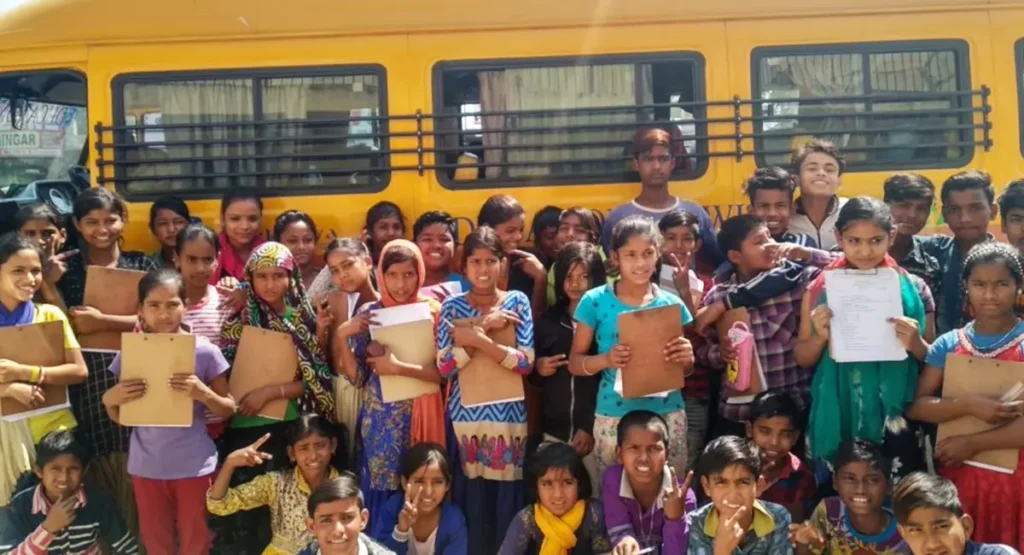
Imagine a brightly painted bus entering a slum colony—filled with books, tablets, blackboards, and enthusiastic teachers. This is not just a vehicle, but a school on wheels.
Mobile classrooms are designed to adapt to the lifestyle of migrant families and urban poor by providing:
Globally, such models have succeeded. In countries like Kenya and Brazil, mobile classrooms have raised literacy rates among underserved populations. In Noida’s suburbs, these initiatives are giving children the chance to catch up with mainstream education and eventually integrate into formal schools.
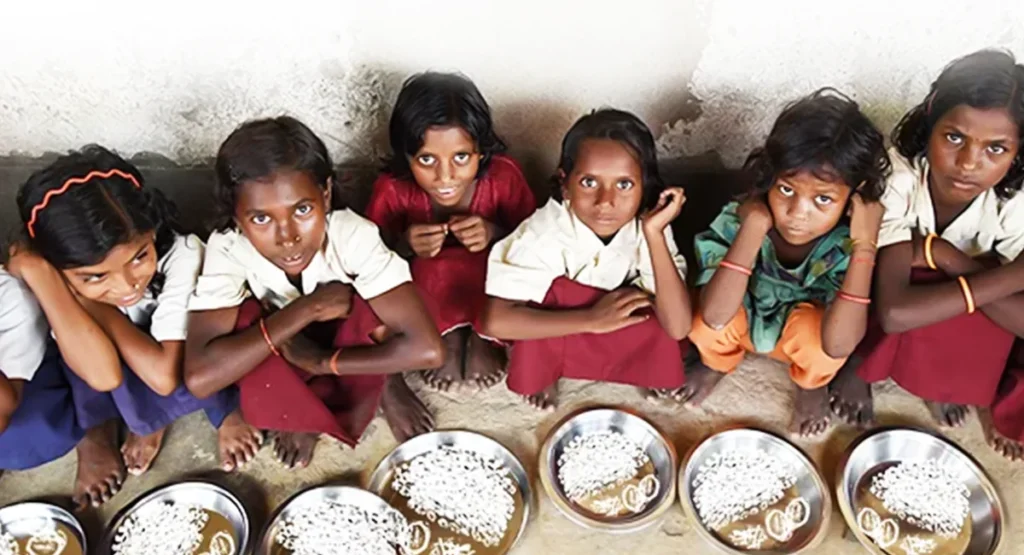
One of the biggest reasons for school dropouts in urban slums is hunger. Malnourished children find it hard to concentrate, stay motivated, or even attend school regularly. According to [Government of India data], 45% of children in slums are undernourished, which directly affects cognitive development.
Mobile classrooms and NGOs often address this by combining education with nutrition:
This holistic approach—addressing both literacy and hunger—ensures that children not only learn but thrive.
Here’s the lesser-discussed but equally powerful outcome: when children gain literacy, women in slum communities are indirectly empowered.
For instance, a literacy program in Delhi-NCR observed that women’s participation in community decisions rose by 30% when their children were consistently engaged in mobile classroom programs.
For children in urban slums, illiteracy often translates into lifelong poverty. According to [UNESCO report], children who lack basic reading and writing skills are four times more likely to remain in poverty as adults. Mobile classrooms help break this cycle by giving children the chance to dream beyond their immediate surroundings.
By gaining literacy and numeracy skills, a child not only envisions new futures but also becomes a role model for siblings and peers. Families that once believed school was “not for people like us” start seeing education as an achievable goal. This generational shift is what makes mobile classrooms such a powerful intervention in communities around Noida and NCR.
Education is not just about books. For a hungry child, learning is nearly impossible. Studies by the [World Food Programme] show that malnourished children perform 20–30% lower in school tests compared to their well-nourished peers. In slum areas, many children come to class without having eaten a full meal.
Mobile classrooms often integrate nutritional support programs—from simple snacks to partnerships with mid-day meal schemes. These initiatives ensure that children are able to focus, learn, and retain information. In many cases, the promise of food itself motivates parents to send their children to these learning setups.
Empowering women goes hand-in-hand with children’s education. When mothers in slums learn basic literacy, financial management, or skill-based work, the family benefits at large. Research from [Govt of India Women Empowerment Data] shows that households where women are educated are 40% more likely to prioritize their children’s schooling.
Mobile classrooms also act as safe community hubs where women gather, share knowledge, and sometimes even receive training in skills like tailoring or digital literacy. This dual empowerment—of both child and mother—creates ripples of transformation. NGOs like One Hand for Happiness are gently weaving this approach by combining children’s education with women’s empowerment initiatives in Noida’s underserved areas.
These stories illustrate that mobility is not just about reaching children physically but about shifting entire families mentally toward the power of education.
The long-term sustainability of mobile classrooms depends on the active participation of local communities. When parents volunteer to help organize classes, when slum leaders advocate for education, and when older students mentor younger ones, the program builds roots that go beyond NGO involvement.
Community buy-in also reduces dropout rates. For instance, when mothers form informal “attendance groups,” they encourage each other’s children to stay consistent with learning. Such grassroots-level collaboration amplifies the impact of structured educational interventions.
With over 35% of India’s urban slum population being children under 14 ([Census data]), the demand for innovative solutions like mobile classrooms is massive. Delhi-NCR, with its expanding migrant workforce, stands as both a challenge and an opportunity for replicating this model.
Future directions include:
If scaled well, this model could be a blueprint for slum education across India, changing millions of young lives.
Children’s literacy in slums is not just about education—it is about dignity, empowerment, and breaking systemic barriers. Mobile classrooms in Noida and beyond prove that learning can find a way, even in the most challenging circumstances.
When children gain access to books, when women are empowered with skills, and when nutrition fuels learning, underprivileged communities move closer to equality. NGOs, governments, and communities must work together to ensure that these mobile classrooms grow from small vehicles of hope to nationwide engines of transformation.
The story of literacy in slums is still being written—and every contribution, whether as a volunteer, donor, or advocate, adds another chapter of progress.


Leave A Comment