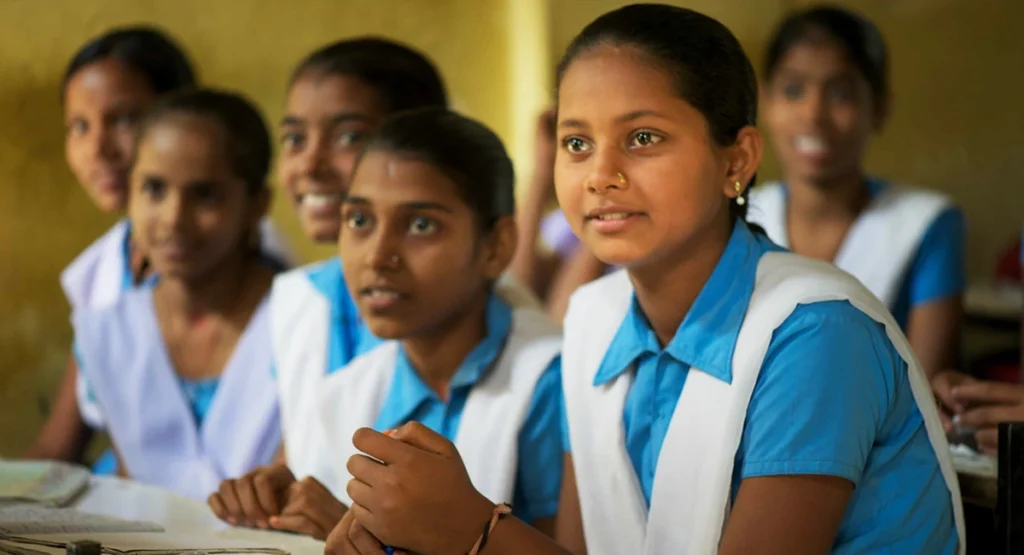
In a narrow lane of an urban slum, 14-year-old Rukhsar walks briskly to school, her neatly tied braid bouncing, her backpack filled with hope. A few years ago, she might have been married by now. Today, she’s preparing for her 10th board exams and dreams of becoming a nurse. Her life is not just changing—it’s transforming everything around her.
This is the ripple effect of girl education. When one girl receives an education, the impact doesn’t stop with her. It spreads to her siblings, her family, her neighborhood, and eventually, the nation.
The intersection of education, nutrition, and female empowerment in underprivileged communities is not just a development goal—it’s a revolution in motion. Backed by the quiet, consistent work of grassroots efforts, including NGOs like One Hand for Happiness, this transformation is reshaping the future of India—one educated girl at a time.
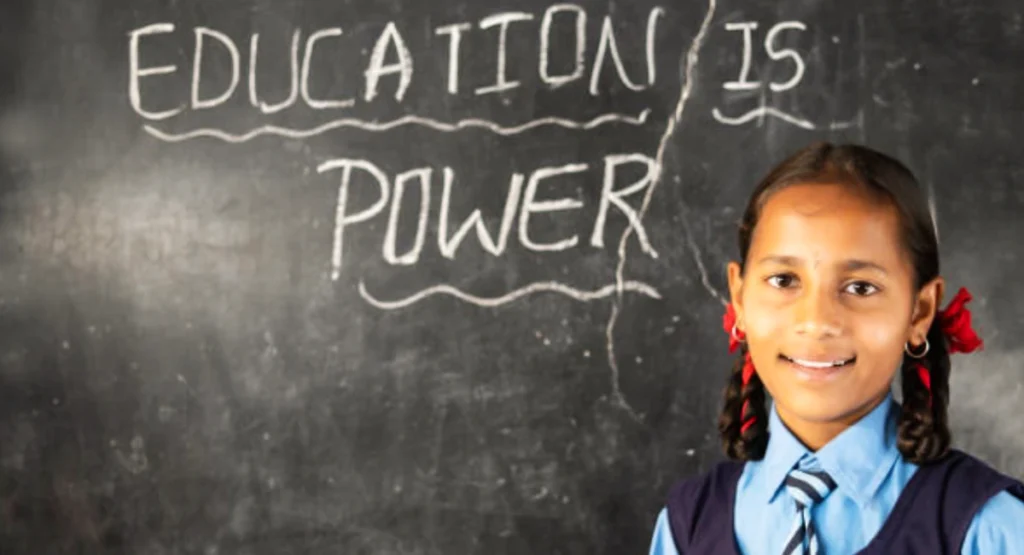
The world agrees: educating girls is one of the most powerful tools to fight poverty, inequality, and injustice. UNESCO reports that every additional year of schooling for a girl can increase her future earnings by up to 20%. Educated women are:
But despite these benefits, millions of girls across India still face barriers to education—poverty, gender bias, household chores, early marriage, and inadequate infrastructure.
India still accounts for the largest number of child brides in the world. In communities where daughters are seen as economic burdens, marriage is considered more important than schooling.
Education becomes a luxury, and dropout rates soar between grades 6–10—especially in urban slums and rural belts.
Many girls leave school due to a lack of proper toilets, sanitary supplies, or safe travel options. Families fear harassment and prefer to keep daughters at home.
Even in government schools where tuition is free, the hidden costs of education—books, uniforms, shoes, transportation, and school bags—are often too high for underprivileged families.
This is where community-based support becomes essential.
Educated girls are far less likely to be married before the legal age. They understand their rights and often have stronger parental support to delay marriage in favor of pursuing careers or higher education.
A study by the International Center for Research on Women (ICRW) found that girls who completed secondary education were six times less likely to marry early than those with no education.
Educated women are more likely to access healthcare, understand reproductive rights, and ensure their children receive vaccinations and proper nutrition. This directly contributes to lower child mortality rates and healthier families.
Girls who attend school become role models in their communities. They challenge traditional norms, influence siblings, and demand equal rights in the household and workplace.
Women with education are more likely to find work, start businesses, or contribute to the family income through home-based enterprises. Over time, this improves the financial stability of entire communities.
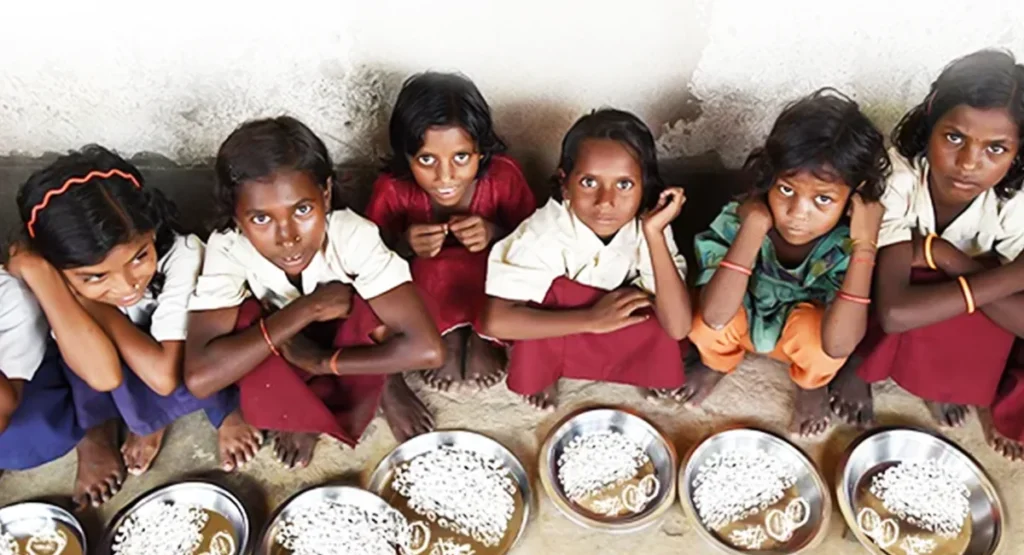
Many girls drop out not because of disinterest but because they’re hungry. Malnutrition causes fatigue, poor concentration, and absenteeism. This is where mid-day meal programs play a lifesaving role.
Studies by the World Bank and Pratham show that school meals significantly improve attendance and cognitive performance, especially among girls.
When girls receive a nutritious mid-day meal, along with basic hygiene education and health check-ups, the classroom becomes a safe, nurturing space.
Without proper books, stationery, or uniforms, many girls feel embarrassed and alienated. Community NGOs that provide free school kits, sanitary pads, and uniforms help restore confidence and a sense of equality in school.
The work of One Hand for Happiness, a Noida-based grassroots initiative, is a strong example of this quiet revolution. By providing education kits, food support, and skill training for mothers, they enable girls to stay in school, learn confidently, and dream freely.
When women in the family are skilled and confident, their daughters’ chances of finishing school increase dramatically.
NGOs have begun offering vocational training for underprivileged women—tailoring, cooking, digital skills, and handicrafts. This not only boosts the household income but also changes attitudes around educating daughters.
One Hand for Happiness and similar organizations provide skill-based empowerment, enabling mothers to earn with dignity, support their daughters’ schooling, and become advocates of education within their communities.
Once a silent, shy girl forced to babysit her siblings, Sakshi received books and a school uniform through a local initiative. Her mother, who trained in tailoring, now supports the household. Sakshi now leads a girl’s club at her school and helps other girls enroll and attend regularly.
“When I walk into school, I feel like I belong. My uniform is like my armor.”
Fatima had dropped out due to lack of sanitary facilities and books. A volunteer group brought in a mobile classroom, hygiene supplies, and free mid-day meals. Now in Class 7, Fatima wants to become a social worker.
“If I can help just one more girl like me, it will all be worth it.”
These girls are not just students—they are community transformers in the making.
The education ripple effect begins with one girl, but the benefits touch:
A report by Brookings Institution concluded that if every girl worldwide received 12 years of education, it could add $15 trillion to global GDP and reduce child deaths by over 50%.
That’s not just a ripple. That’s a wave.
Change begins with awareness—but it grows through action. Here’s how you can support girl education and its ripple effects:
Support drives that collect books, uniforms, and sanitary pads for underprivileged girls.
Offer academic support, career guidance, or simply encouragement.
Your contribution to a woman’s training can help fund her daughter’s education.
Use social media or community events to highlight the importance of girl education.
Organizations like One Hand for Happiness often need volunteers, donors, and advocates. Support them to amplify your impact.
Educating girls is not just an investment in individuals—it’s a strategy for lasting social change. It fights poverty, delays early marriage, improves family health, and uplifts entire communities.
The journey begins with books in her hands, food in her stomach, skills in her mother’s toolkit, and hope in her heart.


Leave A Comment