
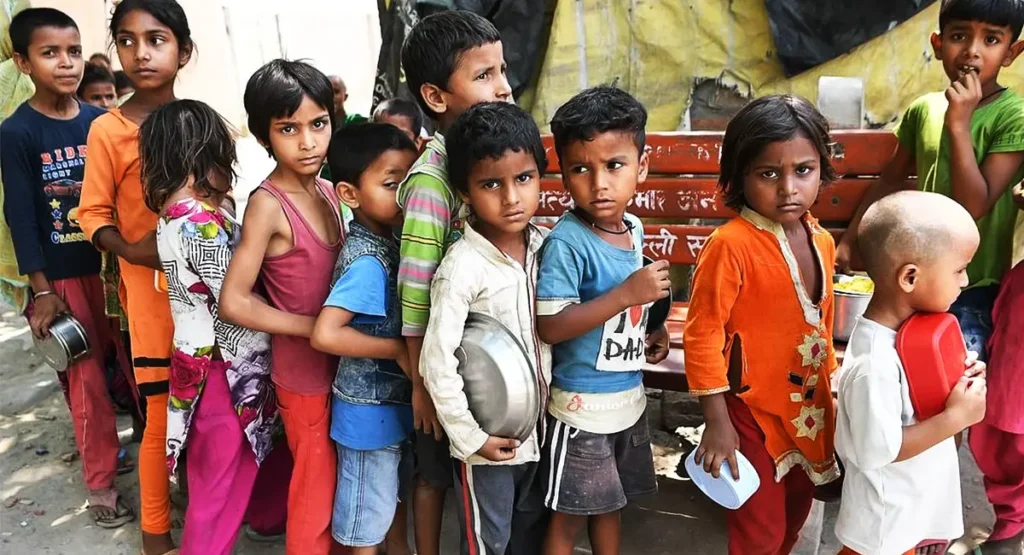
When we think of recess, we imagine squeals of laughter, running feet, and fleeting moments of carefree joy. But for millions of underprivileged children, recess isn’t just a break — it’s a lifeline. It might be the only moment in their day when they receive nourishment. A simple mid-day snack becomes more than food; it becomes brain fuel, a source of energy, and sometimes even a reason to come to school.
In communities battling poverty, education, nutrition, and women empowerment are not separate stories — they are interwoven chapters of the same tale. One cannot flourish without the other. Mid-day nourishment at schools sits at this very intersection. It not only uplifts the health and concentration of undernourished children but also ignites a powerful ripple effect, touching families, mothers, and entire communities.
Let’s explore how something as unassuming as a snack can become a tool of transformation.
Globally, one in three children under the age of five is undernourished or overweight, according to UNICEF’s State of the World’s Children report. In low-income countries, this figure often doubles for school-aged children, especially girls. The irony is heartbreaking — while school is supposed to be a place for growth and learning, hunger silently steals potential from millions.
For a child sitting in a classroom with an empty stomach, letters blur, numbers confuse, and curiosity dims. Studies show that malnutrition in early childhood can reduce IQ by 10–15 points, and lead to long-term learning delays. Hunger doesn’t just live in the stomach; it clouds the mind.
Mid-day snacks or meals directly tackle this invisible barrier. When implemented consistently, school snack programs have shown a marked improvement in enrollment, attendance, and academic performance.
Nutrition is not just a matter of growth — it is central to cognitive development. The human brain uses about 20% of the body’s total energy, and for growing children, this demand is even higher.
A study published in The American Journal of Clinical Nutrition found that children who receive adequate midday nourishment show better attention spans, improved memory retention, and greater problem-solving ability. The “learning break” that recess offers is not just physical but neurological — a moment when glucose levels are stabilized, hydration is replenished, and mental fatigue is reduced.
Nutrient-rich snacks such as whole grains, fruits, nuts, and dairy-based items play a critical role in ensuring that children not only stay awake in class but remain engaged.
In schools serving economically vulnerable families, these mid-day snacks serve an additional role — they reduce dropout rates, especially among adolescent girls, who are often pulled out to care for siblings or help at home. When education comes with a meal, it becomes harder for families to say no.
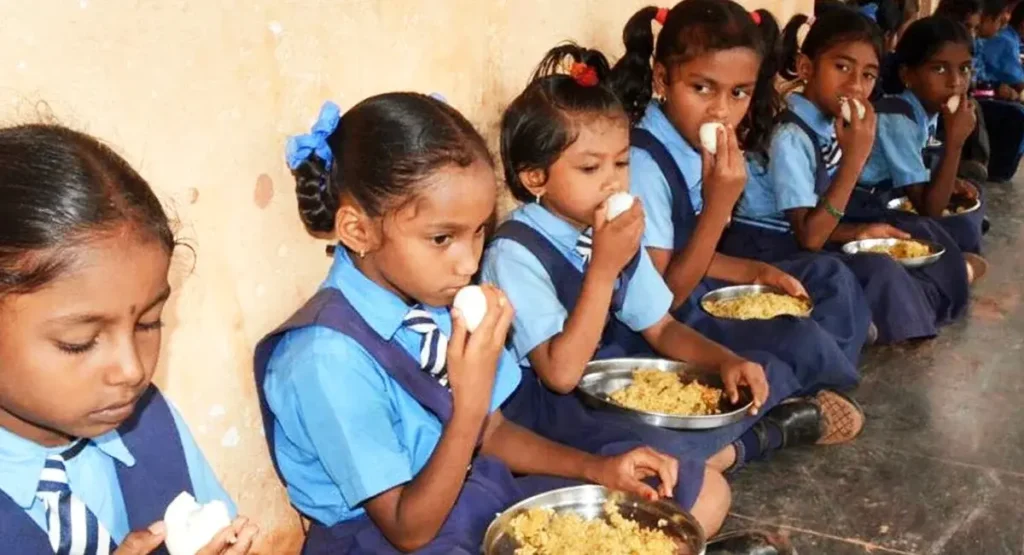
Let’s consider a real-world example.
In a rural primary school tucked away in Eastern India, children arrive barefoot, some walking up to 3 kilometers each morning. For many, breakfast is a luxury. But at 11:30 AM every day, just before recess, the air fills with the scent of freshly prepared lentils and rice — a simple mid-day meal distributed to every child. This has done more than fill stomachs.
Attendance has jumped from 58% to 89%, and teachers report that children are not only more energetic but also more eager to participate. Girls, in particular, have shown improved retention, and community members now view the school as a safe, nurturing place. This is the quiet power of nourishment.
And the ripple effect doesn’t stop at the school gate.

When children receive nourishment at school, mothers — especially those from marginalized backgrounds — are relieved of one daily burden. This seemingly small shift allows many women to redirect time and energy into income-generating work, skill development, or adult education programs.
Women are often the first to sacrifice their own nutrition and education for the sake of their families. But when communities support school-based meal programs, it opens doors for women’s empowerment in subtle but lasting ways.
Some programs even employ local women to cook and serve these meals. This not only provides livelihood support but also builds community trust. When women are paid for their labor, given uniforms, trained in hygiene, and included in school governance, their self-worth soars. Many go on to participate in community health groups, financial savings programs, or start small businesses.
In this way, nutrition at school doesn’t just feed children — it nourishes the ecosystem of hope for women in disadvantaged communities.
Beyond nutrition, recess can also be used as a powerful tool for socio-emotional development. For many underprivileged children, school is the only structured and safe environment they encounter. Recess, combined with nourishment, can become an opportunity for:
These small interventions, paired with nutritional support, create a holistic learning break. It transforms recess from a chaotic pause to a moment of nourishment — physical, mental, and emotional.
In some areas, NGOs have begun combining snack distribution with book corners, uniform drives, or creative skill sessions, particularly for adolescent girls. The subtle integration of resources during recess helps bridge gender gaps and create continuity between health, learning, and dignity.
In many under-resourced regions, the first casualty of poverty is a girl’s education.
Girls often bear the brunt of household chores, sibling care, or are married off early to reduce economic burden. Malnutrition disproportionately affects them, making them vulnerable to anemia, stunting, and low immunity — all of which negatively affect school performance.
Mid-day snacks are a frontline defense against this gendered inequality.
When a girl is assured of a nutritious meal at school, her family is less likely to keep her at home. When she’s offered sanitary facilities, clean uniforms, or nutritional supplements during these breaks, she is protected from dropping out due to health-related shame or fatigue.
Programs that distribute iron-rich snacks or menstrual hygiene kits during mid-day breaks are slowly shifting this reality. As communities begin to associate school with dignity and care for their daughters, their perceptions begin to change.
This change is slow. But it is happening — thanks to consistent, on-the-ground efforts.
Much of this change is driven by NGOs working quietly across slums and rural belts. Their work is community-driven, culturally sensitive, and deeply personal. One such initiative — One Hand For Happiness — has been subtly changing this narrative.
By providing mid-day meals, books, and skill-based training for mothers, they are fostering circles of change. Rather than swooping in with charity, they build local ownership — equipping communities to take charge of their children’s futures. Their impact shows that long-term change doesn’t come from grand programs, but consistent care.
In many of their partner schools, children no longer come for the food — they stay for the learning. Mothers no longer come for the rations — they stay for the skill workshops. This is what dignity-centered intervention looks like.
The real beauty of mid-day nourishment lies in its simplicity. It is cost-effective, scalable, and empathetic. Yet, its impact spans the pillars of development — education, health, gender equality, and economic upliftment.
Governments, educators, and NGOs alike must recognize that:
By supporting school snack programs, training local women, and integrating health with learning breaks, we can reimagine what “recess” really means.
No child should have to choose between hunger and education. No mother should have to pick between feeding her child and keeping her in school. And no girl should be denied a future because a meal was missing from her day.
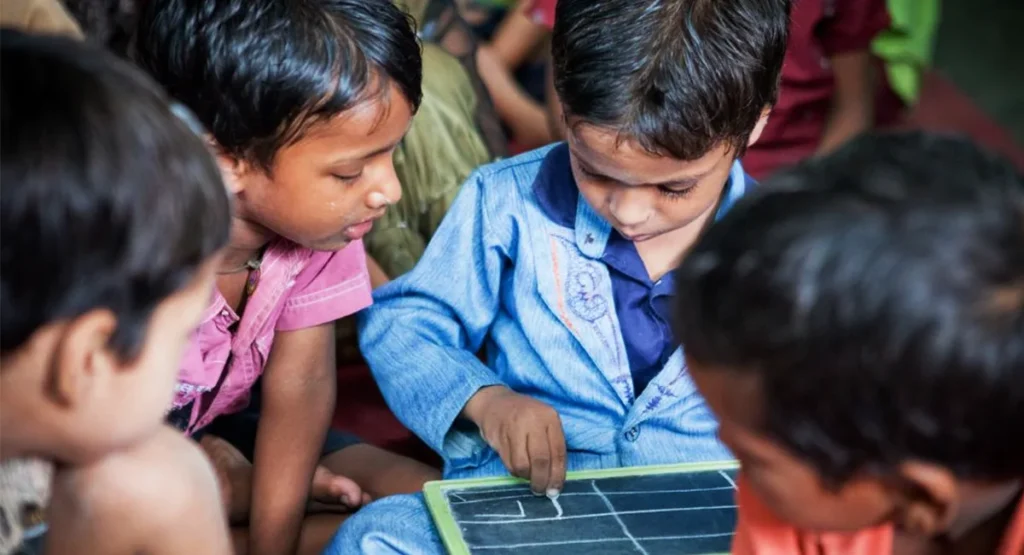
Recess isn’t just a break from studies. For underprivileged children, it is a window of opportunity. A mid-day snack, lovingly served, becomes a quiet revolution — one that whispers of care, equality, and potential.
If we wish to build a just, thriving society, we must start by feeding our children, valuing our women, and investing in the small moments that create big futures.
Because sometimes, the path to empowerment begins not in policy or parliament — but in a warm plate of food, shared under the shade of a schoolyard tree.


Leave A Comment