Education is more than classrooms and chalkboards. It is the promise of a future—one where children can break free from cycles of poverty, discover their voice, and step into a life of dignity. But for underprivileged children living in Noida’s slums, education is often fragile, threatened by hunger, financial stress, or the simple absence of a school bag. This is where education NGOs in Noida play a transformative role, not just by providing books and uniforms but also by measuring their impact in meaningful, data-driven ways.
In this blog, we will explore how NGOs track student progress, why impact measurement NGO India is becoming critical, and how communities—especially women and children—benefit when education is measured, nurtured, and adapted.
Traditionally, charitable work was judged by the intent behind it. But today, the conversation has shifted from good intentions to measurable outcomes. Impact measurement NGO India is no longer optional—it’s essential. When NGOs can show clear data on how many students stayed in school, how many girls moved to higher education, or how many children improved literacy levels, they inspire trust among communities, donors, and policymakers.
Impact measurement is also a way of ensuring that no child is left behind. In crowded slum classrooms, it’s easy for the quiet child—often a girl tasked with household chores—to go unnoticed. By tracking attendance, performance, and nutrition, NGOs identify these children early and design targeted interventions.
Education NGOs in Noida use a mix of traditional and modern tools:
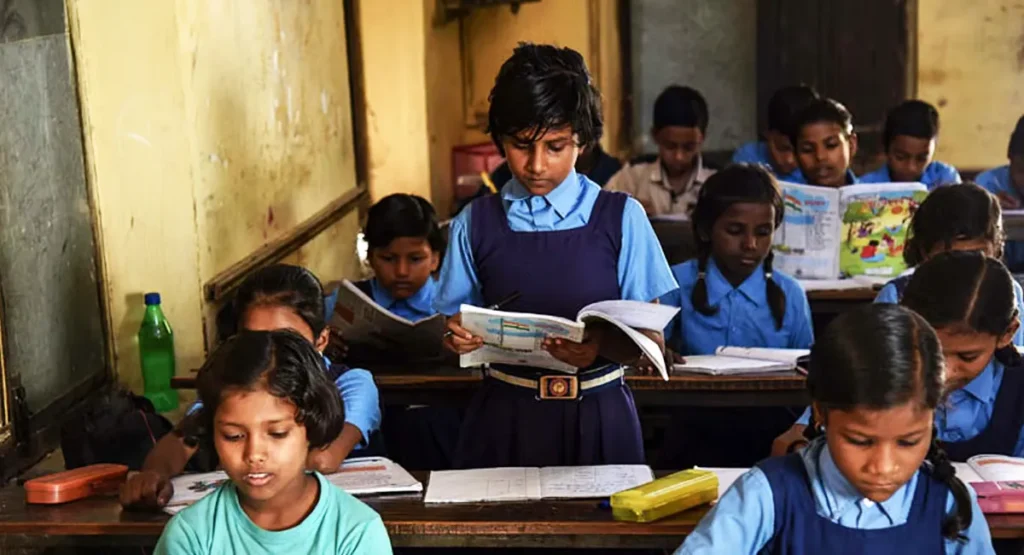
For slum children in Noida, education is not just about learning—it is survival against odds. Challenges include:
This is why education for slum kids requires flexible, community-centric models. Tracking student progress ensures these barriers are visible, measurable, and solvable.
Being a data-driven NGO means more than collecting statistics—it means using those numbers to design better programs. For example:
Thus, impact measurement NGO India is a cycle—collect data, analyze it, act on it, and measure again.
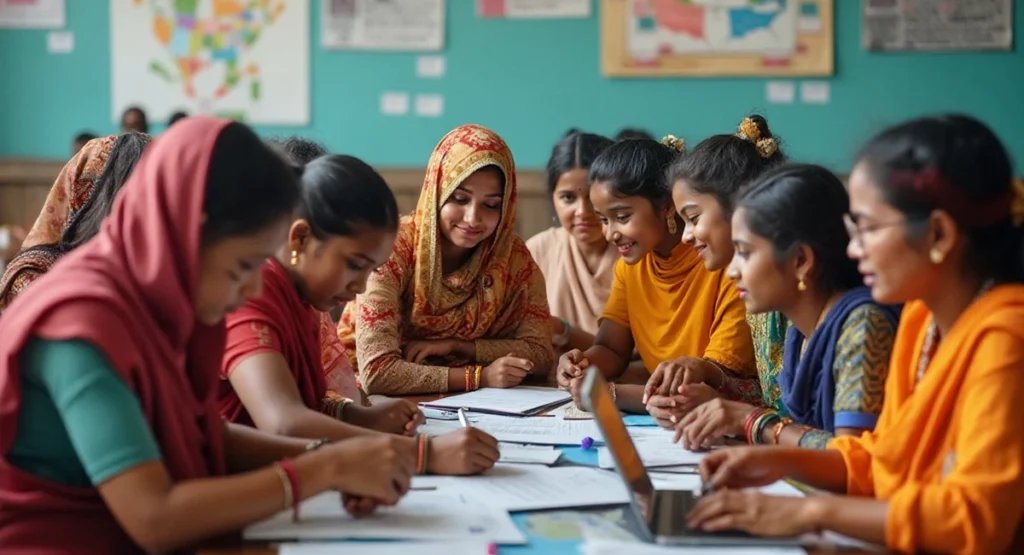
Education is not just for children—it empowers mothers too. In slum communities, women often feel sidelined, their labor invisible. But when NGOs involve mothers in progress tracking—asking them to monitor homework, attend parent meetings, or volunteer in nutrition drives—women gain confidence.
Some education NGOs in Noida run women’s literacy circles alongside children’s classes. This dual impact means mothers who once hesitated to sign documents now confidently guide their children’s learning. Over time, these women become role models for the community.
Behind every data point is a story.
Take the case of Rani, a 10-year-old from a migrant family living in Noida’s Sector 8 slums. Her attendance record showed frequent absences. When an NGO worker visited her home, they discovered she was staying back to care for her baby brother while her parents worked. The NGO intervened by connecting her to a local child-care support group and providing mid-day meals to ease the family’s burden. Within three months, Rani’s attendance improved by 70%, and her reading level rose by two grades.
Or consider Arif, a 12-year-old boy whose assessment showed severe learning gaps. Teachers noticed he was always tired. Health data revealed he was severely anemic. With iron supplements and consistent meals, Arif not only regained his health but also began topping his class in science.
These stories show how kids welfare NGOs transform raw data into life-changing outcomes.
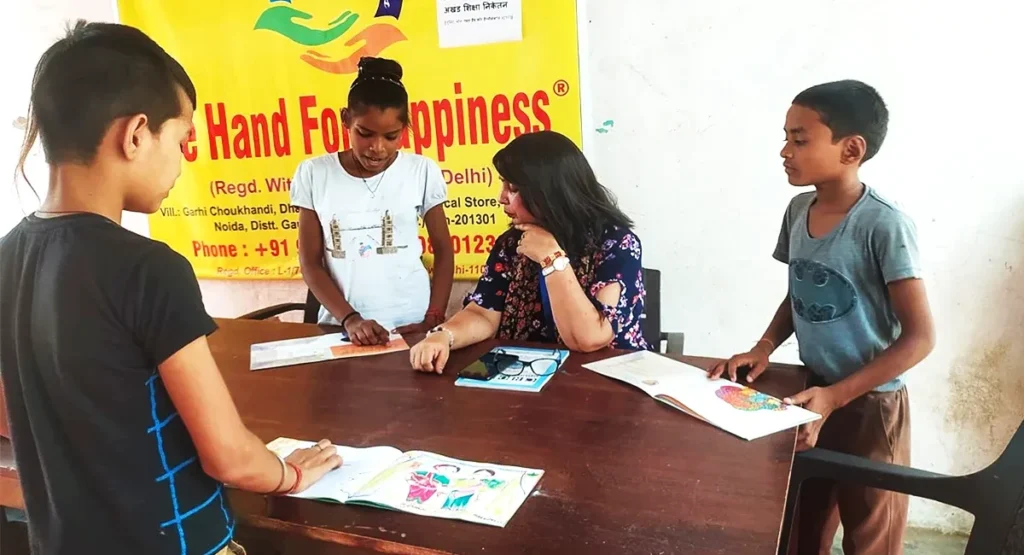
Among the many organizations working quietly in this space, initiatives like One Hand for Happiness impact demonstrate how small, consistent actions can ripple into long-term change. By supporting education for slum kids with meals, books, and uniforms, and by tracking the progress of every child, they showcase how structured impact measurement can build hope.
They also highlight the importance of sustainability: measuring not just how many children attend school today, but how many go on to secondary education, avoid early marriage, or secure meaningful jobs tomorrow.
Education cannot be measured in isolation. It intertwines with nutrition and women’s empowerment. Studies from UNICEF show that well-fed children are 13% more likely to stay in school. Similarly, when mothers are empowered to support education, children’s academic scores rise significantly.
In Noida’s slums, NGOs increasingly adopt holistic models: mid-day meals to fight hunger, free uniforms to ease economic burden, and vocational training for women to stabilize family income. Tracking these interconnected factors gives a clearer, fuller picture of real progress.
The challenges in Noida mirror those faced by underprivileged children worldwide. From Nairobi’s informal settlements to Dhaka’s riverbank communities, issues of poverty, migration, and gender bias echo.
What sets apart the education NGOs in Noida is their increasing reliance on data. By becoming data-driven NGOs, they are setting a benchmark that global child education NGOs can learn from: impact is not about promises—it’s about proof.
Looking ahead, several innovations are poised to strengthen impact tracking:
Such models will ensure NGOs move beyond temporary fixes to sustainable, generational change.
At its core, measuring student progress is about measuring hope. Each percentage increase in attendance, each rise in reading scores, and each girl who stays in school is a testament to resilience.
Education NGOs in Noida are proving that with impact measurement NGO India models, progress is not just a dream—it can be tracked, scaled, and sustained. By focusing on education for slum kids, engaging mothers, and addressing nutrition, these NGOs are creating a ripple effect that transforms families and communities.And in the quiet corners of this transformation, initiatives like One Hand for Happiness impact remind us that small, consistent steps—tracked and nurtured—can rewrite the story of a child, a family, and eventually, an entire nation.

Leave A Comment