In the narrow, sun-drenched lanes of India’s slum settlements, a quiet revolution is rolling in on four wheels. Painted in bright colors, filled with books, and echoing with laughter, these mobile libraries are doing much more than lending storybooks—they are lending hope.
They represent a powerful intersection of education, nutrition, and women empowerment, showing how the simplest ideas—books on wheels, meals in plates, and skills in hands—can change generations.
For millions of children in India’s underserved neighborhoods, education is not a guaranteed right; it’s a luxury. Poverty, malnutrition, and gender inequality often chain them to cycles of hardship. Yet, amidst this struggle, education NGOs in Noida and beyond are proving that change doesn’t always need grand institutions—it can begin with a van full of dreams and stories.
India, despite being home to the world’s largest youth population, still faces alarming education gaps.
Education in marginalized areas is often disrupted by factors like poverty, migration, lack of parental literacy, and inadequate school infrastructure. Children grow up without storybooks, libraries, or access to guided reading—tools that spark curiosity and creativity in early learning.
But the solution, as it turns out, doesn’t always require a classroom. Sometimes, all it takes is a mobile library—a humble vehicle carrying books, learning aids, and volunteers determined to make education travel to the child, instead of the other way around.
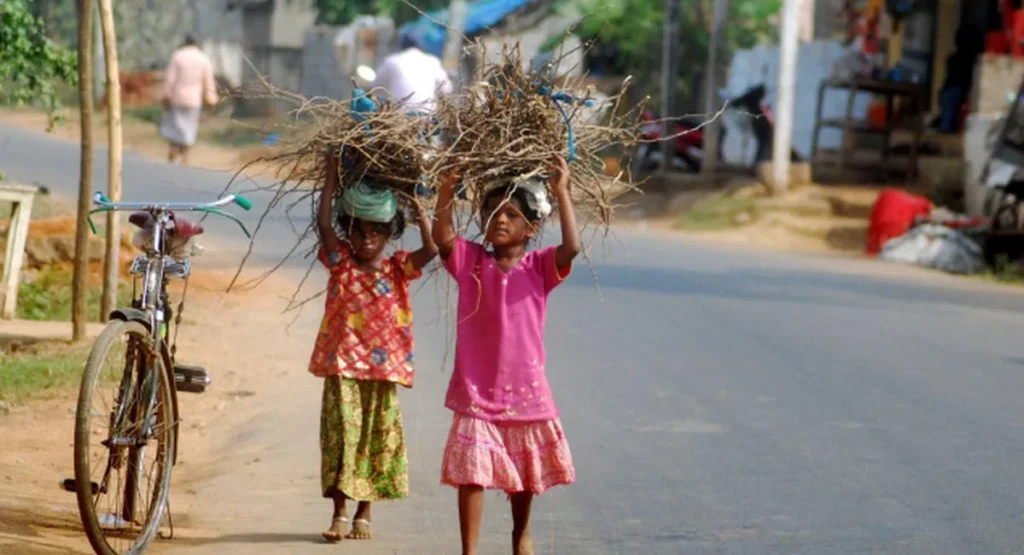
The mobile library India movement started as a creative response to the stark divide between resource-rich urban schools and the struggling education systems in informal settlements. The idea was simple: if children can’t reach libraries, libraries should reach them.
A mobile library van typically carries hundreds of books—ranging from colorful picture books and moral stories to basic science, math, and language readers. Each stop becomes a makeshift learning zone, where volunteers conduct storytelling sessions, reading circles, and creative writing activities.
For slum kids, many of whom have never owned a book, the experience is nothing short of magical. A single story read aloud under a banyan tree can open a thousand windows of imagination.
Reading programs for slum kids not only improve literacy rates but also restore confidence and joy in learning—something that rote schooling often fails to achieve.
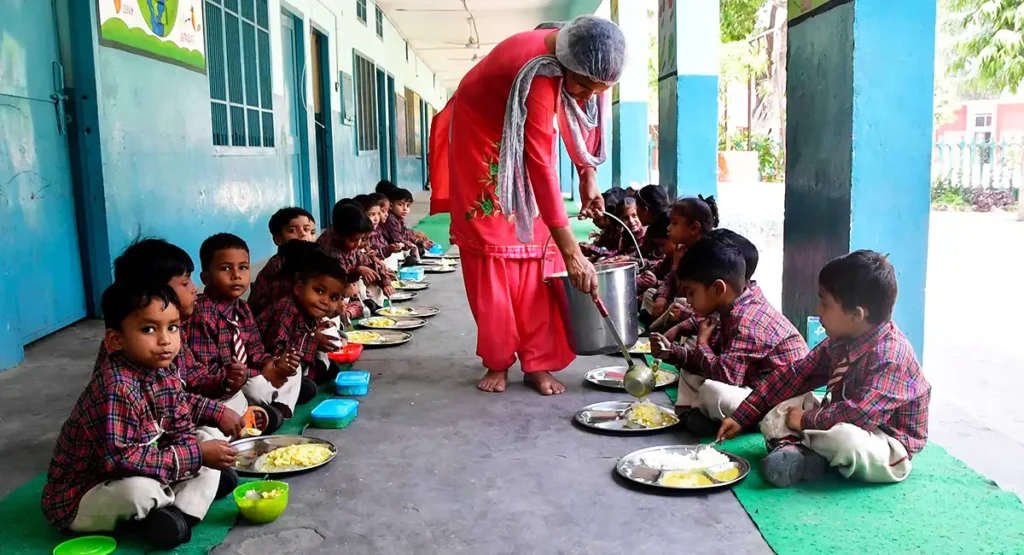
A hungry child cannot learn. Nutrition is the invisible backbone of education. According to UNICEF, nearly one in three children in India suffers from malnutrition. Hunger forces children to skip school, lose concentration, or drop out altogether.
This is where the most effective child education NGOs in India integrate nutrition with learning—serving mid-day meals, snacks, or milk during mobile library sessions.
The logic is simple yet transformative: when the stomach is full, the mind opens up.
For instance, in several community centers across Noida and Ghaziabad, mobile learning programs are accompanied by a nutrition drive—fresh fruits, khichdi, or boiled eggs provided alongside reading sessions. Volunteers often note that attendance doubles on days when meals are served.
Nutrition doesn’t just improve attendance—it improves comprehension, retention, and emotional stability. When children feel cared for physically, they become more responsive to learning.
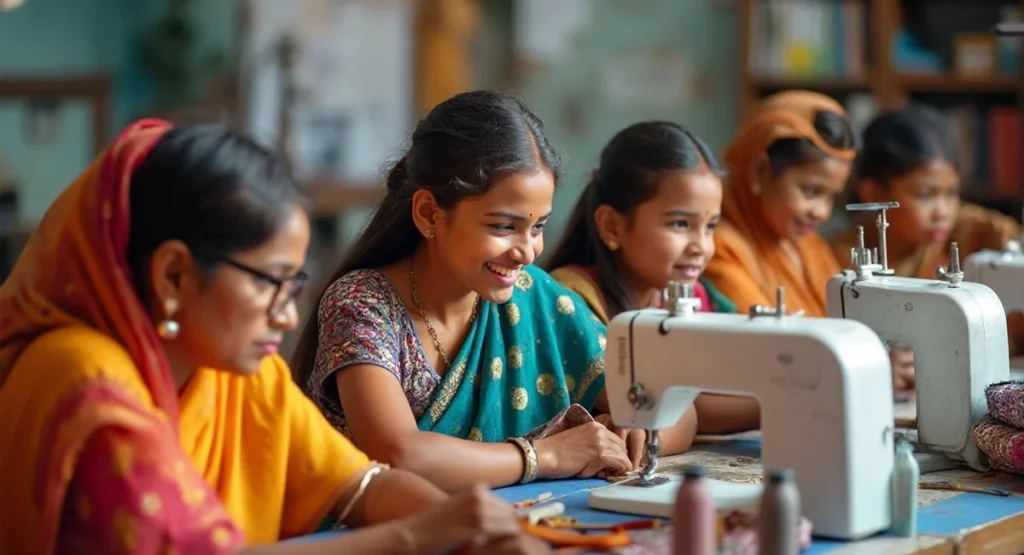
No social change is sustainable without women empowerment. When women are educated, skilled, and financially independent, entire communities rise.
In the context of education and literacy programs, women play a dual role—as beneficiaries and as catalysts. Many NGOs for children in Noida have realized that involving mothers in the education process yields exponential results.
Women are trained as:
This integrated approach ensures that when a mobile library visits a slum, it’s not just about books—it’s about building ecosystems of learning and care.
When a mother learns to read alongside her child, she not only breaks her own barriers but also transforms her family’s destiny.
Imagine this: It’s 10 AM in a crowded settlement in Noida. A bright yellow van pulls up, honking twice. Children rush out, barefoot but smiling. Volunteers open the doors to reveal shelves packed with books.
Soon, the street corner turns into a mini school.
By noon, lunch is served—simple but nourishing. And as the van drives off to its next stop, the air hums with laughter, learning, and lingering excitement.
For many of these children, that van represents the only structured learning experience they receive all week. But it’s enough to keep their dreams alive.
Across India, such initiatives are sowing seeds of lasting impact.
These numbers are not just data points—they represent thousands of stories of renewed hope.
Children living in urban slums face layered disadvantages. Many are first-generation learners, growing up in homes where education is not prioritized because survival takes precedence.
They often lack:
The mobile library becomes a safe space—a place of joy, acceptance, and creativity. Here, children are not judged for what they don’t know; they are celebrated for their curiosity.
Volunteers often read stories that reflect the children’s lives—tales of resilience, courage, and kindness—helping them relate to the characters and internalize moral lessons.
As one volunteer recalls, “A girl once told me she wanted to become the story reader for other kids someday. That’s when I realized—the cycle of change had begun.”
No movement thrives in isolation. The success of mobile library India programs lies in how deeply they embed themselves within communities.
Local participation ensures sustainability—residents help identify safe parking spots, contribute snacks, and assist in maintaining book records. Teachers, retired elders, and youth volunteers form the backbone of these programs.
Such collaboration transforms charity into partnership. Communities don’t just receive help—they become co-creators of progress.
Among many compassionate initiatives, One Hand for Happiness stands out for weaving together education, nutrition, and empowerment under one umbrella of humanity.
Through its learning programs, the organization reaches children in under-resourced neighborhoods—bringing books, learning kits, and moral guidance to spaces where formal schooling often stops.
Its focus extends beyond education. Women are trained in skill-based programs, children receive nutritious meals and uniforms, and communities are uplifted through sustained engagement.
Such integrated models illustrate that progress is holistic—it’s not enough to feed the mind without feeding the body or empowering the hands that nurture both.
Numerous studies underline the power of this intersectional approach:
These numbers reaffirm what social workers witness every day: education, when paired with nourishment and empowerment, creates a self-sustaining loop of progress.
Mobile libraries are not just about academic growth—they nurture emotional intelligence, curiosity, and social awareness. Many reading programs now include sessions on:
When a young boy reads about a girl who becomes a doctor despite hardships, or when a girl learns about leaders who changed the world through education, seeds of possibility are planted.
These lessons ripple outward—children influence their families, communities adopt better habits, and slowly, societies evolve.
Behind every successful mobile library program are women—mothers, educators, and volunteers—who keep it running with dedication and love.
They are the unseen engineers of social change:
These stories highlight that empowerment is not about charity—it’s about opportunity. When women are trusted with responsibility, they nurture entire generations of readers and learners.
The vision ahead is clear: a world where no child is denied education because of poverty, and no woman is silenced due to lack of opportunity.
Mobile libraries represent more than an educational initiative—they symbolize movement. Movement of books, yes, but also of minds and hearts toward equality.
The road to universal literacy and empowerment may be long, but every journey begins with one story shared, one meal served, one girl educated.
In this symphony of change, NGOs, educators, and communities must continue to play together—each bringing their unique instrument of impact.
In the end, the real power of a mobile library in India lies not in its bookshelves but in its ability to bridge worlds—between privilege and poverty, hunger and hope, silence and voice.
For slum kids who once thought dreams were beyond their reach, a library on wheels brings them closer to the idea that they, too, can write their own story.
And as the van drives away each afternoon, leaving behind trails of dust and giggles, it carries more than stories—it carries the future.
A future where every child learns, every woman leads, and every community thrives—because when we lend a hand for happiness, we turn the wheels of change.

Leave A Comment