
In the narrow lanes of Noida’s slums, where daily survival often overshadows dreams of schooling, one simple intervention has been quietly rewriting destinies: the mid-day meal program. For thousands of children, the promise of a hot meal is more than just food—it is hope, dignity, and an incentive to stay in school.
Education is often described as the great equalizer, yet for underprivileged children in India, the barriers are immense: poverty, hunger, lack of resources, and social inequalities. In these circumstances, initiatives like mid-day meals in Noida have become a lifeline, addressing not only hunger but also reducing dropout rates and empowering entire communities.
This blog explores the powerful intersection of education, nutrition, and women empowerment, showing how community-driven solutions can uplift generations.
The connection between hunger and education is undeniable. Research by UNESCO shows that hungry children are twice as likely to drop out of school compared to their well-nourished peers.
In slum communities around Noida, where families often survive on daily-wage earnings, education is not always a priority. Children are pulled out of school to work, beg, or care for siblings. The pressure to contribute to household income often outweighs the perceived benefits of education.
But when schools provide nutritious mid-day meals, the equation changes:
Thus, the mid-day meal is not just a welfare scheme—it is a tool for social transformation.
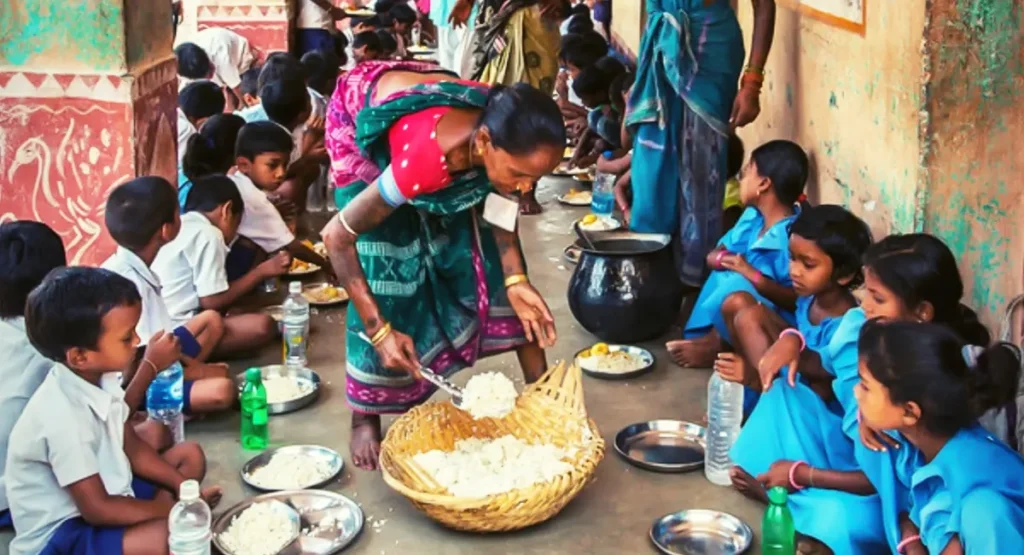
In the bustling industrial city of Noida, slum pockets house thousands of families who migrated in search of work. Here, the challenge of education for slum kids is magnified by instability, poverty, and lack of infrastructure.
Schools supported by an education NGO in Noida that serve mid-day meals are seeing remarkable results:
The very presence of a plate of food—a bowl of dal, rice, or vegetables—creates a powerful pull, anchoring children to classrooms where learning can happen.

Aarti, a 9-year-old living in a Noida slum, once faced a future of domestic work. Her family, struggling to afford even two meals a day, did not see schooling as a priority. But when her local school began offering mid-day meals, Aarti’s mother enrolled her.
Now, Aarti not only eats a full meal at school but also brings home stories of reading, arithmetic, and dreams of becoming a teacher. Her consistent attendance has inspired her younger brother to join school as well.
Aarti’s story is a reminder that for underprivileged children’s education, sometimes the first step is simply ensuring they are not hungry.
Studies by UNICEF highlight that malnutrition impairs cognitive development, memory, and concentration. A hungry child cannot focus on math problems or language lessons.
By ensuring essential nutrition through mid-day meals in Noida, schools are laying the foundation for effective learning:
Nutrition and education are not separate battles—they are two sides of the same coin.
Mid-day meal initiatives also create opportunities for women empowerment. Many schools employ women from local slums to cook, serve, and manage meals.
This model serves multiple purposes:
In this way, education for slum kids is linked directly to skill-building and empowerment for their mothers.
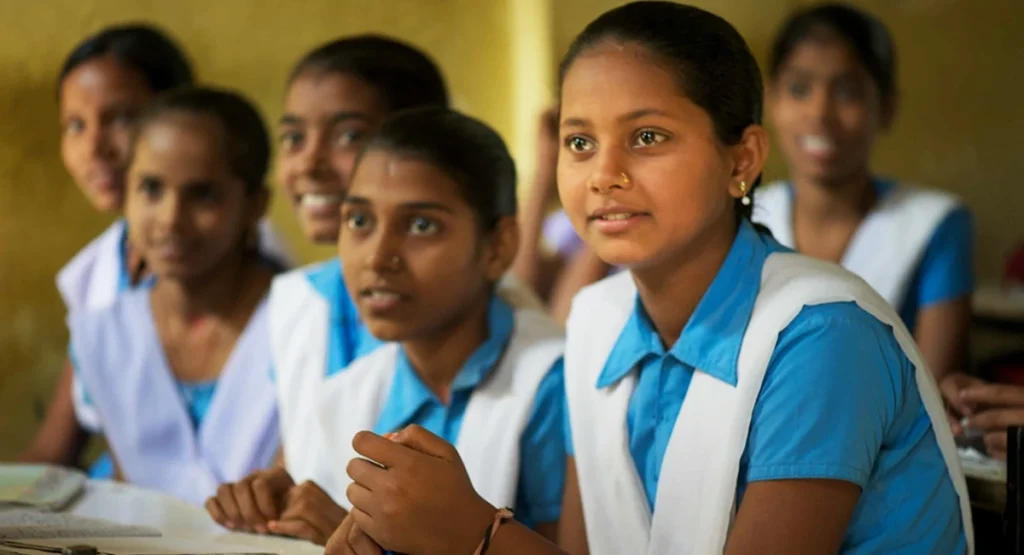
Government programs form the backbone of mid-day meal distribution, but NGOs for children in Noida play a vital role in bridging gaps. By providing books, uniforms, skill training, and supplementary meals, NGOs ensure that education is holistic.
Some initiatives extend beyond just feeding programs:
For example, community-focused groups like One Hand for Happiness meals subtly combine food security with child education NGO India initiatives, demonstrating how nourishment and learning can walk hand in hand.
Several studies validate the impact of school meals on education:
These numbers confirm what communities already know intuitively: a fed child is a learning child.
While Noida offers a local lens, the broader issue of child education NGOs in India is equally compelling. Across the country, NGOs are tackling the dual challenges of hunger and illiteracy.
They provide:
This integrated model ensures that schooling is not a luxury, but a sustainable reality for slum children.
Education is not just about literacy—it is about breaking intergenerational cycles of poverty. When children in slums are educated:
Every child pulled out of the cycle of illiteracy represents a family lifted toward dignity. Mid-day meals serve as the bridge to this transformation.
For many mothers in Noida’s slums, the mid-day meal represents relief from impossible choices. Rina, a domestic worker, once had to decide daily whether to send her children to school or keep them home to work and eat. With meals guaranteed at school, her burden eased.
Now, she proudly shares that her eldest son is the first in the family to reach Grade 8. “I no longer have to choose between food and learning,” she says. “My children can have both.”
Her words echo across countless families who see in these programs not charity, but a path to dignity and hope.
The ripple effects of kids welfare NGOs and mid-day meals go beyond classrooms:
In short, mid-day meals are more than food—they are investments in mindsets.
Despite successes, several challenges persist:
Here, partnerships between government, communities, and NGOs are essential. Together, they can ensure that mid-day meal initiatives not only survive but thrive.
Among the grassroots efforts in Noida, initiatives like One Hand for Happiness meals highlight the power of community-driven solutions. By combining meals with books, uniforms, and skill-based support for women, they demonstrate how holistic interventions can reduce dropout rates and empower families.
These examples remind us that the fight for education for underprivileged children in India is not a distant dream—it is unfolding daily, in small yet powerful steps.
The story of mid-day meals in Noida’s slums is a story of resilience and possibility. When a child sits down to a hot meal at school, it is more than nourishment—it is an invitation to stay, learn, and dream.
By integrating nutrition, education, and women empowerment, these programs are transforming the fabric of slum communities. They are proving that even in the most challenging circumstances, hope can be served on a plate.
The journey is far from over, but the path is clear: invest in children, empower mothers, and strengthen communities. Every meal served today is a step toward a brighter, more equal tomorrow.


Leave A Comment