In the hands of a child, a pencil becomes more than graphite and wood — it becomes a voice, a dream, a possibility. Yet for millions of underprivileged students, even this basic tool is a luxury. While we often focus on large-scale interventions like school infrastructure or digital access, something as small and simple as free stationery can become a powerful catalyst in unlocking child potential.
This blog explores how providing school tools and learning materials — pens, notebooks, erasers, rulers — transforms not only academic outcomes but also self-worth, participation, and even gender equality. At the intersection of education, nutrition, and women empowerment, a seemingly humble writing supplies donation becomes an engine of long-term change.
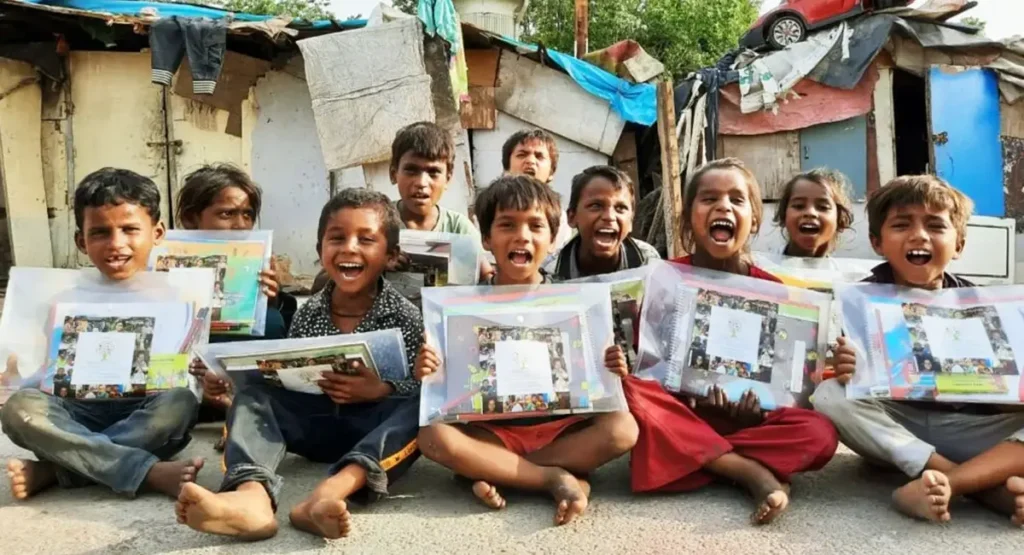
Imagine this: A seven-year-old walks into class eager to learn but has no notebook to write in. She borrows a pencil from a friend, erases faster than she writes, and hesitates to participate out of fear that she’ll run out of space on a shared scrap of paper. For her, every word she writes feels rationed.
This scenario plays out in thousands of classrooms across India and beyond.
UNESCO reports that more than 250 million children globally lack basic learning tools, and in India alone, over 30% of children in low-income families attend school without adequate stationery. This lack doesn’t just hinder learning — it cultivates shame, silence, and disengagement.
These children often sit at the back, quiet and unnoticed. Not because they lack potential — but because they lack tools.
Stationery is not just a school supply — it’s a symbol of dignity, agency, and inclusion.
A child who receives her own set of notebooks and pencils feels seen, valued, and capable. She can write freely, draw with abandon, erase without guilt, and raise her hand with confidence. Her ideas take shape. Her handwriting improves. Her participation increases.
In one slum redevelopment school near Mumbai, a simple initiative that distributed free school kits (including pencils, notebooks, sharpeners, and rulers) to 150 students led to a 21% rise in class engagement and 15% improvement in test scores within a year. Teachers noted a visible shift: children who previously avoided eye contact were now coming forward to write on the board.
The stationery impact is deeply emotional — it tells a child: you belong here.
While national schemes often focus on curriculum and digital inclusion, grassroots organizations and volunteers have long known that no child can learn without the basics.
A functioning pen. A sharpener that works. A full notebook. These are the foundation stones of academic achievement.
In a rural school in Rajasthan, a writing supplies donation drive supported by a community-based NGO led to a surprising outcome: school attendance rose by 27% over two months. When interviewed, parents said, “We feel ashamed sending our kids to school without anything. But when they are given what they need, we don’t hesitate.”
Here, stationery acted as a gateway to attendance and dignity, especially among families where children had to choose between going to school or helping at home.
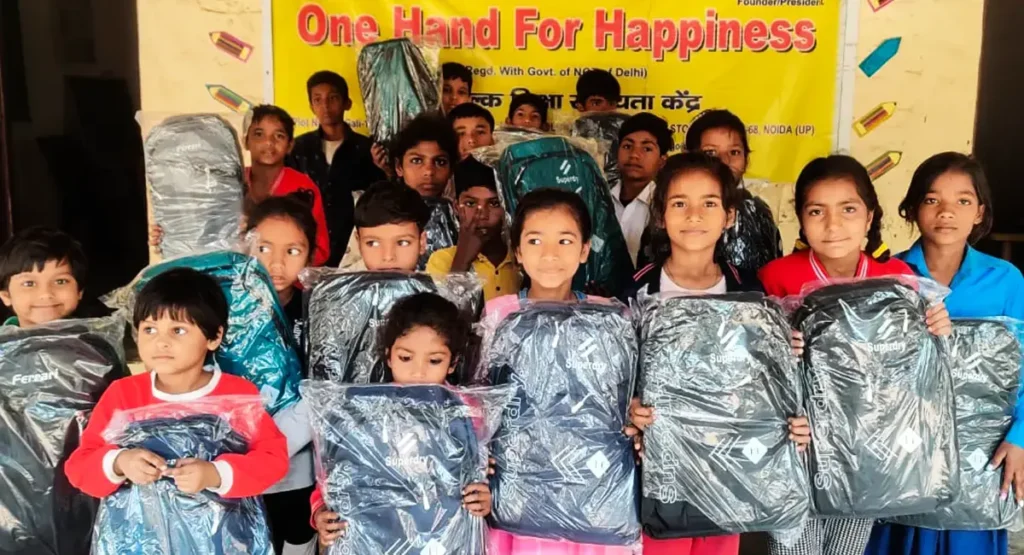
Access to stationery doesn’t just empower children — it indirectly uplifts mothers and young women, especially in low-income households.
In many families, girls are the last to receive resources. A boy may get a school bag; a girl gets old torn pages. A boy’s broken pencil is replaced; a girl’s is shared. Over time, these small inequalities snowball into massive educational drop-offs.
But when NGOs and schools provide equal education support, including writing supplies, to girls, it sends a loud message: your learning matters.
More importantly, many community initiatives now involve mothers in the supply chain — training them to stitch pencil pouches, create eco-friendly notebooks, or volunteer during distribution. This not only provides them with livelihood skills but also reconnects them with learning, some for the first time since childhood.
Organizations like One Hand For Happiness, for example, quietly empower communities by providing school tools to children and parallel skill-based support for women. The results are subtle yet powerful — better attendance for kids, and new income or literacy for mothers.
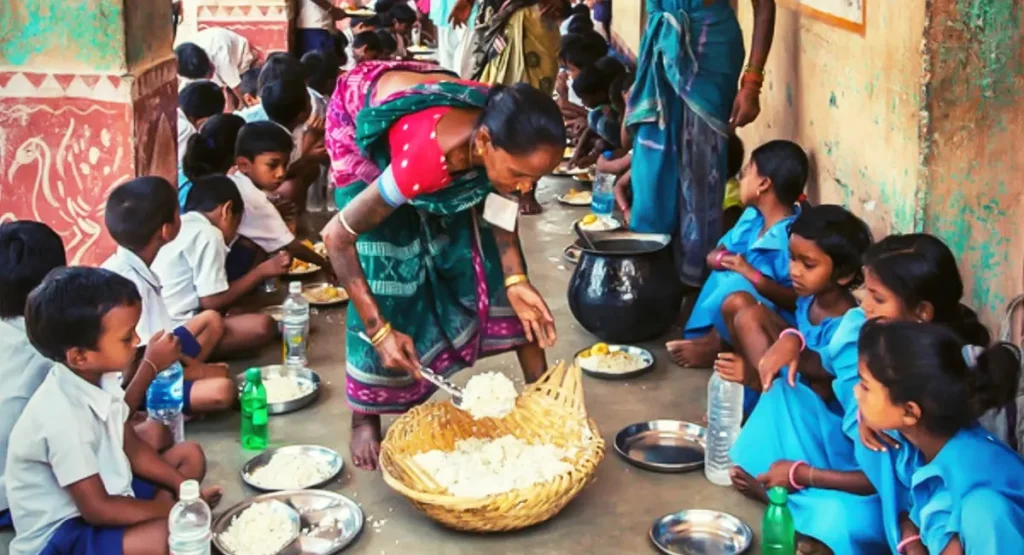
You cannot separate education from nutrition. A well-fed child with no pen cannot learn. A child with a notebook but no breakfast cannot concentrate.
That’s why many NGOs and community groups today combine mid-day meals with free stationery distribution — a holistic approach to schooling. When children receive a warm meal and a writing kit, their learning retention, energy, and enthusiasm significantly increase.
In one such integrated school support program, data showed:
Nutrition fills the stomach. Stationery fills the mind. Together, they unlock the future.
Aarav, 9, used to come to class with just a torn book and borrowed pencil. After receiving his own kit, he began drawing every day — not just doodles, but diagrams, comic strips, and homework. His grades went up. His self-esteem soared. He now dreams of becoming a science teacher.
Meera, 12, almost dropped out because she felt embarrassed writing with stubs and torn pages. After receiving her first set of new notebooks, she stayed back after school to complete extra assignments. Today, she tutors younger girls in her village — with confidence and pride.
These children didn’t need tablets or expensive tools. They just needed simple school supplies and someone to believe in their potential.
If you’re reading this, chances are your own schooling was filled with fresh notebooks and neatly packed pencil cases. It’s easy to take these things for granted. But for millions, the lack of basic child learning tools is the difference between staying in school or silently slipping through the cracks.
Donating stationery, funding school kits, or even spreading awareness isn’t charity — it’s equity. It’s ensuring that talent doesn’t go to waste just because of poverty.
We often talk about leveling the playing field in education. That begins with leveling the pencil case.
Providing stationery is also a way to build community connection. Local shops, volunteers, retired teachers, and youth groups can come together to organize donation drives. Schools can partner with NGOs to assess real needs and distribute materials responsibly.
Some efforts even train older students to manage supply banks — building leadership, accountability, and shared ownership.
In these moments, a pencil becomes more than an object. It becomes a thread — stitching together families, schools, and communities in a shared mission of empowerment.
Education doesn’t need to begin with a laptop. It can begin with a sharp pencil and a blank page. When we provide free stationery and the tools to write, we give children the chance to dream, to ask questions, to create answers.
In low-income communities, the road to change is often long and winding. But each small act — a donated pen, a stitched notebook, a distributed school kit — lays the bricks for a stronger future.By combining nutrition, stationery, and women-led skill programs, we don’t just educate children — we transform generations.

Leave A Comment