
Imagine a classroom where every child is attentive, energetic, and eager to learn—not held back by hunger pangs or malnutrition. For millions of underprivileged children, this vision remains distant. But it doesn’t have to be.
Across the globe, particularly in low-income communities, the conversation around education often overlooks one powerful lever: nutrition. Without the fuel of balanced meals, no amount of textbooks, uniforms, or teaching quality can unlock a child’s full potential. This is where the deep connection between school nutrition science, cognitive health, and community transformation becomes undeniable.

The brain, especially in its developmental years, is a demanding organ. It consumes about 20% of the body’s energy. Research in nutritional neuroscience shows that deficiencies in key nutrients—iron, iodine, zinc, B vitamins, and essential fatty acids—can impair concentration, memory, and emotional regulation.
A UNICEF report notes that undernutrition in early childhood can reduce a child’s IQ by up to 10 points. This isn’t just a health crisis—it’s an education crisis. Undernourished children are more likely to miss school, perform poorly in class, and drop out before completing primary education.
Balanced, consistent school meals can reverse that narrative. By addressing nutritional deficiencies, children gain more than physical strength—they build mental agility, resilience, and a readiness to learn.
One of the most immediate and measurable effects of school feeding programs is the rise in daily attendance.
According to the World Food Programme, school meal interventions increase attendance rates by 9% in primary schools and 15% in secondary schools in low-income countries. For underprivileged families, the promise of a daily meal can be a powerful incentive to send children to school, especially girls who might otherwise stay home to help with chores.
In urban slums and rural villages, where food insecurity is high, a warm plate of rice and dal—or any culturally appropriate balanced meal—isn’t just sustenance. It’s a lifeline. A motivation. A tool of equity.

It’s not just about feeding children; it’s about feeding them right.
NGOs and local programs that prioritize diverse, nutrient-rich menus report significant improvements in children’s concentration levels, social interaction, and reduced behavioral issues in class.
When nutrition falters, education suffers. When education suffers, job prospects shrink. When job prospects shrink, poverty deepens. This intergenerational trap affects not just individual lives but entire communities.
Girls and young women are especially vulnerable. Malnourishment in childhood makes them more likely to experience complications in pregnancy, give birth to undernourished infants, and continue the cycle of poor health and limited opportunities.
The solution? Strategic investment in school meals combined with women empowerment initiatives.
Empowering mothers through vocational training, nutrition education, and community kitchens not only boosts household income but ensures that children are fed and nurtured in a supportive home environment.
When mothers understand what a “balanced meal” means—even with limited ingredients—they make different choices. When they’re skilled and employed, they’re more likely to prioritize their children’s education.
In some rural districts, community-led efforts include women preparing school lunches, gaining both livelihood and dignity. These micro-models show how the empowerment of women is directly tied to the health and success of the next generation.
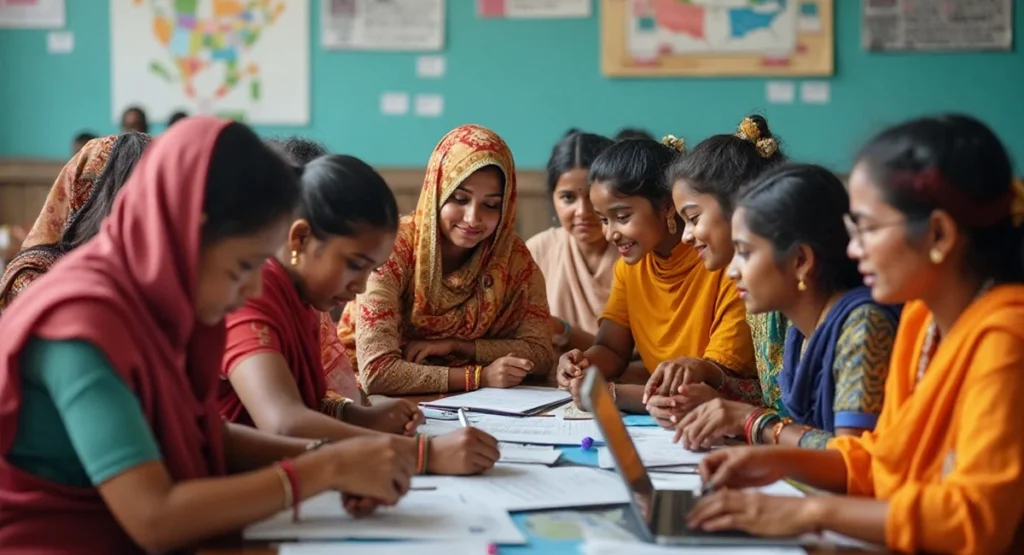
In the backdrop of these transformations are NGOs working quietly yet effectively—providing mid-day meals, school books, uniforms, and skill-building programs for women. While not always in the spotlight, their work lays the foundation for lasting impact.
Organizations like One Hand For Happiness have woven these services together—recognizing that feeding a child and training a mother is a dual investment that pays lifelong dividends.
In one documented case from central India, a tribal school that introduced meals alongside hygiene and health education saw a 40% increase in retention over three years. Nearby, a sewing program for mothers helped many transition from daily wage labor to steady incomes, boosting family nutrition and school engagement.
The benefits of school meals don’t end at the classroom door:
Studies show that every dollar invested in school nutrition programs returns $9 in economic benefits—through improved productivity, health, and education outcomes.
Consider the story of Anjali, a 10-year-old from an underserved village. A few years ago, she struggled with constant fatigue, frequent illness, and low class performance. Her mother, lacking steady employment and unaware of basic nutrition, often served just tea and flatbread.
When a local support initiative introduced mid-day meals and hosted a women’s workshop on nutrition and sanitation, the change was palpable. Anjali began eating dal, vegetables, and fruit at school. Her mother joined a kitchen-garden program. Today, Anjali is one of the brightest in her class—and her younger siblings are following in her footsteps.
These aren’t isolated successes. They’re the result of integrated efforts—of seeing nutrition, education, and women’s empowerment as parts of the same whole.
If we believe in learning for all, then we must believe in nourishment for all. Schools should never be places where children come hungry. And communities should never be places where women remain disempowered.
Here’s how change accelerates:
The science of school nutrition affirms what humanity has always known—we cannot think, learn, or grow on an empty stomach. But the ripple effects go beyond test scores. They touch families, empower women, and uplift communities.
When we feed the mind and the body together, we don’t just build smarter students—we build a more just and resilient world.
As seen through efforts like those by One Hand For Happiness and similar community initiatives, the road to empowerment is paved with meals, mentorship, and dignity.
Let’s ensure every child walks that road well-fed and fully prepared.


Leave A Comment