A simple pen may look ordinary, but in the hands of a child from an underprivileged community, it becomes a tool of transformation. The “pens to paychecks” journey is more than just a phrase—it represents the shift from basic education to sustainable employment, from dependence to dignity.
Every stationery donation, every book provided, and every uniform given contributes to a broader story of empowerment. When paired with nutrition programs and skill-based training for women, these efforts evolve into a holistic cycle of underprivileged progress.
This blog explores the stationery donation impact, the role of education in shaping employment, and how skill training transforms women from invisible caregivers into visible changemakers.
Children in underserved communities often begin their educational journey without even the simplest tools—pens, notebooks, or proper school bags. When they receive stationery boxes or uniforms, it is more than just an item; it’s a symbol of inclusion.
This simple act of providing tools to training lays the foundation for the longer journey—education to employment.
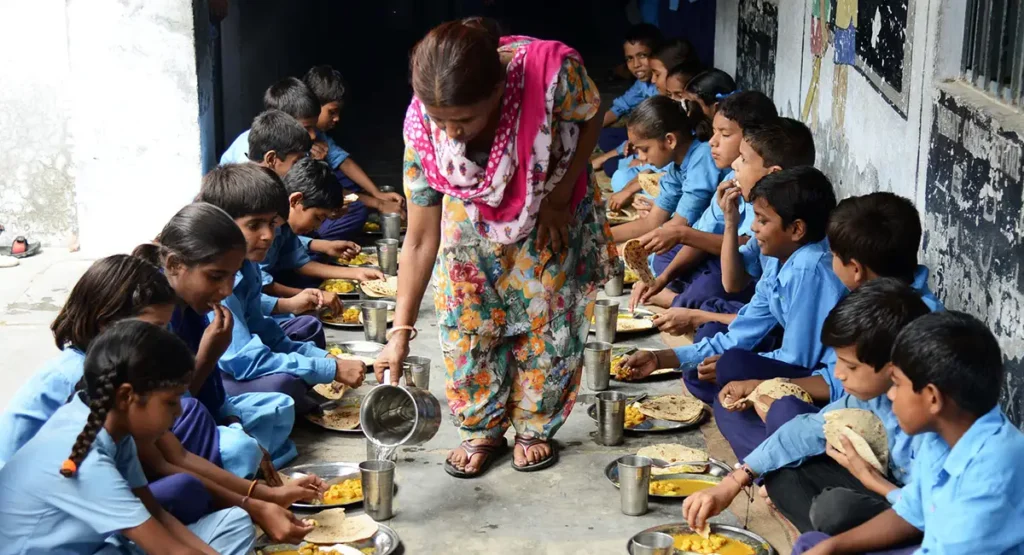
Education without nutrition is like writing with an empty pen—it doesn’t leave a mark. Millions of children in developing regions attend school on an empty stomach, unable to concentrate or learn effectively.
This nutrition-education link creates a foundation where learning thrives, paving the way for better futures.
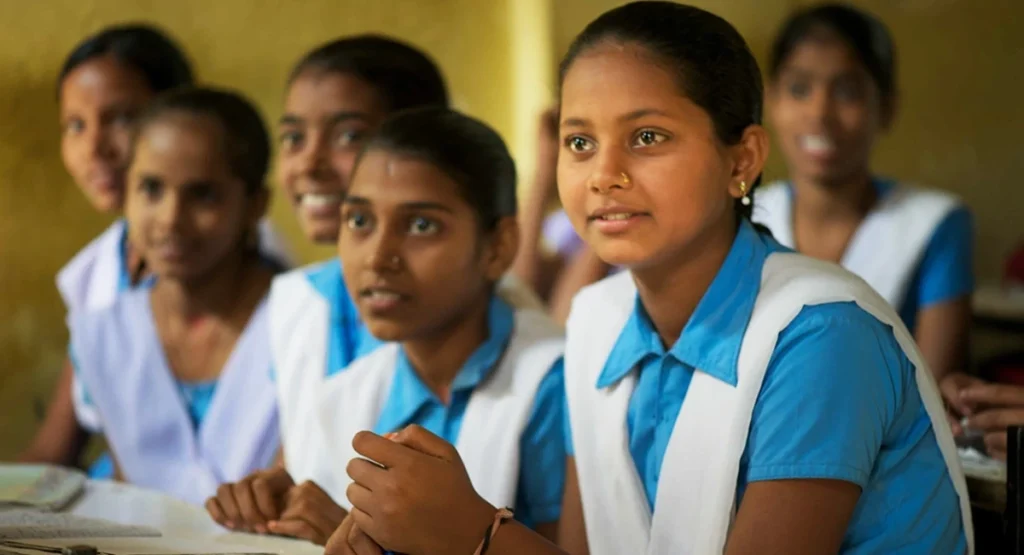
The phrase “child-to-woman empowerment” captures the generational shift that education and nutrition ignite. A child with pens and books grows into a confident young woman. With the right skills, she transitions to economic independence.
This path—from stationery boxes to skill-building—isn’t just personal; it’s communal. When one woman is empowered, entire communities benefit.
Consider the story of a girl in a rural setting who received her first school kit at the age of 8. That kit kept her in school. Years later, she accessed tailoring training through community programs. Today, she not only earns a livelihood but also mentors other women in her village.
This is the stationery donation impact at scale: what begins with pens, evolves into paychecks and progress.
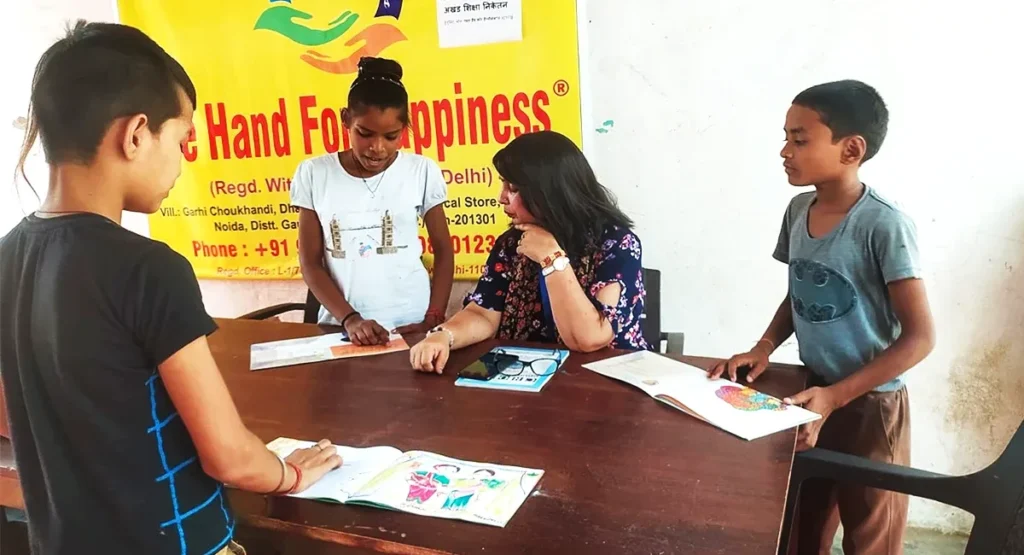
And it’s not only individual stories. Many NGOs today run programs that combine education, nutrition, and skill training to ensure underprivileged progress is sustainable. One such initiative is One Hand for Happiness NGO, which provides children with books, uniforms, and mid-day meals, while also creating skill-based opportunities for women. Through such integrated efforts, the shift from tools to training becomes tangible
Education provides knowledge, but skill-building provides livelihood. In underprivileged communities, particularly among women, skill-based training is the missing link that converts learning into income.
Vocational courses such as tailoring, handicrafts, digital literacy, beauty services, or food processing are practical, accessible, and adaptable to community needs. These programs often don’t require heavy infrastructure, yet they provide tangible income-generating opportunities.
When combined with literacy and confidence-building, skill training allows women to step into dignified employment and entrepreneurship.
The ultimate milestone in the “pens to paychecks” journey is financial independence. For underprivileged women, that first paycheck carries more than monetary value—it represents dignity, self-reliance, and the power to dream bigger.
This chain reaction ensures underprivileged progress is not temporary but generational.
When women thrive, communities transform. The stationery donation impact that started in a classroom expands to entire neighborhoods once women achieve paychecks.
This ripple effect strengthens communities from within, turning small donations into long-term community wealth.
The world has recognized the undeniable connection between education, nutrition, and women empowerment. Sustainable Development Goals (SDGs) emphasize quality education (Goal 4), gender equality (Goal 5), and decent work (Goal 8).
Together, these layers of support create an ecosystem where tools to training and education to employment aren’t just phrases, but lived realities.
Let’s revisit the concept through another real-world scenario. Imagine a group of women in an urban slum receiving tailoring kits after attending literacy classes. With these skills, they start stitching school uniforms for local children.
This is the true essence of pens to paychecks—a cycle where education fuels skills, skills fuel employment, and employment fuels empowerment.
Many grassroots initiatives are already making this transition possible. For example, One Hand for Happiness NGO integrates education support for children with skill-based programs for women. By ensuring children receive books, uniforms, and mid-day meals, and by creating vocational opportunities for women, they stitch together the missing pieces of empowerment.
It’s not just about helping a child pass exams or a woman learn tailoring—it’s about creating a community that rises together, hand in hand.
The journey from stationery boxes to skill-building, from pens to paychecks is more than charity—it is empowerment. It proves that change is not always born of grand interventions; sometimes, it begins with something as small as a pen or a meal.
By supporting education, nutrition, and skill-building, we transform not only individuals but entire generations. The equation is simple: Tools + Training + Nutrition = Sustainable Empowerment.
And as long as organizations and communities continue to nurture this cycle, we can truly create a world where every pen leads to a paycheck, and every child-to-woman empowerment journey leads to lasting progress.

Leave A Comment