
In bustling classrooms across the world, learning begins with more than just books—it begins with dignity. For millions of underprivileged children, something as simple as a school uniform becomes a powerful symbol of belonging, equality, and hope. The importance of a uniform extends far beyond fabric and stitching; it is often the first step in helping children stand tall, speak up, and visualize a future beyond the limitations of poverty.
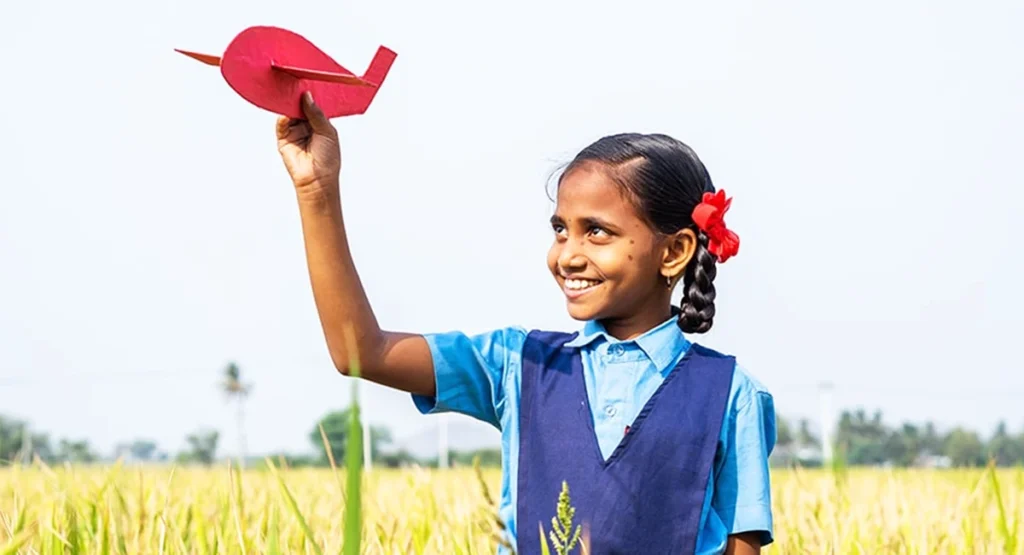
Uniforms in schools are not merely dress codes. They symbolize access, unity, and equal footing—qualities that can profoundly affect a child’s emotional and academic journey. Studies have shown that students in uniform feel a greater sense of identity and affiliation with their schools. This fosters improved attendance, reduced behavioral issues, and stronger academic performance.
For underprivileged students, the impact is even deeper. Many children in low-income families start school without the necessary clothing, books, or bags. This lack, while material in nature, chips away at a child’s self-worth and confidence, making them hesitant to participate or even attend regularly. Uniform donation initiatives aim to fix this very gap, restoring not just outer appearance but inner confidence.
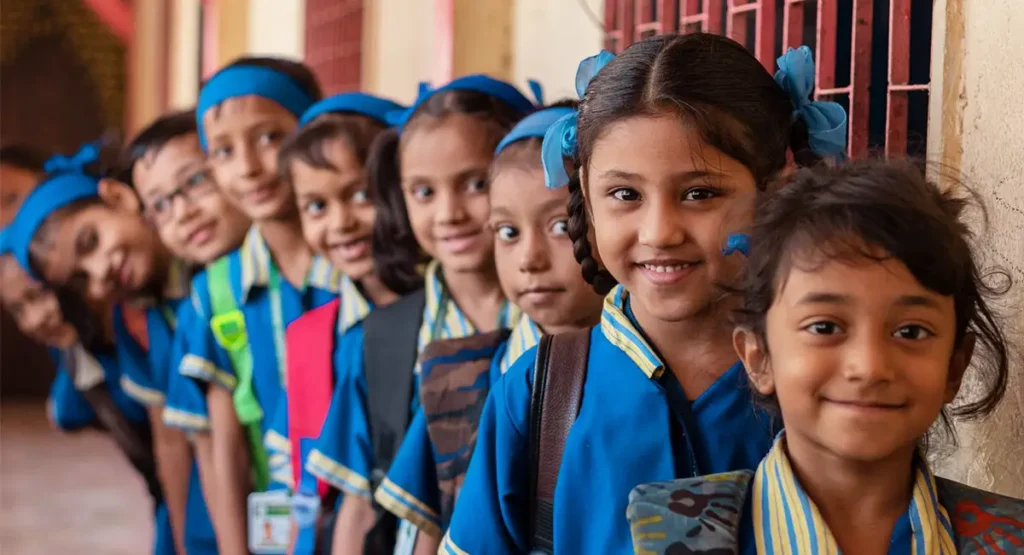
A 2020 report by the National Institute of Education Planning and Administration (NIEPA) in India emphasized how school attire strongly correlates with students’ willingness to engage in classroom activities. Children who lack proper uniforms often withdraw socially and academically. They may skip school altogether, fearing ridicule or embarrassment.
Conversely, children who receive clean, well-fitted uniforms report higher levels of classroom participation, peer interaction, and self-expression. This aligns with global patterns: research from Sub-Saharan Africa and South Asia has consistently shown that uniform programs improve retention rates and reduce dropout rates, particularly among girls.
In underserved communities, uniforms help restore dignity and a sense of normalcy. For a child coming from a home plagued by food insecurity, unemployment, or displacement, slipping into a school uniform can be deeply empowering. It signals that they belong—that their education matters.
In many rural and semi-urban areas, children are tasked with helping at home, collecting water, or taking care of siblings. Attending school, especially in clean uniforms, allows them to be seen not as laborers or caretakers, but as students—dreamers in the making.
NGOs across India and other developing nations, including organizations like One Hand For Happiness, have made silent yet significant strides in providing free uniforms, mid-day meals, stationery, and holistic support to ensure no child feels left behind. The results? Healthier, happier, more present students.
Uniforms also carry special meaning for girls in low-income communities. For many, a uniform isn’t just about education—it’s about protection. It often signals enrollment in school, which can deter child marriage, early pregnancy, and unsafe labor.
In conservative regions, parents are more willing to send daughters to school when modest, standardized clothing is part of the equation. School identity becomes a form of social safety. And for the girls themselves, uniforms enable a stronger sense of self-worth, one that helps them transition from passive learners to assertive participants.
Programs that distribute uniforms specifically to girls have seen notable improvements in female attendance and retention. When paired with nutrition programs and access to clean toilets, the effect is even more transformative.
One of the most striking functions of school uniforms is how they level the playing field. In a typical classroom, socioeconomic differences can be painfully visible through shoes, clothes, or school supplies. This visibility often leads to social exclusion, bullying, or inferiority complexes.
Uniforms offer an antidote. When every child dresses the same, the classroom becomes a more inclusive, democratic space. No one is singled out for poverty, nor privileged for wealth. The focus shifts to learning, curiosity, and collective growth.
Uniforms, therefore, aren’t just an education tool—they’re an equity tool.
There’s a quiet confidence that grows when a child is given the resources they need to succeed—clean uniforms, nourishing meals, and a welcoming school environment. Over time, this confidence translates into ambition. Children begin to dream of being engineers, doctors, teachers, or entrepreneurs.
In states like Bihar and Chhattisgarh, vocational training programs linked with schools have shown promising outcomes when uniform support was part of the early intervention. When students feel valued and dignified from the start, they are more likely to pursue higher education and career-oriented training.
Moreover, teachers report that students who wear complete uniforms show better attendance, discipline, and long-term commitment to learning. These aren’t just anecdotes—they’re precursors to systemic change.
In a small village near Ujjain, a school principal noticed that attendance was drastically low during the winter months. Upon inquiry, he found that most children lacked proper uniforms, particularly sweaters or shoes. With the help of a local NGO, donations of warm uniforms were organized.
The result? Attendance rose by 38% that winter. More importantly, children stayed focused in class, and dropout rates declined in the months that followed. The impact wasn’t just visible—it was felt.
Such stories aren’t isolated. They reflect a growing recognition that education requires more than books. It requires a network of care, where uniforms, meals, hygiene kits, and emotional support intersect to create resilient learners.
One might wonder—how much impact can a single donated uniform truly have? The answer: immeasurable.
For families struggling to meet daily needs, affording uniforms for multiple children is a luxury. A uniform donation not only relieves financial stress but opens the door to consistent schooling. It reinforces to the family and the child that their education matters to the larger community.
Organizations working quietly on the ground—like One Hand For Happiness—play a pivotal role in mobilizing such support. Their community-based model ensures that resources reach the right hands, in the right way, at the right time. From sourcing uniforms to organizing mid-day meals, their work addresses not just learning but also well-being.
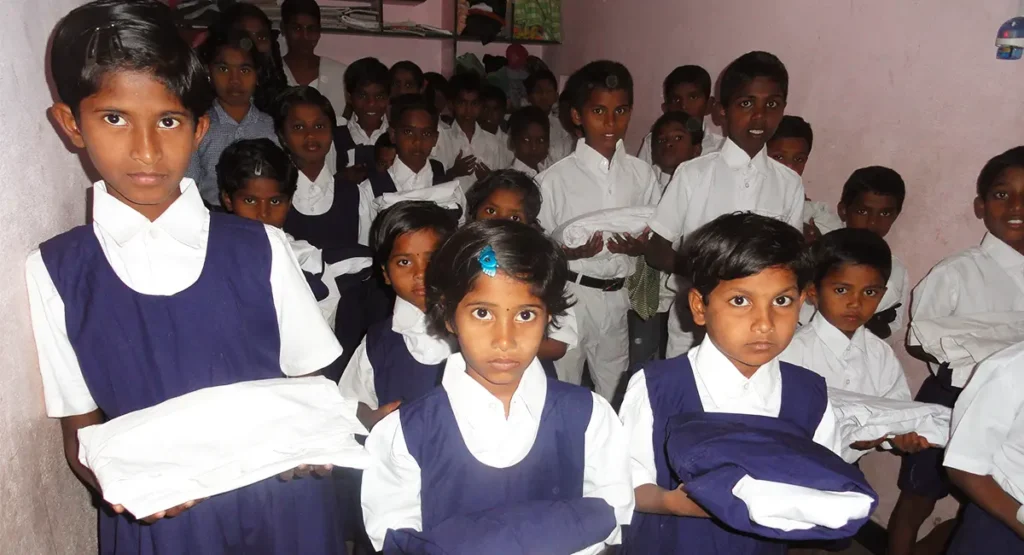
Uniforms are one piece of the puzzle. When paired with nutritious school meals, learning materials, and community engagement, they become part of a much larger ecosystem that supports holistic education.
And here’s where women come in. Many of the uniform stitching initiatives in India employ underprivileged women, often mothers of the very children receiving the uniforms. These vocational programs teach tailoring and provide a steady income while reinforcing community ties. It’s a cycle of empowerment: uniforms help children learn, and sewing those uniforms helps women earn.
This intersection of women’s income generation, children’s education, and community well-being is the cornerstone of sustainable development.
As we look toward building an equitable education system, we must recognize that the “basics” aren’t basic at all. A uniform is not just clothing. It’s identity. It’s motivation. It’s a promise of opportunity.
Government programs, CSR initiatives, and NGOs must continue to collaborate to ensure that every child, regardless of their background, has what they need to learn with pride. And as citizens, we too can contribute by donating, volunteering, or simply spreading awareness.
Because when a child walks into school in a uniform that fits, so does the hope of a future that fits them.
From classroom to career, the journey begins with confidence, and confidence often begins with something as humble as a school uniform. In empowering underprivileged students with clothing, care, and consistent support, we’re not just changing school experiences—we’re rewriting life stories.
When we help a child feel seen and valued in the classroom, we give them the courage to take up space in the world beyond. One uniform, one meal, one book at a time, we move closer to a world where every child, regardless of circumstance, can truly learn, thrive, and lead.


Leave A Comment