
In the quiet corners of rural villages and the bustling lanes of urban slums, one truth echoes across communities: a hungry child cannot learn. Yet, millions of children walk into classrooms with empty stomachs, clutching their dreams tighter than their stomachs. Hunger is not just a lack of food—it is a barrier to education, growth, and equity.
Food access is not a privilege; it is a prerequisite for progress. And when schools become not only centers of learning but also sources of nourishment, something extraordinary happens: attendance rises, attention spans lengthen, joy returns to learning, and dreams get the fuel they need.
This blog explores the critical link between nutrition, education, and women empowerment—and how addressing food insecurity in schools is one of the most impactful, community-driven changes we can make.
According to the World Food Programme, nearly 66 million primary school-age children attend classes hungry across the developing world. In India alone, millions of children from underprivileged communities rely on mid-day meals as their only complete meal of the day.
When children are undernourished, the impact goes far beyond physical weakness. Hunger dulls memory, delays cognitive development, and increases absenteeism. In contrast, access to school food programs has shown a direct improvement in literacy rates, grade-level performance, and emotional well-being.
“A full stomach often leads to a fuller future.”
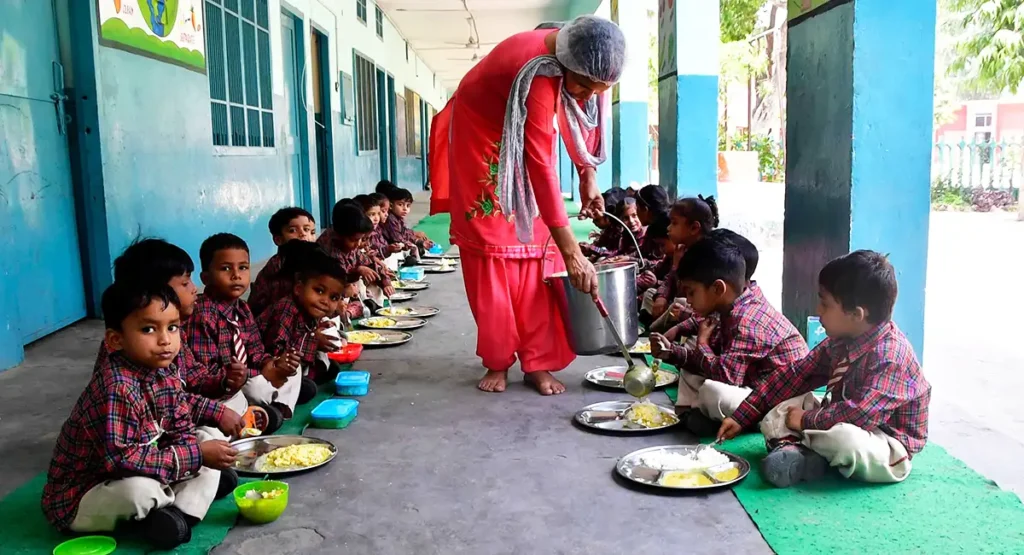
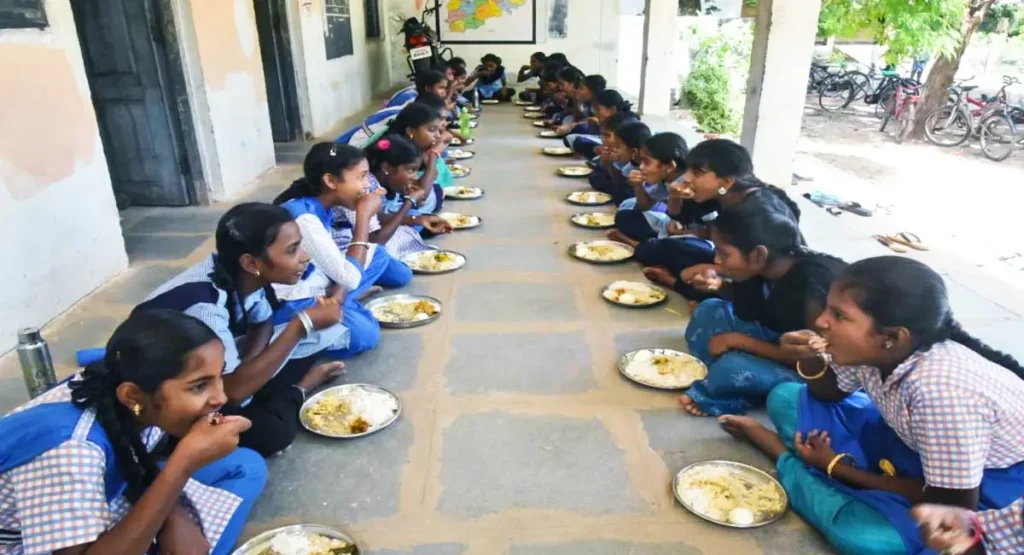
The brain consumes about 20% of our daily energy intake, and for growing children, this demand is even higher. Essential nutrients such as iron, vitamin A, and protein are key to concentration, memory retention, and problem-solving abilities.
In one study published by the Journal of Pediatrics, students who received regular, nutritious meals in school scored 18% higher in math and showed 30% better attention spans than those who didn’t. Nutrition for learning is not optional—it is foundational.
Beyond biology, mid-day meals offer something equally vital—emotional well-being. For a child who comes from a food-insecure home, knowing that a warm meal awaits them at school creates a sense of safety, belonging, and dignity.
You’ll often hear a smile before a spoon is raised. Laughter across steel plates. Joy shared in simple, quiet bites. These moments foster community and mental health nourishment, reducing school dropouts and behavioral issues. In this way, school wellness becomes as emotional as it is nutritional.
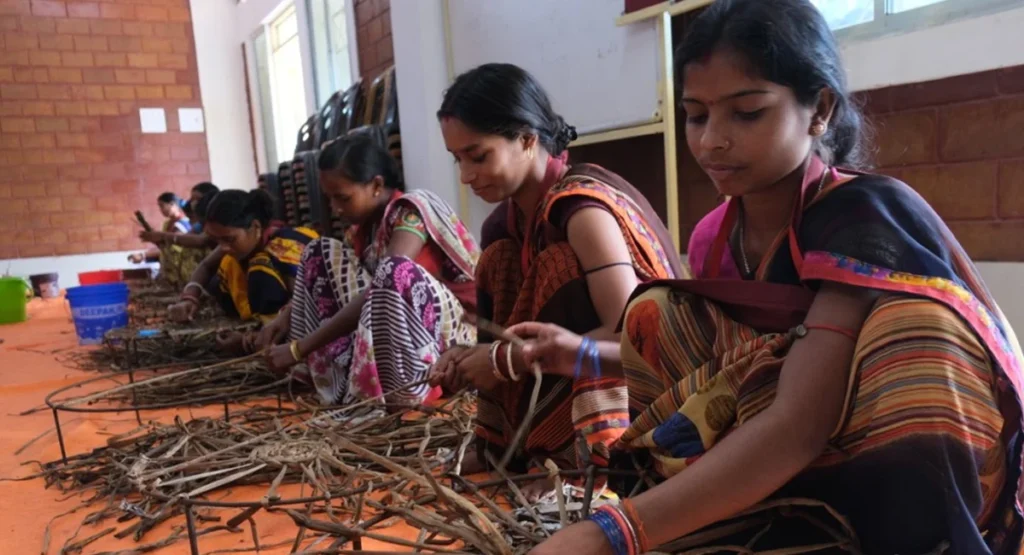
Food access in schools doesn’t just support students—it transforms entire households. When children are guaranteed one balanced meal at school, the economic burden on mothers is eased, allowing women from underserved communities to redirect time and energy into earning, learning, or upskilling.
Many school food programs hire local women as cooks and helpers. This micro-employment not only uplifts household incomes but also strengthens women’s identities as community leaders.
Small acts—chopping vegetables, stirring pots—become gateways to empowerment.
In several grassroots initiatives, mid-day meal kitchens are coupled with women empowerment programs that train women in nutrition, budgeting, hygiene, and even food entrepreneurship.
Take the case of Radha (name changed), a widowed mother of three from a tribal belt in eastern India. Once struggling to feed her children, she was enrolled in a community kitchen workshop and trained in food safety and bookkeeping. Today, she not only earns a living but mentors other women—proof that feeding children can feed futures.
When you support school meals, you support mothers, too.
When children know they’ll be fed at school, attendance improves by 12–25%, especially among girls. For families on the edge of survival, sending children to school instead of work becomes a viable decision.
With higher attendance comes improved retention rates, especially beyond the primary level. Nutrition thus creates a ripple effect: from regular attendance to academic success through meals.
Food is the great equalizer. In classrooms where economic disparities often show in worn-out uniforms and empty pencil boxes, a shared mid-day meal brings parity. Everyone eats the same. Everyone matters.
When this basic need is met, underprivileged kids find the mental space to dream beyond survival—to imagine careers, passions, and futures.
This is what true educational equity looks like.
Across India, community-based NGOs are addressing hunger and educational disparity through school-linked programs that provide:
These organizations are often embedded in the very communities they serve, making their work sustainable, participatory, and impactful.
For example, One Hand For Happiness, an empathetic grassroots effort, supports schoolchildren with nutritious meals and educational kits, while simultaneously running women’s micro-skilling workshops to make mothers part of the progress. Without fanfare, without flashes—just lasting change.
To treat food as charity is to misunderstand its place in human dignity. Children do not earn meals—they deserve them. Providing food access in schools is not just about kindness. It’s about correcting systemic imbalances, ensuring that every child—regardless of their background—has the same shot at success.
By nourishing students, we nourish nations.
Government-led mid-day meal schemes are powerful. But when paired with community support, NGO expertise, and women’s leadership, they become transformative.
Bridging gaps in food security requires not just funds, but faith—in local wisdom, in mother-led solutions, and in the power of care to drive learning outcomes.
“A well-fed child is a well-read child.”
Let’s look at the full picture:
This is not fiction. This is the silent revolution happening every day in India’s schools when we invest in food, education, and women’s empowerment—together.
Food access is not an afterthought. It is the first building block of education, equity, and empowerment.
If we want to nurture thinkers, leaders, and changemakers among the most vulnerable, we must start with a simple, everyday promise: No child learns on an empty stomach. No woman is left behind in the solution.
From underprivileged kids’ meals to community kitchens, from chalkboards to chapatis—the future of education lies in nourishment. Feeding for growth is not a campaign slogan. It is a call to conscience.
When you feed a child, you do more than fill a stomach. You unlock a future. When you uplift a woman, you raise a community.


Leave A Comment