In the narrow alleys of India’s underserved neighborhoods, amidst challenges of poverty, poor education, and daily survival, something quietly powerful is happening—mothers are becoming change-makers. With threads in their hands or recipes in their memory, they’re weaving the future—not just for themselves, but for their families, and by extension, for the entire community.
Women skill development is more than an employment strategy; it’s a life transformation tool. It has been observed globally and in India that when a woman earns, she invests 90% of her income into her family, prioritizing children’s education, nutrition, and health. In contrast, men invest 30-40%.
This blog explores how vocational training for women, especially mothers from underprivileged backgrounds, becomes a catalyst for sustainable change. With community-driven organizations like One Hand for Happiness working silently on the ground, we see how mother empowerment is a central pillar in uplifting families.
Many women in urban slums and rural pockets are confined by generations of poverty, early marriage, and cultural restrictions. Most have little or no access to formal education. This leads to:
Without income or opportunity, they remain trapped in a cycle of economic and emotional vulnerability.
Now imagine flipping that equation. Imagine a woman with the power to earn, choose, and lead.
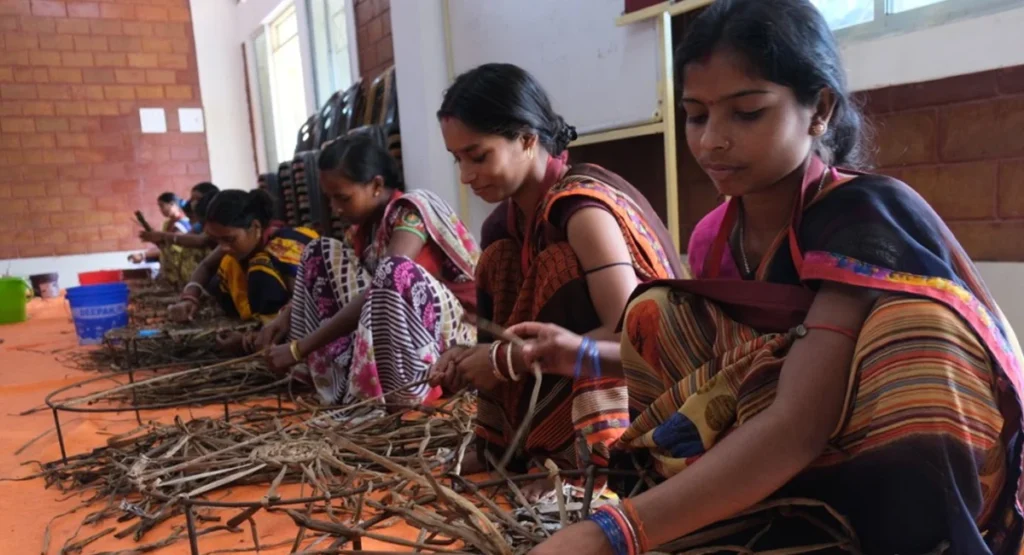
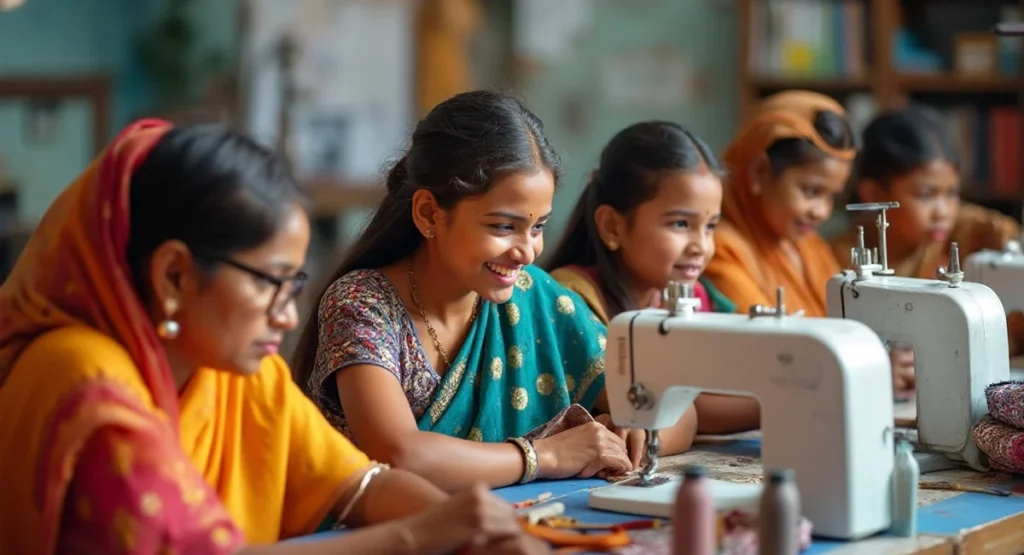
Women earning skills come in many forms: sewing, embroidery, food processing, beauty services, soap-making, handicrafts, digital literacy, and more. With structured community training, these talents become a ticket to dignity and financial stability.
Studies show that even basic vocational skills can lead to a 30-60% increase in household income. But the benefits go beyond numbers:
In many grassroots programs, mothers receive training plus toolkits, mentorship, and platforms to sell their products—creating a path to sustainable livelihoods.
Meet Meena, a 34-year-old mother of three from a slum near Sector 62, Noida. Once reliant on her husband’s erratic earnings, Meena joined a local sewing program supported by a women-focused NGO. In six months, she was stitching school uniforms for neighborhood kids and started earning ₹6,000 a month.
With her income, she:
Today, Meena trains other women and dreams of opening a tailoring unit. One Hand for Happiness, a community-led NGO, has quietly supported such women with skill training, raw materials, and market linkage.
She says, “Earlier, I used to wait for my husband to buy vegetables. Now I can buy groceries, pay school fees, and still have some left.”
This isn’t just an income story—it’s a story of identity, autonomy, and respect.
When mothers are empowered, children benefit the most. Here’s how:
Earning women are more likely to buy fruits, vegetables, and milk, improving child nutrition—a key factor in cognitive and physical development.
Children of skilled, earning mothers have:
This directly impacts school readiness and long-term learning outcomes.
Daughters of empowered mothers are more likely to study longer, marry later, and aspire for financial freedom. Sons, too, grow up respecting working women—creating a ripple of gender-positive change.
India’s rich artisan culture—be it block printing, weaving, pottery, or embroidery—is often kept alive by women in rural and semi-urban areas. Yet many lack the means to monetize these traditions.
Community NGOs now run artisanal skill revival programs, connecting women to local and international markets.
Women like Sushila in Rajasthan, who once embroidered only for dowries, now sells hand-stitched dupattas online. Groups supported by programs like One Hand for Happiness are helping women form self-help groups (SHGs), produce collectively, and brand their work.
These women aren’t just creating handicrafts—they’re creating heritage-driven incomes.
While success stories are inspiring, several barriers still exist:
That’s where community support, mentorship, and targeted NGO interventions play a vital role.
Organizations like One Hand for Happiness tackle these gaps by:
Such holistic approaches are what make empowerment truly sustainable.
Some programs combine women empowerment with child welfare, such as:
This builds a powerful loop:
When the same woman cooks meals in the school kitchen and sends her child to class in a uniform she stitched—it’s a revolution powered by resilience.
Sustainability is about longevity, growth, and dignity. Women need more than a one-time training—they need systems that allow them to scale, adapt, and dream.
With sustained guidance, women go from participants to producers to entrepreneurs.
You don’t need to run an NGO to make an impact. Here’s how individuals can contribute:
Sewing machines, tailoring tools, embroidery kits, culinary equipment, or even second-hand laptops.
Offer sessions in marketing, digital tools, branding, or financial literacy.
Support marketplaces or exhibitions that feature women artisans and entrepreneurs.
Work with your community to collect supplies, raise funds, or sponsor training for women.
Share their stories, showcase their work, and change perceptions around working women.
The empowerment of underprivileged women isn’t charity—it’s investment. An investment in stronger families, smarter children, healthier communities, and a more equitable society.
Skill development, when paired with dignity, respect, and opportunity, becomes more than just employment—it becomes a movement.
Every mother trained is not just a worker added to the economy. She is a nurturer, a decision-maker, a role model. She is the light at the center of her family’s journey forward.
As community efforts like One Hand for Happiness continue to empower women with skills, confidence, and opportunities, we inch closer to a future where no woman is powerless, and no child is left behind.
Let’s recognize, respect, and rise with these women, because when they rise—they lift the world with them.

Leave A Comment