Across India, millions of children from low-income families dream of going to school each day. For them, education is not simply about learning—it is about breaking the cycle of poverty, building dignity, and opening doors that once seemed forever closed. Yet behind every child who steps into a classroom, there is often an unsung hero: their mother.
In underserved communities, women empowerment and parent involvement programs are transforming education from a distant hope into a lived reality. By linking education, nutrition, and women’s empowerment, these initiatives nurture both children and their caregivers. From mid-day meals that ensure children don’t study on an empty stomach, to skill-based support that empowers mothers to earn a living, the intersection of education and community upliftment is proving to be one of the most powerful change agents of our time.
Research consistently shows that a mother’s empowerment directly influences her child’s schooling. According to UNESCO, children whose mothers have completed even primary education are 50% more likely to survive past the age of five and significantly more likely to attend school themselves.
But empowerment is not only about formal education. It includes:
In urban slums around Noida, where poverty often pushes children to work as ragpickers, domestic helpers, or factory assistants, the presence of empowered mothers—backed by NGOs—becomes the difference between a child dropping out in Class 5 or completing high school.
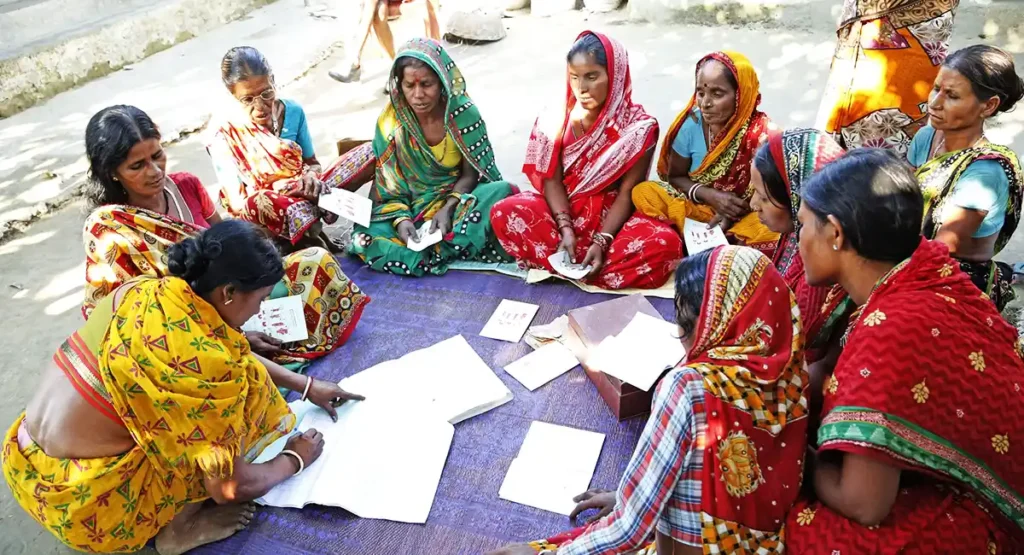
In India, over 30 million children remain out of school, many of them from marginalized communities. In areas around Noida and Delhi NCR, children from slum settlements face:
The result? Even when children enroll, dropout rates soar after the primary level. Here is where education NGOs in Noida step in—not only to support children but also to engage their parents, particularly mothers, as partners in the process.
Parent engagement NGOs in Noida have realized that improving child education requires going beyond classroom walls. By involving parents in meaningful ways, these programs create a holistic environment where children can thrive.
When parents feel invested in their child’s schooling, dropout rates fall dramatically. According to UNICEF, children whose parents are actively engaged in school life are twice as likely to complete secondary education.
Take the story of Aarti, a 9-year-old girl from a Noida slum cluster. For months, she skipped school because her family couldn’t afford breakfast. Sitting in class with an empty stomach was unbearable, and eventually, she stopped going altogether.
When a kids welfare NGO introduced a mid-day meal program at her local learning center, Aarti returned. For her, the assurance of a hot meal meant she could study without distraction. For her mother, it meant one less worry about feeding all four children.
Nutrition here became more than just sustenance—it became a tool of retention, dignity, and hope.
A mother’s role is central in shaping the educational journey of her child. Empowering women with resources, training, and support not only improves their self-worth but also strengthens entire families.
In many women’s empowerment NGOs in Noida, mothers are encouraged to participate in literacy classes while their children study. Some learn tailoring to contribute to household income, others join self-help groups that collectively save money and invest in small businesses.
The ripple effect is striking:
Sustainable change comes when education, nutrition, and women’s empowerment intersect. This golden triangle creates a cycle of upliftment:
Together, these elements ensure that underprivileged children don’t just attend school—they stay in school.
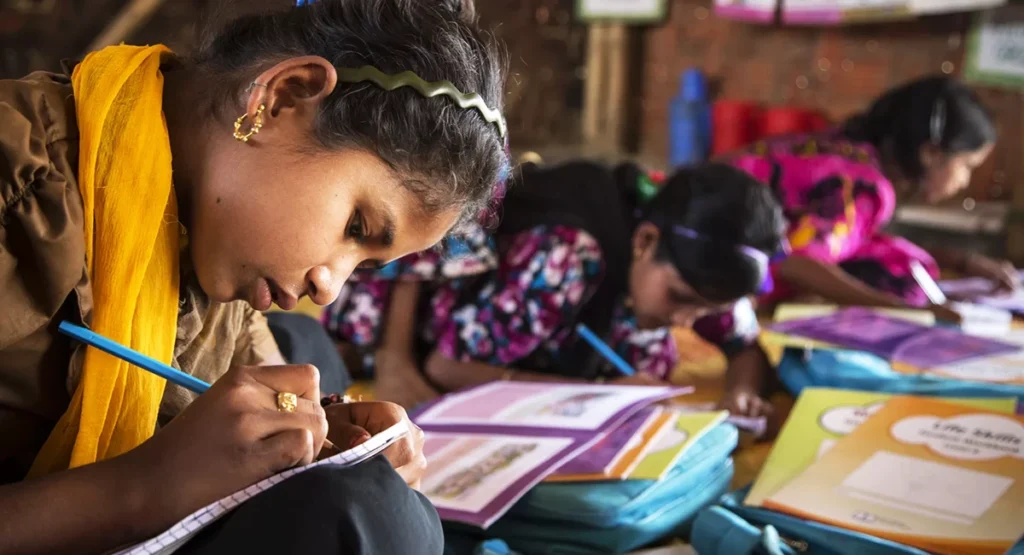
Across India, NGOs quietly form the backbone of this transformation. They:
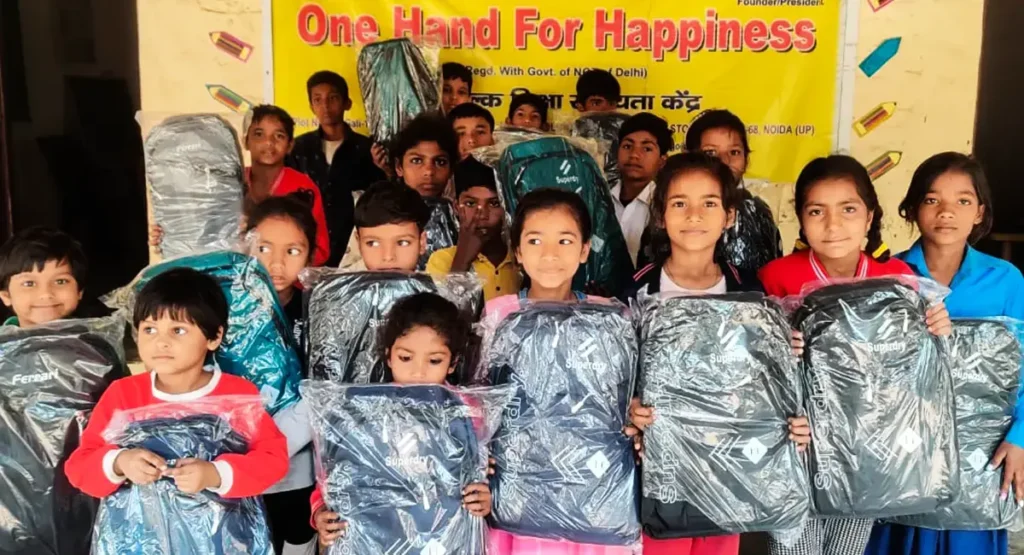
One initiative—subtly highlighted here—comes from One Hand for Happiness programs, which support child education and women empowerment in low-income communities. By combining mid-day meals with parent workshops and basic literacy for mothers, they create environments where both moms and children feel valued.
These programs show that change doesn’t always require massive institutions; sometimes, it begins with a single uniform, a single meal, or a single empowered mother.
These numbers highlight that investment in women and children is not charity—it is strategy.
Community is the glue that holds these initiatives together. When women gather to discuss their children’s progress, share recipes for affordable nutrition, or learn tailoring side by side, they create a culture of education.
This is particularly vital in slum communities, where isolation and daily struggles often breed hopelessness. A single child excelling in school can inspire dozens of others in the neighborhood. A mother gaining financial stability can influence her peers to follow suit.
Of course, the road is not without hurdles. Parent engagement programs face:
Yet, NGOs and community volunteers persist, using trust-building and consistent outreach to dismantle these barriers.
To truly scale this impact, several steps are essential:
When education is treated as a shared responsibility between NGOs, parents, and communities, the transformation becomes self-sustaining.
Education for slum kids is not just about classrooms—it is about the ecosystem that surrounds them. Nutrition fuels learning, women empowerment stabilizes families, and parent involvement sustains progress. Together, they create a cycle where children not only survive poverty but begin to thrive beyond it.
The role of NGOs—whether as providers of uniforms, hot meals, or skills for mothers—is crucial in bridging the gap. Through warm, community-driven initiatives, every child in Noida and beyond can hold a book, wear a uniform with pride, and dream bigger than their circumstances.
In the end, empowering moms is about more than mothers alone—it is about empowering generations. It is about planting seeds of change in communities where hope once seemed distant, and watching those seeds grow into a forest of opportunity.

Leave A Comment