
Across marginalized communities, children struggle not just with poverty but with limited access to the very tools that enable learning. Many attend school without pens, notebooks, uniforms, or supportive environments. This gap in basic resources compounds into broader disparities in attendance, performance, and future opportunity. However, providing free school supplies—supported by meals, uniforms, books, and women’s skill-based empowerment initiatives—can begin to dismantle those barriers.
This blog explores the transformative power of school supplies donation in promoting education equity, the resulting emotional and academic uplift for underprivileged students, and the broader impact when combined with nutrition and women’s empowerment efforts. Drawing on real program data, research findings, and empathetic storytelling, we show how simple interventions can catalyze meaningful change—highlighting how grassroots initiatives and partners like One Hand for Happiness help connect these dots.
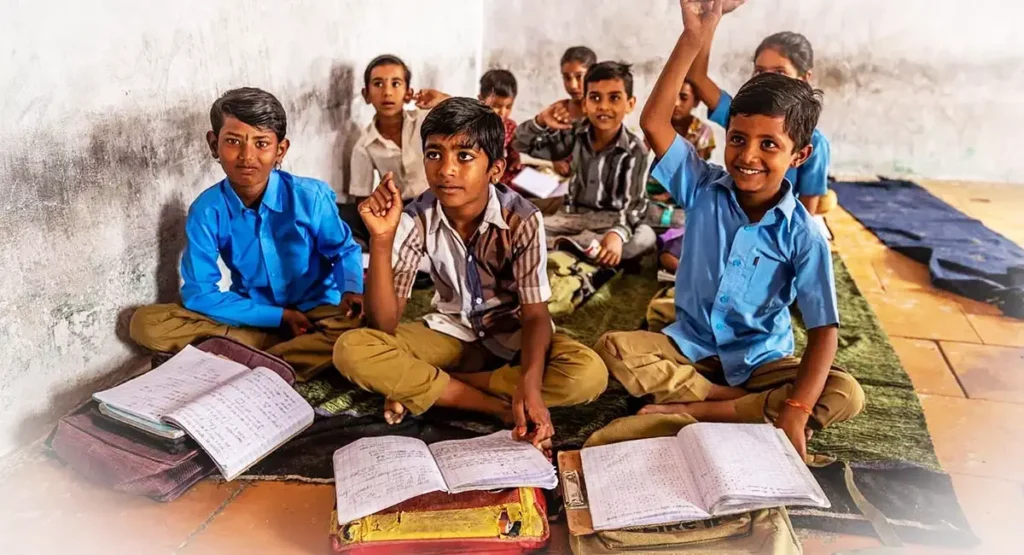
Enrollment alone does not guarantee learning. Even when children are in class, lacking the basic tools for education limits their ability to participate and progress. Many underprivileged students rely on borrowed or inadequate supplies—or none at all. This infrastructure gap suppresses confidence and reinforces the perception that learning is beyond their reach.
Studies from institutions like UNESCO and Brookings have demonstrated that students with personal access to stationery, uniforms, and textbooks consistently perform better academically and display higher engagement. This underscores how closing the education gap begins with ensuring students have the resources needed to learn in dignity.
School supplies are more than functional items—they are symbols of inclusion. A child who arrives ready to learn with their own notebook and pencil feels belonging in the classroom. That psychological comfort often translates into improved participation—children ask questions, complete assignments, and dare to express themselves on paper for the first time.
Quantitative studies show that when programs distribute comprehensive school kits, test scores rise, retention rates improve, and dropout likelihood declines. In one district, supply provision boosted school completion rates by nearly 20 percent within a single academic year. The impact springs from more than content delivery—it is due to emotional empowerment and pride.
A hungry child cannot learn—even if they have perfect supplies. Nutritional support, especially mid-day meals, provides the energy and attention span required for academic success. Extensive research confirms that schools offering meals show dramatic increases in attendance, especially among girls, while decreasing absenteeism due to fatigue or illness.
When meal programs operate alongside resource provision, children arrive clothed, fed, and equipped to absorb lessons. This combined support—meals plus materials—creates a reinforced ecosystem that powers both school wellness and learning equality.
Children’s success often hinges on the economic and emotional environment at home. Empowering women through skill-based training—tailoring, food processing, craft or basic vocational opportunities—leads to sustainable income and boosts household resilience.
Programs that link vocational training to children’s school support create a virtuous cycle: while women earn, they can afford uniforms, transport, and fees associated with education. When women earn regularly, school attendance improves, and fewer children pull out of school to support family income.
Delivering skill-based empowerment in tandem with educational support transforms not only a child’s day in class but a family’s financial trajectory and the entire community’s future.
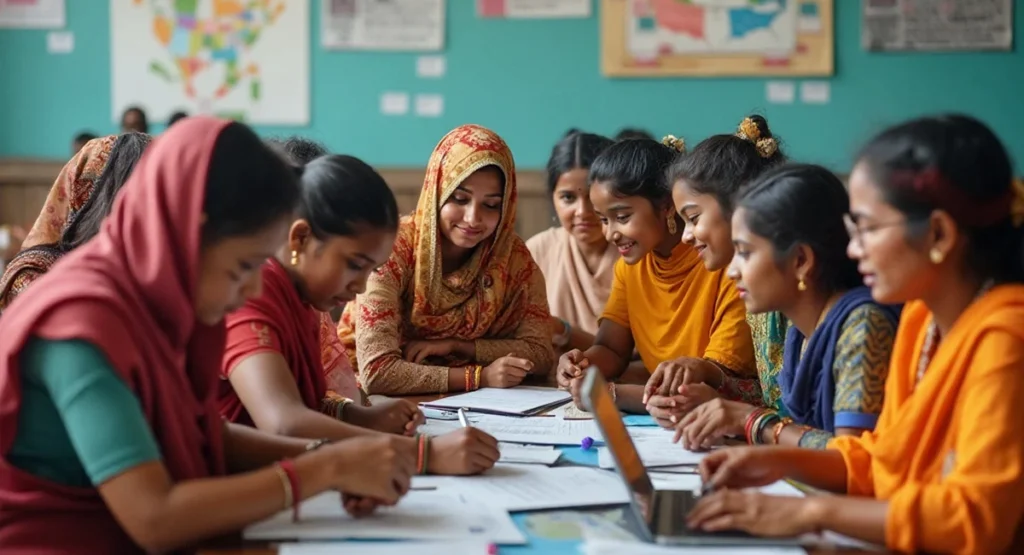
In a low-income rural region, schools received complete academic kits—uniforms, stationery sets, backpacks, and books. Attendance increased by nearly 25% over the year. Teachers reported stronger class leadership emerging from previously quiet children. Uniform standardization also reduced teasing and improved peer dynamics.
A multi-faceted initiative delivered lunch, school kits, and parenting workshops in urban slum schools. Within two semesters, retention increased by 30%, and aggregate test scores climbed across literacy and numeracy. Girls’ re-enrollment accelerated as parents saw tangible improvements.
Communities that tied supply distribution with women’s vocational training saw ripple benefits. Women trained to stitch uniforms and prepare educational kits then supported their local schools. Their micro-enterprise income allowed investment in childcare, nutrition, and school fees—that in turn improved student performance and reduced dropouts.
The most successful programs follow a few key design principles:
Programs with this strategic design consistently outperform ad-hoc distributions. When combined with local leadership and transparency, they generate trust, ownership, and long-term impact.
Research supports this: Women who receive vocational training invest up to 90% of their income in children’s nutrition and education; children in food-secure, resource-equipped schools perform up to 25% better in exams; and community-based programs involving both education and nutrition reduce dropout by up to 40 percent.
Efforts like the supply-and-meal combined models championed by local grassroots efforts and supported quietly by initiatives like One Hand for Happiness demonstrate the potential of integrated support. Children receive supplies and food daily, mothers gain skills and work, and communities begin to see education as achievable, not abstract.
This collective approach is rooted in care, equity, and sustainability—placing choice, dignity, and local agency at its center. It goes beyond charity—it builds educational inclusion with permanence.
Every pen, notebook, and uniform given ensures a child can show up, feel included, and dream bigger.
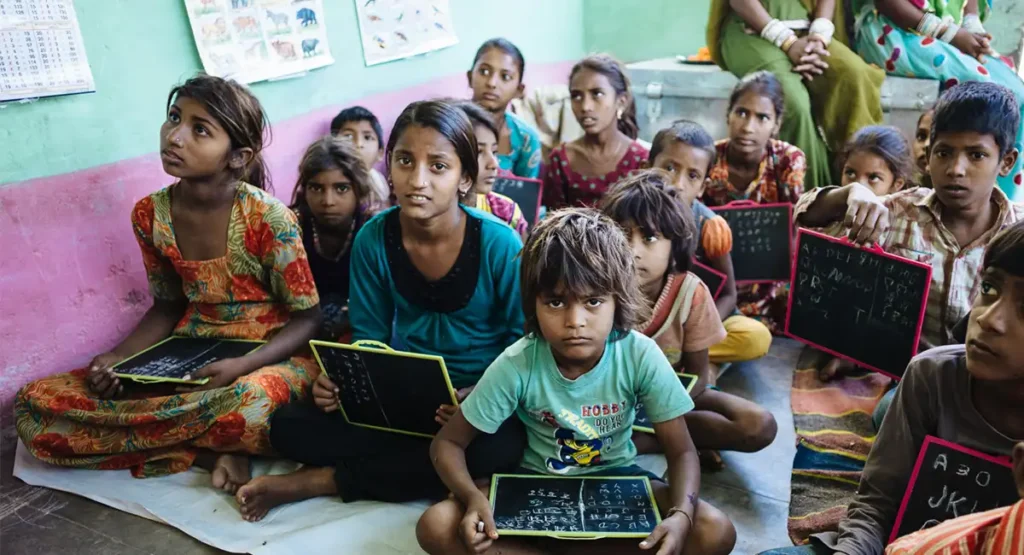
Closing the education gap requires more than infrastructure—it demands that every child, regardless of circumstances, has the tools to learn, the food to fuel their growing minds, and the emotional support to persist. School supplies bridge that gap. Nutrition reinforces it. And empowering women ensures those gains endure.
When communities unite around these simple pillars—stationery, meals, and livelihoods—the result is not just individual academic success, but sustainable, inclusive growth. That is the promise of educational inclusion and true equity—removing invisible barriers with tangible care, dignity, and collaboration.


Leave A Comment