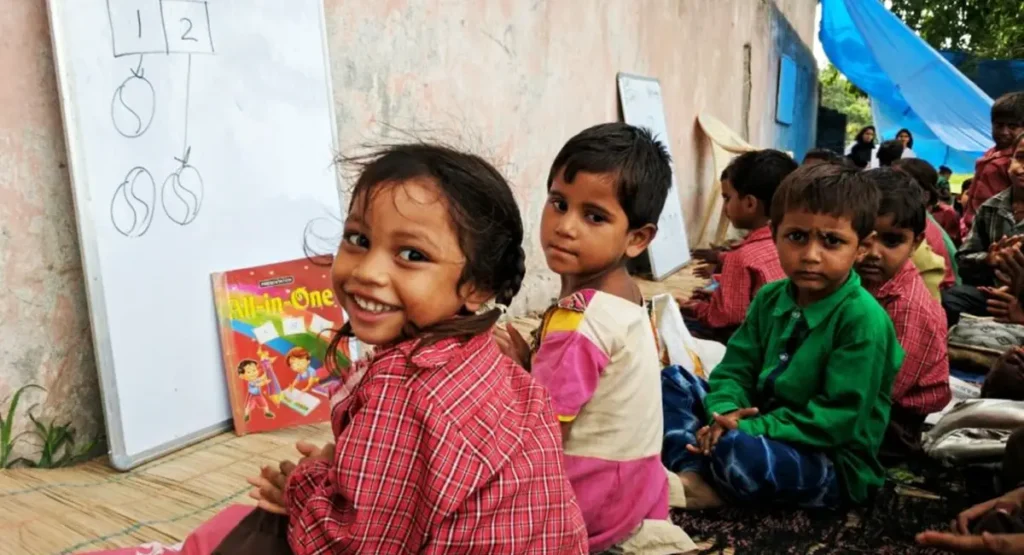
In the bustling corners of Noida and the countless informal settlements across India, education is often seen as a luxury rather than a right. For children of migrant workers, domestic helpers, and daily wage earners, access to school is only the first step—sustaining that access is the real challenge. Amidst these realities, a quiet revolution is taking place through parent-teacher workshops: spaces where understanding, empathy, and collaboration are rebuilding the foundation of education from the ground up.
These workshops, often facilitated by compassionate education NGOs, are not merely meetings—they are community classrooms where both parents and teachers learn the power of partnership. The goal is simple yet transformative: to build supportive ecosystems that nurture children’s learning, well-being, and dreams.
For decades, education programs for underprivileged communities have focused on infrastructure—schools, books, and uniforms. While these are essential, a critical factor has often been overlooked: the home environment.
According to UNICEF, children from marginalized backgrounds are 40% more likely to drop out of school if their parents lack engagement or understanding of the learning process. Many of these parents are illiterate themselves and feel disconnected from their child’s education. Parent-teacher workshops bridge this gap, helping parents understand that their role is not limited to sending a child to school—it extends to nurturing curiosity, discipline, and motivation.
In low-income settlements of Noida, workshops conducted by local education NGOs bring parents and teachers together for open dialogue. These sessions are not one-sided lectures but interactive discussions about nutrition, attendance, hygiene, emotional well-being, and simple learning techniques that can be practiced at home.
When parents learn how to encourage reading, ask about their child’s day, or praise small achievements, the ripple effects are profound. For many, it’s the first time they see themselves as educators too.
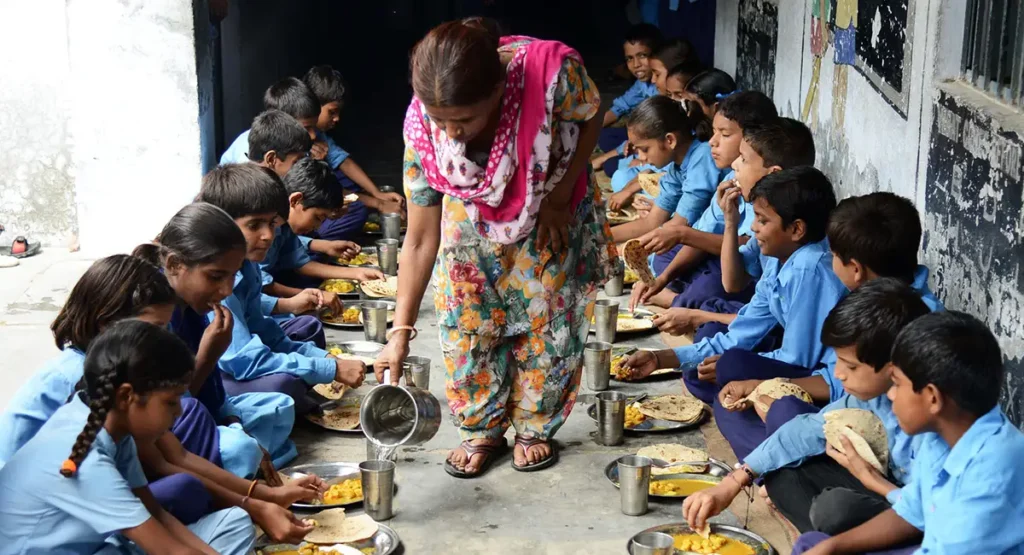
One of the most overlooked discussions in these workshops is the link between nutrition and learning outcomes. A child who arrives at school hungry cannot focus, participate, or retain information effectively. Research by the World Food Programme shows that nutritionally supported children perform 20–30% better in classroom activities and show higher attendance rates.
Many NGOs now integrate mid-day meals and nutritional guidance into their parent-teacher initiatives. Through these programs, parents are educated on the importance of balanced meals, hydration, and hygiene. Teachers are trained to identify signs of malnutrition and coordinate with welfare organizations to ensure children receive adequate support.
A teacher from a Noida-based learning center recalls,
“When we started talking about food in the workshops, parents began sending rotis and vegetables instead of just tea and biscuits. It may seem small, but over months, we saw children becoming more energetic and engaged in class.”
This interlinking of education and nutrition is crucial because hunger is often the invisible barrier keeping children from realizing their potential.
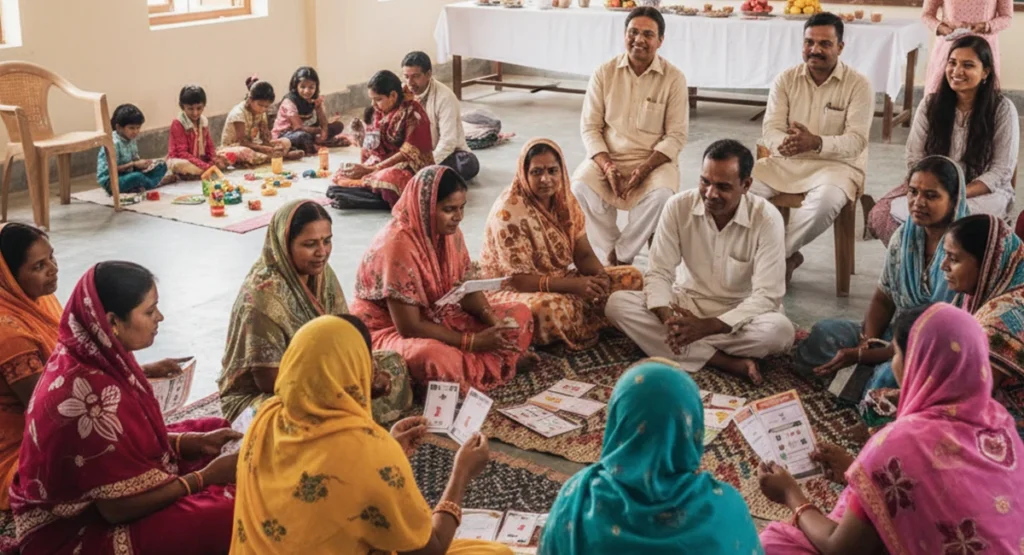
In the narrow lanes of slum communities, mothers hold untapped potential. They are often the first teachers—imparting values, stories, and resilience. Parent-teacher workshops in these areas are now designed to empower women as co-educators, giving them the tools and confidence to participate in their child’s learning journey.
These sessions often begin with simple literacy and numeracy lessons for mothers, followed by discussions on how to help children revise lessons, maintain hygiene, and develop healthy routines. Gradually, many women take on leadership roles, helping other mothers join school meetings or manage small learning circles within their neighborhoods.
This empowerment has a cascading effect. A study by UNESCO notes that when mothers are educated, the likelihood of their children attending school doubles. It also opens pathways for women’s self-growth—some go on to become community educators or part-time teaching assistants, gaining both income and dignity.
Organizations like One Hand for Happiness—an emerging education NGO in Noida—embody this spirit of inclusion. Their model involves training mothers and community women to facilitate local learning sessions and encourage consistent parent-teacher collaboration. By integrating empowerment with education, they’re transforming not just classrooms, but entire communities.
In cities like Noida, a large segment of underprivileged children comes from migrant families who frequently relocate for work. This disrupts schooling and often leads to high dropout rates. Parents juggling multiple jobs rarely have time—or energy—to engage with teachers.
Parent-teacher workshops designed for such communities focus on flexibility and accessibility. Instead of formal school settings, they’re often conducted in community halls, open spaces, or even roadside corners. The idea is to make learning conversations a part of daily life rather than a formal obligation.
During these workshops, discussions go beyond academics. They address:
By creating awareness in a safe, judgment-free space, parents start viewing schools not as distant institutions, but as allies in their children’s growth.
In a small settlement near Sector 62, Noida, a mother named Rekha once believed her daughter’s education was pointless. “Girls don’t need much study,” she would say. But after attending a parent-teacher workshop organized by a local kids welfare NGO, something shifted.
For the first time, she heard a teacher explain how education gives girls financial independence and decision-making power. The workshop also included a short session on nutrition and hygiene—topics Rekha had never discussed before. Inspired, she began helping her daughter revise alphabets each evening and encouraged her to attend classes daily.
A year later, her daughter not only topped her grade but now dreams of becoming a nurse. Rekha herself began attending adult literacy sessions held twice a week. What started as a simple meeting became a generational transformation.
Stories like Rekha’s are not isolated—they are happening in thousands of homes across India, quietly redefining what education means for families living on the margins.
Parent-teacher workshops are effective because they reinforce one fundamental truth: education is a shared responsibility. When teachers, parents, and NGOs collaborate, learning transcends classroom walls.
In these community-driven ecosystems:
This holistic model ensures that a child’s education is supported from every angle—mental, emotional, and physical.
An education NGO in Noida explains that even providing basic hygiene awareness and access to clean uniforms can boost attendance by up to 30%, as children feel more confident about coming to school.
When such interventions are combined with active parent involvement, the results compound. Dropout rates fall, literacy rises, and a generation once trapped in survival mode begins to dream again.
Progressive child education NGOs in India are now expanding the scope of parent-teacher workshops to include financial literacy and skill training for women. The logic is simple—when a mother earns, her child learns.
Many NGOs facilitate micro-workshops that teach tailoring, stitching, food processing, or small-scale entrepreneurship. Women who were once hesitant to even speak in public now manage small savings groups, make household decisions, and proudly fund their children’s education.
This integration of women empowerment with education not only uplifts families economically but also breaks cycles of dependency and gender bias. It creates confident, informed mothers who view education as a tool of liberation, not luxury.
At the heart of these transformative efforts are NGOs that operate with empathy and long-term vision. They don’t just build schools; they build ecosystems of care. Through consistent parent-teacher engagement, nutritional support, and livelihood training, these organizations ensure that learning becomes sustainable and self-reinforcing.
A typical education NGO in Noida might:
These initiatives not only improve educational outcomes but also restore dignity and agency to parents who once felt powerless in the face of poverty.
The subtle yet powerful impact of efforts like One Hand for Happiness learning initiatives lies in this holistic approach—bringing together education, nutrition, and empowerment into one compassionate framework.
The success of parent-teacher workshops highlights a crucial lesson: sustainable education requires collective ownership. Governments can build schools and NGOs can provide support, but it is only when parents, educators, and communities unite that real transformation happens.
In the coming years, scaling these workshops will be key. Imagine a network of education NGOs in India coordinating with local authorities to hold monthly parent-teacher empowerment sessions in every underserved community. Imagine thousands of Rekhas realizing that education is not a burden—it’s a bridge.
When parents see themselves as partners, schools become more than institutions—they become centers of hope. And when hope is nurtured consistently, change is inevitable.
Parent-teacher workshops are more than meetings—they are movements of empathy. They transform disconnected systems into supportive ecosystems for learning, where every child is seen, heard, and nurtured.
By addressing the intertwined challenges of education, nutrition, and empowerment, these workshops are creating stronger families, smarter children, and more resilient communities.
As initiatives like One Hand for Happiness and other compassionate NGOs continue to expand this model, the vision of equitable education for every child in India comes closer to reality—one workshop, one conversation, and one empowered parent at a time.

Leave A Comment