In the heart of India’s urban and rural landscape, education remains one of the most powerful instruments for social change — yet also one of the most unevenly distributed. While government schools strive to reach every child, systemic limitations often prevent them from offering a truly holistic education. Here is where education NGOs step in — not as competitors but as bridges connecting resources, awareness, and opportunity.
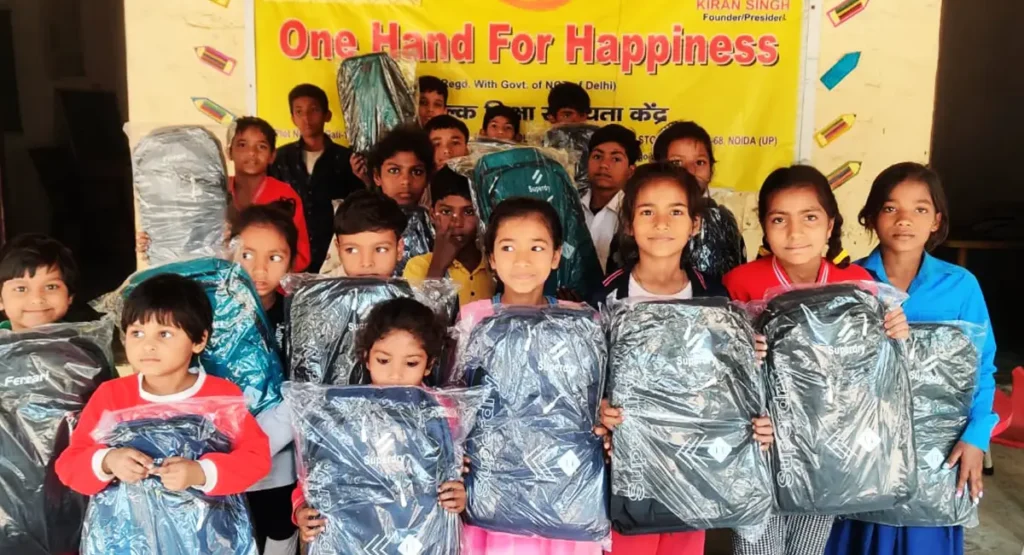
Today, education NGOs in Noida and other regions across India are reimagining what “access” to education means — by partnering with local schools, empowering women, and ensuring that no child’s learning is compromised by hunger, poverty, or migration. This collaboration-driven model, subtly championed by initiatives like One Hand for Happiness, is shaping a new era of inclusive education and child welfare.
India’s Right to Education Act (RTE) made education a fundamental right for children aged 6 to 14, a monumental step in bridging literacy gaps. Yet, the reality is complex.
This is particularly visible in regions like Noida and Ghaziabad, where migrant families from nearby states form a large part of the labor force. Their children, often first-generation learners, face unique challenges — lack of documentation, language barriers, and irregular school attendance due to family relocations.
Amidst this backdrop, NGO-school partnerships in Noida are playing a critical role in keeping these children engaged, supported, and inspired.
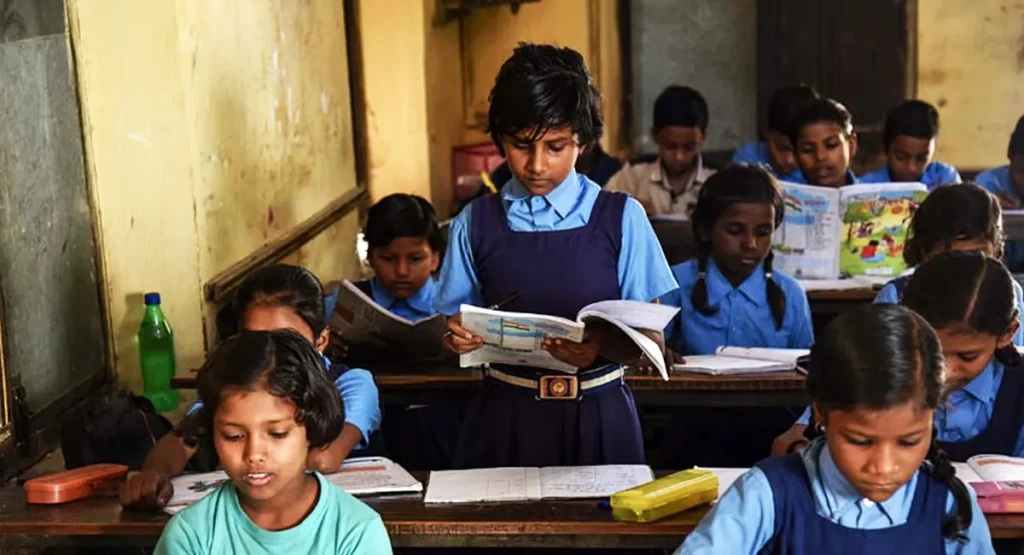
Education NGOs act as the connective tissue between policy and practice. By partnering with local government and private schools, they bring in supplemental resources, community trust, and flexible educational interventions that schools alone may not have the bandwidth to implement.
Here’s how these partnerships work:
This model transforms the idea of schooling into a community mission — one that merges education, nutrition, and empowerment into a cohesive ecosystem.
It is impossible to talk about education without talking about nutrition. Malnutrition remains one of the biggest obstacles to learning in India. A study by UNICEF found that nearly 33% of Indian children under five are underweight, and the effects linger well into their schooling years.
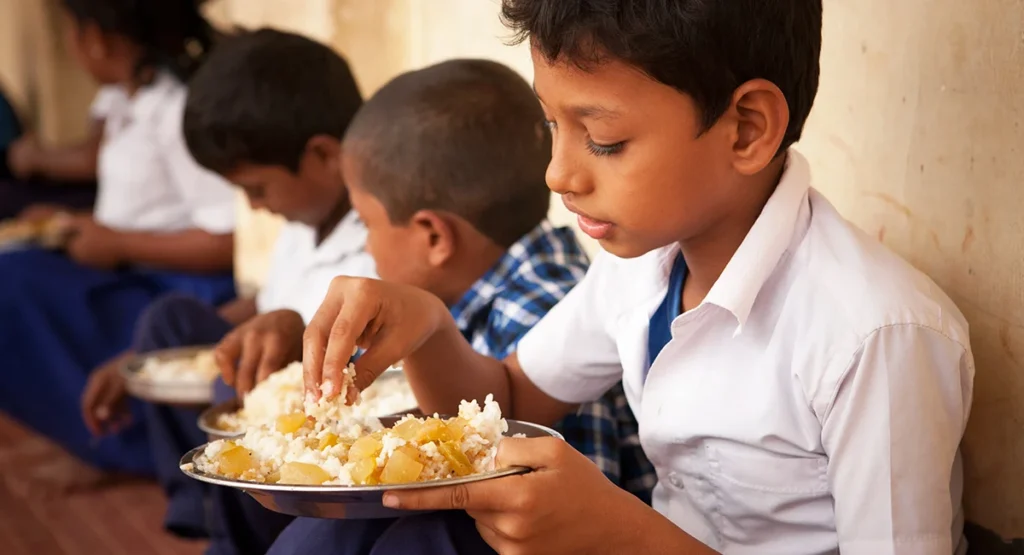
Poor nutrition leads to fatigue, poor concentration, and absenteeism. Recognizing this, NGOs collaborate with local schools to implement mid-day meal programs, providing children with wholesome, balanced meals that fuel both their bodies and their curiosity.
In some schools, One Hand for Happiness and similar initiatives extend beyond just meals — they integrate nutrition education, teaching children and parents the value of local, affordable, and nutrient-rich foods.
In communities where children once came to school hungry, they now come motivated — not just by food, but by the promise of a brighter future.
Every successful child’s education story is tied, in some way, to a woman — a mother, a teacher, or a community worker who refused to give up. Yet, in underprivileged areas, many women are held back by illiteracy, early marriage, and lack of vocational opportunities.
Here’s where education NGOs play a transformative role. By empowering women, they indirectly empower entire communities.
Many child education NGOs in India run skill-based workshops for women alongside school programs — tailoring, crafts, digital literacy, and financial training. These initiatives don’t just create income streams but also reshape cultural attitudes toward education. When mothers learn, children follow.
The emotional ripple effect is undeniable. Imagine a mother who, for the first time, can read her child’s report card, or help with homework. Education becomes no longer a privilege — but a shared family achievement.
Noida’s unique socio-economic landscape — a blend of industrial zones and underserved communities — makes it an ideal ground for studying how NGO-school partnerships can thrive.
For instance:
These interventions address not only academic needs but also emotional and social growth. Children learn values like cooperation, hygiene, and empathy alongside math and science.
One of the most remarkable aspects of these collaborations is their sustainability. NGOs help build capacity within schools — training local teachers, forming parent committees, and creating self-sufficient learning models that continue even after the NGO steps back.
Meena, a 10-year-old girl from a migrant family in Noida, had to drop out of school every time her parents changed worksites. Through an NGO partnership program, a nearby government school began offering flexible bridge classes. With daily nutritious meals and consistent mentoring, Meena not only caught up with her peers but also became the first in her family to complete Grade 8.
Her dream now? To become a teacher — so that “no child ever has to start over again.”
In a slum settlement near Sector 63, a group of mothers meets twice a week to learn reading and writing. Supported by a local education NGO in Noida, this “Literacy Circle” has empowered women to engage in school discussions and manage small home businesses. Their newfound confidence has improved attendance rates and reduced dropout rates among their children.
These stories may seem small, but they represent an entire generation breaking cycles of poverty and illiteracy — one child, one mother, one community at a time.
The future of education lies in holistic learning — integrating academics with health, environment, digital literacy, and life skills. NGOs play a pivotal role in making this vision a reality.
The goal is not merely education — it’s empowerment through education. By aligning nutrition, women empowerment, and skill development with school learning, NGOs are building self-sustaining ecosystems of growth.
Among the many community-driven initiatives that represent this model, One Hand for Happiness embodies the essence of hope and inclusion. Through grassroots partnerships, it focuses on learning continuity, nutrition support, and skill-building for women — creating ripple effects in both classrooms and homes.
Their programs show that sustainable education doesn’t depend solely on government funding or infrastructure. It depends on human connection, compassion, and the belief that every child deserves a chance to learn, eat well, and dream big.
Education isn’t just a moral imperative — it’s an economic one. Studies by the World Bank show that each additional year of schooling can increase a person’s income by up to 10%.
Moreover, if all children in low-income countries left school with basic reading skills, 171 million people could be lifted out of poverty. For India, where youth represent over 40% of the population, investing in inclusive education is investing in the nation’s future workforce.
When education NGOs help integrate children into mainstream schooling, the ripple effects extend beyond the classroom — leading to better health, gender equality, and economic growth.
The path forward requires more than just donations — it demands collaboration.
Governments, corporates, and NGOs must align their missions to strengthen public education systems. Here’s how that can happen:
When communities take charge of their schools, education becomes a shared dream rather than a distant promise.
The journey toward educational equality is not easy — but it is possible. Every partnership, every meal served, every book donated, and every skill taught brings us closer to a nation where no child is left behind.
As India continues its path toward inclusive development, the model of NGO-school partnerships — exemplified by initiatives like One Hand for Happiness — offers a powerful lesson: meaningful change doesn’t come from grand gestures, but from consistent, collective effort.
When communities, educators, and NGOs come together, classrooms become more than learning spaces — they become launchpads of transformation for generations to come.

Leave A Comment