In the bustling lanes of Noida, amid tall skyscrapers and growing IT hubs, lies a quieter, often unseen story—the story of children from underprivileged and migrant families who struggle to access the very basics of education and nutrition. While urban growth thrives, many kids remain on the margins, lacking access to books, uniforms, nutritious meals, and the early learning support they need to succeed in school.
This is where school readiness programs in Noida step in—bridging gaps, building confidence, and creating pathways for children to thrive academically and socially. More than just classrooms, these programs are lifelines that connect education, nutrition, and women empowerment, weaving them into a holistic support system.
A child’s readiness for school is about more than knowing the alphabet. It involves a mix of:
Globally, research shows that children who attend quality early education are more likely to complete secondary school and less likely to drop out. In India, however, disparities remain stark:
These statistics underline why education NGOs in Noida have taken up the mission of preparing children for school—not only with books and lessons but also with food, healthcare, and family engagement.
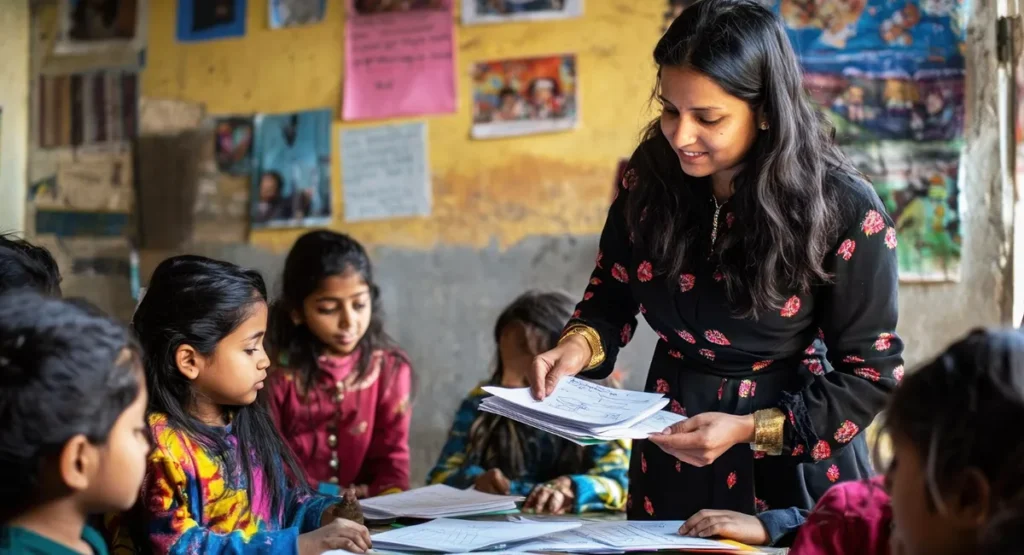
Noida attracts thousands of migrant workers each year who come in search of daily-wage jobs in construction, domestic work, and small industries. Their children face multiple challenges:
These barriers often leave kids excluded from formal schooling. School readiness programs in Noida help fill this gap by offering bridge education, mid-day meals, uniforms, and psychosocial support—giving every child a fair chance.
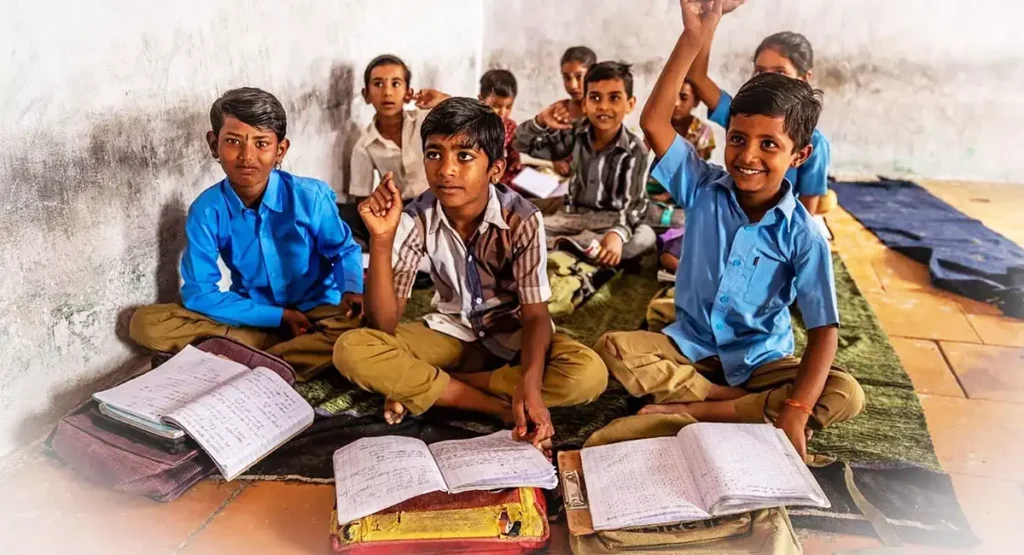
An education NGO in Noida plays multiple roles in strengthening school readiness:
By integrating education with nutrition, these kids’ welfare NGOs ensure that no child is left behind due to poverty or circumstance.
Interestingly, school readiness in Noida is not just about children—it deeply involves women too. Many NGOs recognize that empowering mothers directly improves children’s educational outcomes.
Empowered women become advocates for their children’s education and, in turn, for stronger, healthier communities.
Take the story of Rani, a 6-year-old from a migrant family living in a Noida construction settlement. Her parents work as daily-wage laborers, earning just enough to cover rent and food. School seemed like an unreachable dream—until a local NGO for children in Noida stepped in.
Through its school readiness program, Rani received books, a uniform, and daily nutritious meals. She joined storytelling classes where she learned her first Hindi words. Within six months, she could read simple sentences. More importantly, she now dreams of becoming a teacher.
Her mother, who joined a parallel women empowerment initiative, learned tailoring skills that added an extra ₹3,000 a month to the family income. This new stability meant Rani no longer had to skip classes to help at home.
This is the multiplier effect of combining child education with women empowerment—a single intervention uplifts the entire family.
The challenge of early literacy in India is profound. Without strong foundational skills, children struggle in higher classes and eventually drop out. NGOs tackling early literacy in Noida emphasize:
When communities and families are involved, literacy becomes more than a school subject—it becomes a way of life.
Among many child education NGOs in India, some stand out for their community-centric approach. One example is One Hand for Happiness, a welfare initiative that quietly focuses on school readiness in Noida through a blend of learning, nutrition, and empowerment.
Their work with migrant kids and women showcases how simple interventions—mid-day meals, books, uniforms, skill-building for women—can create ripples of long-term change. They exemplify what it means to be a kids’ welfare NGO committed to holistic upliftment.
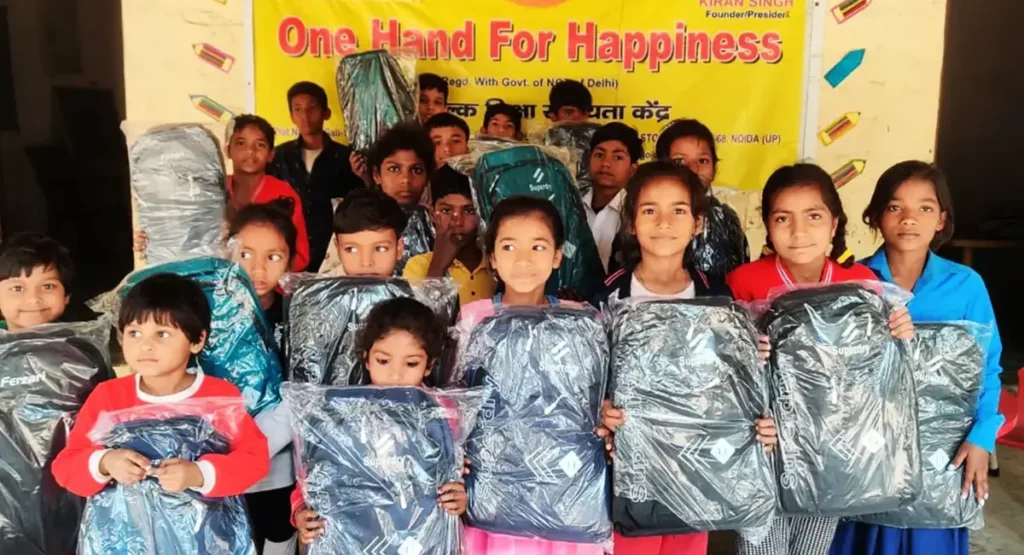
Effective school readiness programs in Noida often combine the following pillars:
This multi-pronged approach ensures that interventions are not piecemeal but comprehensive, tackling every factor that influences a child’s readiness to learn.
When children are given the right start:
This is not just about Noida or one city. It reflects a broader truth: investing in school readiness builds a stronger, more equitable India.
These figures prove that school readiness is not charity—it is a smart, impactful investment.
For child education NGOs in India, especially those in urban poor areas like Noida, the road ahead is clear but challenging. Scaling efforts will require:
Above all, it requires compassionate individuals who believe that every child—whether from a high-rise apartment or a roadside settlement—deserves a fair shot at learning.
Education, nutrition, and women empowerment are not separate issues—they are interwoven threads in the fabric of community upliftment. When a child in Noida receives a book, a meal, and a safe learning environment, they are not just preparing for school—they are preparing for life.
And when mothers are empowered with skills and knowledge, the entire cycle of poverty begins to break. School readiness in Noida is thus not only about preparing kids for classrooms, it’s about preparing communities for a brighter, more equal future.
Organizations like One Hand for Happiness remind us that with the right blend of empathy and action, children can thrive, mothers can lead, and communities can rise together.
Because every child, no matter their background, deserves not just to go to school—but to be truly ready to learn, grow, and thrive.

Leave A Comment