The bustling National Capital Region (NCR) stands as a symbol of India’s rapid urban growth. Glittering skyscrapers, metro networks, and digital businesses define its skyline. Yet, tucked away behind construction sites, under flyovers, and along urban slums, lives a population that remains unseen—migrant families struggling to secure education, nutrition, and dignity for their children.
Migrant workers move to NCR in search of livelihood, but their children often pay the price—cut off from stable schooling, vulnerable to malnutrition, and deprived of opportunities that digital literacy could unlock. For these kids, education is not just about books; it is about survival, confidence, and breaking cycles of poverty.
This blog explores the intersection of education, nutrition, and women empowerment in migrant communities, showing how holistic interventions—from mid-day meals to skill-building programs for women—can nurture entire generations. It highlights the role of digital education in slums in India, the work of child education NGOs in Noida, and community-driven solutions such as One Hand for Happiness learning programs that bring hope where it is needed most.
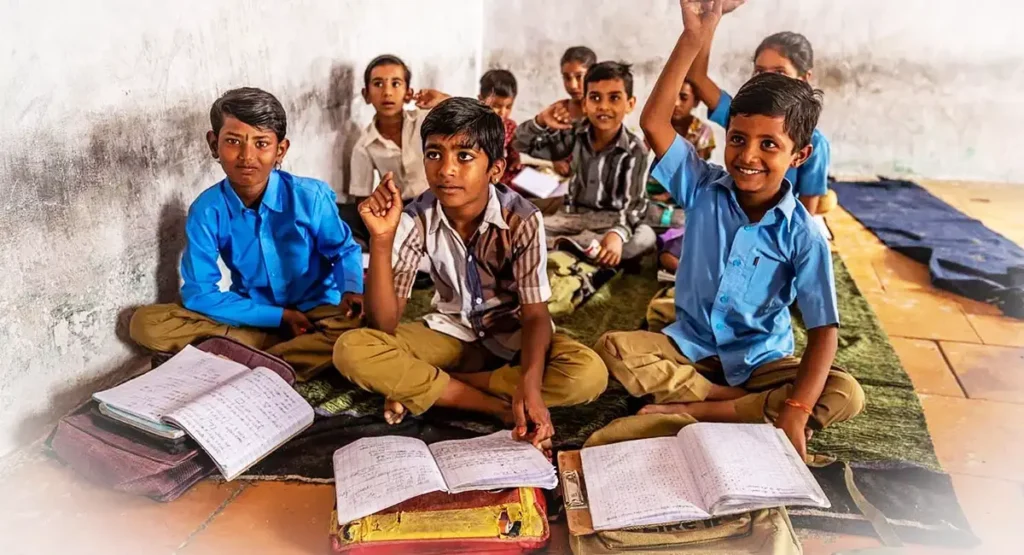
According to a UNESCO report, nearly 47% of children from migrant families in India drop out of school before completing primary education. In NCR, the reasons are manifold:
The digital divide worsens these inequities. While middle-class children in Noida attend online classes, migrant kids in nearby slums often don’t even have access to electricity, let alone smartphones or laptops.
Without education, these children risk being trapped in a cycle of poverty, child labor, and social exclusion.
Studies by the Indian Journal of Public Health show that malnutrition remains one of the biggest obstacles to learning. A hungry child cannot focus, retain knowledge, or attend school regularly.
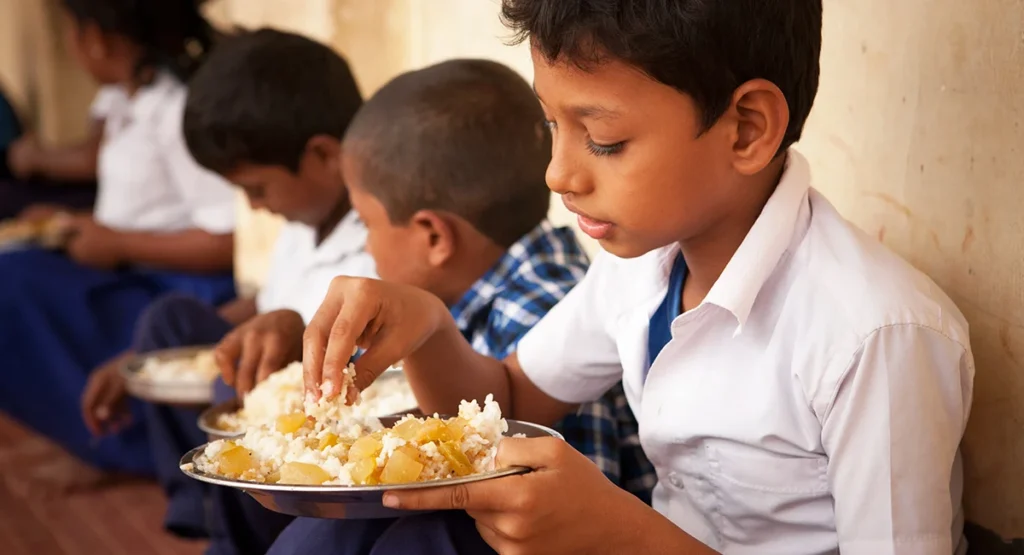
Nutrition and education are two sides of the same coin. A plate of food ensures a child shows up at school; schooling ensures the child builds a future beyond hunger.
Many kids welfare NGOs in NCR now integrate mid-day meal programs with learning initiatives, ensuring that a full stomach goes hand-in-hand with a fuller mind.
The pandemic underscored the urgency of digital education in slums in India. When schools shut down, underprivileged children were excluded overnight from learning because of lack of devices, internet access, and digital skills.
Digital literacy today is not optional—it is foundational. For migrant children, learning to use tablets, computers, or even mobile apps can:
In Noida’s slums, education NGOs have introduced low-cost digital classrooms where 10–15 children gather around a shared device. Such initiatives may seem small, but for a child who has never touched a computer before, logging into a learning app is life-changing.
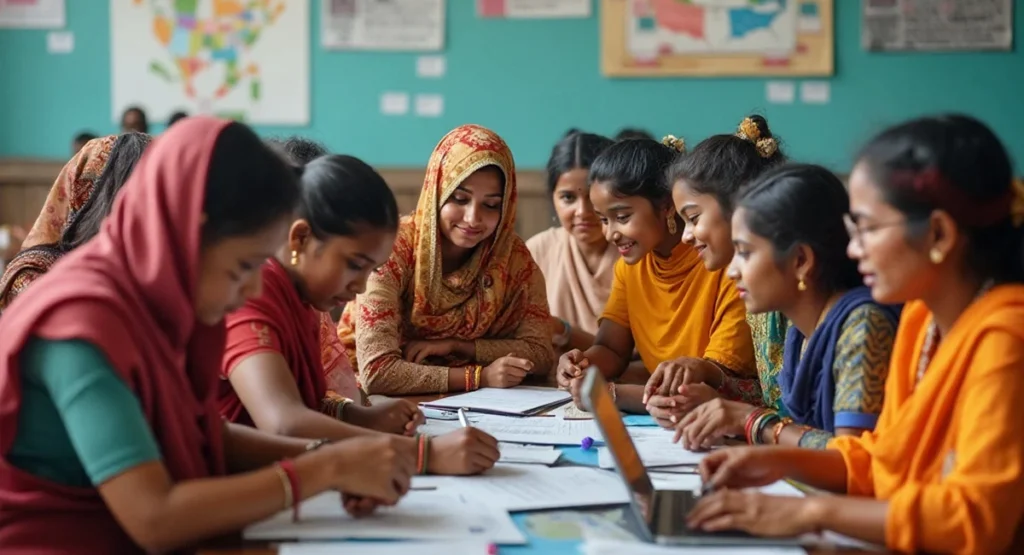
Behind every child who goes to school is a mother who believes education is worth fighting for. In migrant communities, women often shoulder dual responsibilities—working as daily-wage earners while managing households in fragile conditions.
Empowering women through skill-based training—like tailoring, digital skills, or micro-enterprises—has a cascading impact:
For example, in one NCR slum cluster, a women’s group trained in tailoring pooled resources to buy shared smartphones. They used these devices not only for small online businesses but also to download educational materials for their children. When women rise, children climb with them.
Rani, a migrant mother from Bihar, lives with her two children in a makeshift home near a construction site in Noida. Her 10-year-old son, Aarav, had never attended school consistently due to frequent relocation. During the pandemic, he lost touch with learning entirely.
One day, an NGO for children in Noida set up a community learning camp nearby. Aarav was introduced to digital tablets for the first time. He began learning alphabets through interactive games, while his mother Rani attended a sewing-skills workshop at the same center.
The NGO also provided nutritious meals, uniforms, and basic school kits. Within months, Aarav not only rejoined formal schooling but also developed a knack for digital drawing apps. Rani, now earning from stitching clothes, proudly invests in Aarav’s books.
Their story reflects how education, nutrition, and women empowerment intersect to create lasting transformation.
Research from UNICEF and UNESCO consistently shows that multi-pronged interventions are most effective in tackling educational inequality:
Clearly, it is not one initiative but a synergy of support systems that lifts migrant communities.
Among the growing ecosystem of support, One Hand for Happiness learning efforts stand out as examples of compassionate, community-driven change. By focusing on underprivileged children education in NCR, these initiatives create spaces where migrant kids feel safe, fed, and inspired.
Their approach reflects a deep understanding that learning is not just about academics—it is about dignity, self-worth, and opportunity. By blending books, uniforms, nutritious meals, and skill development for women, they plant seeds of long-term empowerment.
This model embodies what it means for a child education NGO in India to work hand-in-hand with communities rather than just for them.
Despite progress, challenges persist in ensuring school access for migrant kids:
These hurdles remind us that solutions must remain flexible, inclusive, and adaptive.
To truly bridge gaps, a holistic framework is essential:
Together, these steps nurture not just individual children, but entire communities.
When a single child in a migrant family becomes digitally literate, they become a bridge—helping siblings with homework, guiding parents with online services, and eventually aspiring for careers once thought impossible.
When a mother learns a skill and earns an income, she doesn’t just change her household economics; she reshapes the aspirations of her daughters and sons.
This ripple effect, multiplied across NCR’s thousands of migrant families, has the power to reshape the socio-economic fabric of the region.
Instilling digital literacy in migrant-kid communities in NCR is not merely an educational mission—it is an act of justice. It is about giving children who build our cities’ skylines through their parents’ labor a fair chance at shaping their own futures.
The intersection of education, nutrition, and women empowerment proves that true progress lies in holistic care. By providing meals, books, uniforms, digital learning, and women’s skill-building, kids welfare NGOs and child education NGOs in India are building futures brick by brick.
Initiatives like One Hand for Happiness learning programs remind us that when communities and compassionate action come together, every child can rise beyond circumstances.
Because in every slum classroom, behind every tablet screen, and under every shared roof of learning, lies a dream too powerful to ignore—the dream of equality, dignity, and hope.

Leave A Comment