
In many parts of the world, classrooms are not empty because children lack curiosity — they are empty because children lack food. For underprivileged families, the choice often comes down to survival: Should my child help earn or should they learn? The answer, heartbreakingly, is often the former. But when a plate of food is guaranteed at school, the equation changes. Suddenly, the classroom becomes not just a place for learning but also a place for nourishment.
This simple yet profound connection — between feeding and schooling — has been the turning point in education access for millions of children. From rural villages to crowded slums, mid-day meal programs and community-driven NGOs are proving that a full stomach is the first step toward a full future.
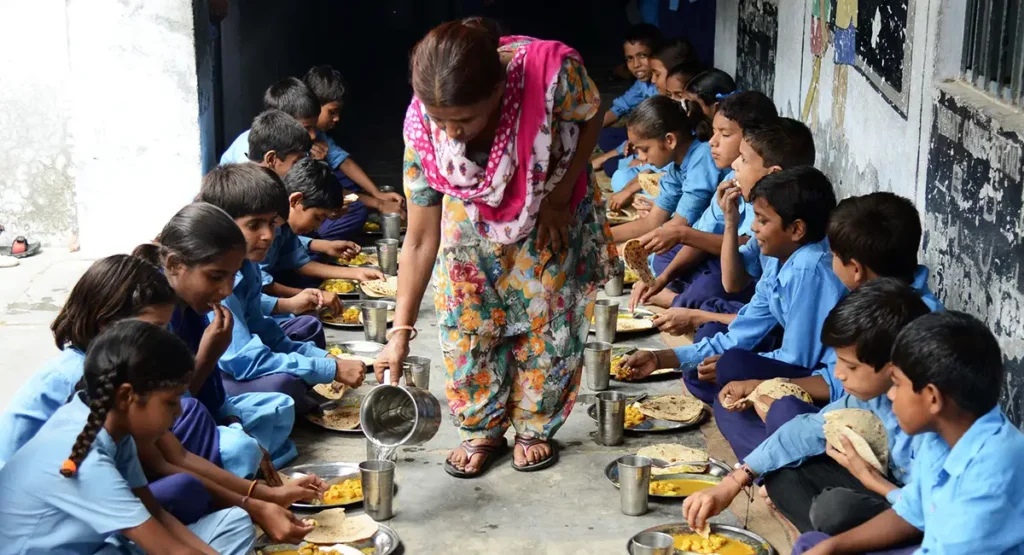
Global studies reveal a staggering truth: hunger is one of the biggest reasons for school dropouts among underprivileged children. The UNESCO Global Education Monitoring Report found that children facing malnutrition are 20% less likely to enroll and twice as likely to drop out compared to their peers with secure food access.
For families living on daily wages, sending a child to school without the promise of food feels like a luxury they cannot afford. But when school meal programs are introduced, the story shifts. Children not only come to class; they stay.

India’s own mid-day meals initiative demonstrated that daily school meals significantly improved student enrollment and led to an average 11% attendance boost across primary schools. Teachers also noticed better classroom focus, as children were not distracted by hunger pangs.
This isn’t just about calories — it’s about creating the mental and physical environment where learning can truly happen.
A guaranteed meal transforms schools into safe, attractive spaces for children. Parents who once hesitated to send their daughters, fearing wasted time, began to see value in both education and nourishment. This dual benefit particularly encouraged female enrollment, narrowing the gender gap in schooling.
Every child who eats in school is one less child on the street begging, working, or being exploited. By connecting food and education, communities begin to break long-standing cycles of poverty. Education becomes not only about literacy but about dignity and opportunity.
The link between food and education is not just about children; it has a profound impact on women too.
One Hand for Happiness NGO and similar community initiatives have shown that empowering women through skill-based training, while also ensuring children are nourished and educated, creates a multiplier effect of progress.
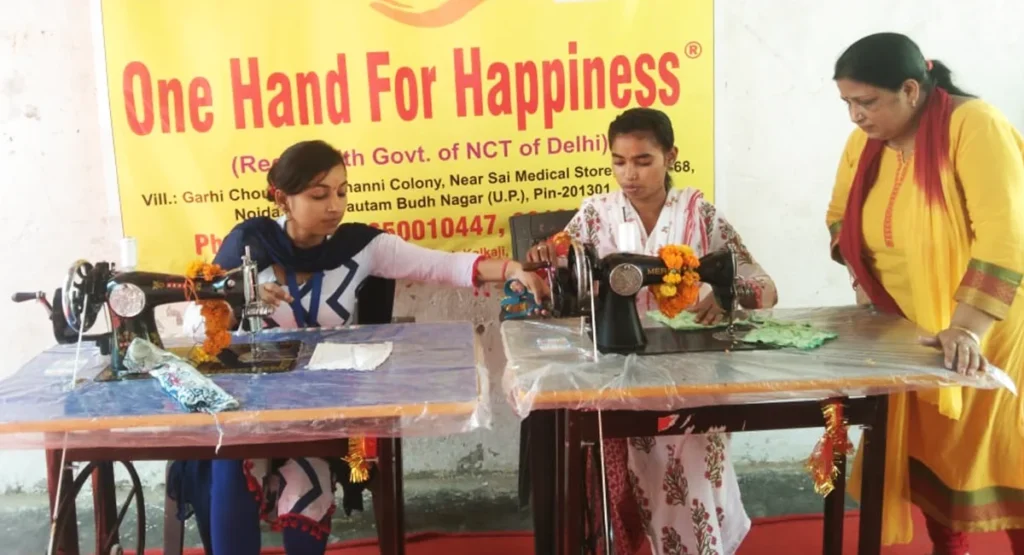
In a small rural settlement, barely half the children attended school consistently. Parents often pulled them out to help in farms or housework. After a mid-day meals NGO program began providing nutritious lunches and distributing free books and uniforms, enrollment jumped by 40% in just one year.
Mothers in the community, once confined to household chores, were hired to prepare meals. With income in hand, they gained confidence and invested in their own daughters’ education. Teachers reported not just higher classroom access, but also a noticeable boost in children’s energy and enthusiasm.
This is not an isolated story — it is a pattern repeating itself across villages and slums where food and education intersect.
Food is not just about filling stomachs; it is about fueling brains. The first 1,000 days of a child’s life, and the years spent in school, are critical windows for physical growth and cognitive development. Malnutrition during these years leads to stunting, poor concentration, and lifelong learning gaps.
By serving balanced meals rich in proteins, vitamins, and minerals, schools directly contribute to child development. Studies from UNICEF and WHO show that school feeding programs can increase test scores by up to 15%, while also reducing iron-deficiency anemia by 20%.
While meals are the cornerstone, real community upliftment requires a broader approach:
NGOs that adopt this holistic model of underprivileged support create sustainable change, ensuring children not only come to school but thrive there.
These figures highlight that investing in the food and education link is one of the most cost-effective ways to build stronger societies.
Behind every statistic is a child with a story.
A boy who once came to school barefoot now sits in a classroom with a full stomach and a notebook in hand. A girl who was destined to fetch water all day now paints pictures of her dreams after lunch break. A mother who was voiceless in family decisions now brings home wages from cooking at the school.
This is hope building in action. It is not charity; it is justice. It is about giving children and women what they deserve — access to opportunities that should never have been denied in the first place.
In today’s world, where flashy tech often dominates conversations, the quiet work of a school NGO serving meals and providing classroom resources might not make headlines. But in reality, these are the most transformative non-profit education initiatives.
They tackle multiple challenges in one go:
Without such grassroots interventions, millions of children would remain invisible.
The goal is simple yet urgent: every child deserves both a plate of food and a place in a classroom. Every woman deserves dignity, skills, and economic freedom. Communities deserve a chance to rise together.
The road ahead demands collaboration — between governments, schools, and NGOs. But it also calls for individuals like us to care, contribute, and spread awareness.
Because when we put plates on tables, we are not just feeding children — we are feeding futures.
The intersection of education, nutrition, and women empowerment is not a coincidence; it is a strategy for transformation. From attendance boosts to child development milestones, from feeding and schooling to community upliftment, the evidence is undeniable: food opens the doors to education, and education unlocks a better life.
Every meal served in a school is an investment in tomorrow’s leaders, doctors, artists, and changemakers. Every empowered woman is a foundation stone for stronger communities.
As One Hand for Happiness NGO and many others have shown, when we bring meals, books, and skills into the lives of underprivileged families, we are not just building classrooms — we are building hope.


Leave A Comment