
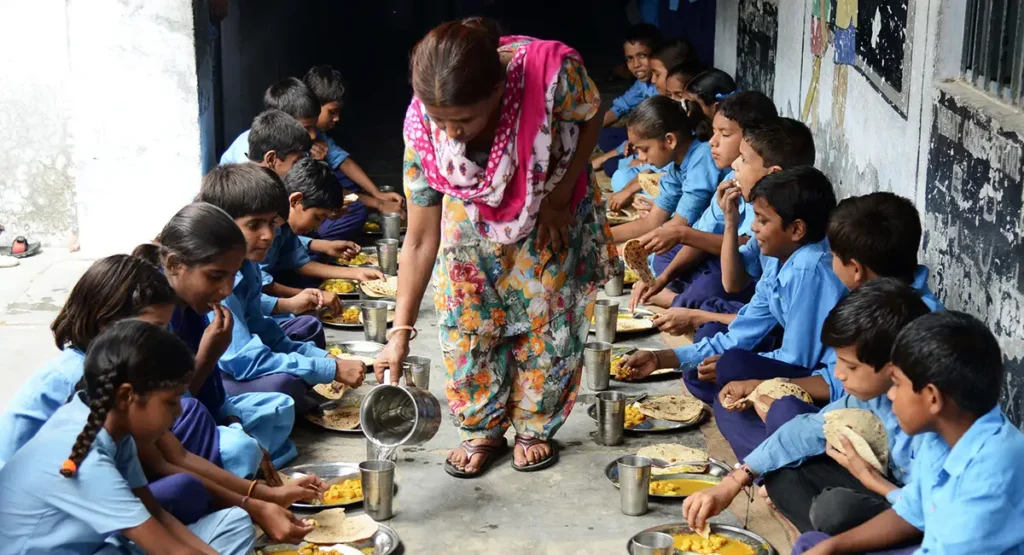
In underprivileged communities, the path to education is often obstructed not just by poverty, but by hunger. When schoolchildren arrive at class with empty stomachs, their ability to learn, participate, and stay in school diminishes drastically. That’s why mid‑day meals have become one of the strongest levers to improve student attendance, school retention, and overall learning outcomes.
While policymakers discuss infrastructure and pedagogy, on the ground, it’s the simple presence of a hot meal at midday that transforms attendance rates—and with them, children’s futures. In this blog, we explore how school feeding programs correlate with attendance, retention, and education access. Through genuine stories, research data, and empathetic language, we uncover why education, nutrition, and women’s empowerment flourish when mid‑day meals become the backbone of schooling.
Even when schools are technically accessible, many children fail to attend regularly. Common challenges include long commutes, child labor expectations, family illness, and most importantly, hunger. Research consistently shows that food-insecure children are more likely to miss school days, either due to physical weakness or lack of motivation.
For underprivileged families where breakfast isn’t guaranteed, choosing to prioritize school over a day of labor can feel unwise—unless that school can at least promise lunch. That psychological assurance plays a huge role in families sending their children.
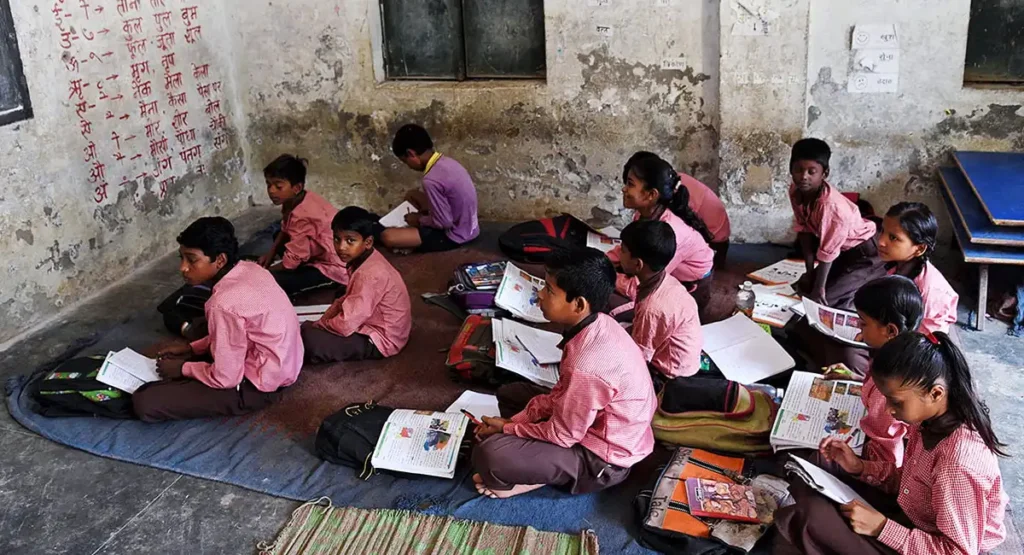
Government-run mid‑day meal schemes in India reach over 118 million children daily, and studies have identified impressive uplifts:
One survey of schools found that after introducing midday meals, daily attendance jumped from 65% to over 85%. Another study across multiple states confirmed sustained year-over-year retention rises of up to 25%.
Every day in school matters. Consistent presence helps children master foundational concepts, build confidence, and develop routine. Children with erratic attendance often fall behind academically, and once they miss enough days, the likelihood of dropout increases sharply.
By significantly boosting attendance, mid‑day meals lower that dropout risk. They interrupt a vicious cycle of hunger, absence, falling grades, and eventual exit from school.
Nutrition fuels learning. A hungry child struggles to concentrate, remember, or participate. Nutrients such as protein, iron, and vitamin A—commonly included in balanced school meals—support cognitive development.
A randomized controlled study in Andhra Pradesh showed that students receiving regular meals improved their performance on cognitive tests by over 20% compared to peers without meals. Teachers reported noticeable attention spans—especially in the hours following lunch.

Girls are particularly vulnerable to dropping out—either due to household chores, safety concerns, or early marriage. In many communities, mid‑day meals significantly reduce this trend by providing incentive and assurance for families to keep their daughters in class.
Research highlights:
Within six months of launching a midday meal program in several disconnected rural schools, average daily attendance rose from 58% to over 80%. Girls aged 10–13 showed the highest participation gain. Community mothers reported that children no longer rushed home to eat but stayed engaged through the afternoon class.
A slum-area school began combining meals with uniform and textbook distribution. Daily attendance jumped from 62% to 87%. Parents said that knowing children had food and supplies removed the hardship barrier that once forced them to keep kids at home.
These real-world examples show that when nourishment meets consistency, attendance improves—and learning becomes possible.
Mid‑day meals don’t just feed children—they also employ local women as cooks and helpers. These roles create stable income and recognition within the community. Women income earners can afford to send their own children to school, buy uniforms, or cover incidental school costs.
When mothers earn, educational access increases—not just for one child but across families. This skill-based support for women connects directly to broader education equity and retention goals.
Nutrition helps children arrive; materials help them stay and learn once they are there. Distributing school kits, uniforms, and textbooks alongside feeding programs multiplies the effect of attendance gains.
Students whose uniforms and books were supported saw a further drop in absenteeism—plus a rise in engagement and self-esteem. These elements reinforce each other: meals build presence, and tools unlock participation.
An effective model integrates:
Research from global education agencies states that each additional year of education increases a child’s future earnings by about 10%. By keeping children in school longer—especially girls—the economic returns ripple through entire communities.
In areas where attendance rose by 20% thanks to strong feeding programs, communities saw:
Programs succeed when they’re intentional:
Community trust builds when programs deliver consistently. And that trust translates into education access that is reliable, inclusive, and long-lasting.
NGOs working in remote and urban under-resourced areas often bring together meals, material support, and women’s livelihood programs in a unified manner. One Hand for Happiness, for instance, quietly supports such layered approaches—ensuring children get meals, uniforms, books, and that their mothers gain vocational training, all under one cohesive model.
This interconnected model ensures that boosting attendance doesn’t occur in isolation—it’s tied to community dignity, education retention, and long-term empowerment.
To broaden impact, programs should:
Such scaling ensures that the attendance gains become systemic and sustainable.
When we understand attendance as more than numbers—when we recognize that each day present converts into knowledge gained, identity built, and opportunity unlocked—mid‑day meal programs transform from utility to lifeline.
For underprivileged students, the difference between showing up and staying up to date is often one nourishing meal. When that meal is tied to dignity, support, and empowerment, education access shifts from aspiration to reality.
In every plate served, every school kit given, and every woman earning, villages transform. As attendance improves, children learn. As children learn, communities grow.
Mid‑day meals aren’t just lunch—they are the foundation of education access. And when access becomes reliable, no opportunity remains out of reach.


Leave A Comment