
In the quiet hum of a rural classroom or the chaotic bustle of a city slum school, there’s a universal moment that brings calm and joy — lunchtime. For many children across underprivileged communities in India and the world, mid-day meals are not just about food; they are about hope, emotional stability, and the chance to learn with a full stomach and an open heart.
This simple act of providing nourishment speaks volumes. It says, “You matter.” And for children who face poverty, instability, or hunger at home, that message can shape a future.
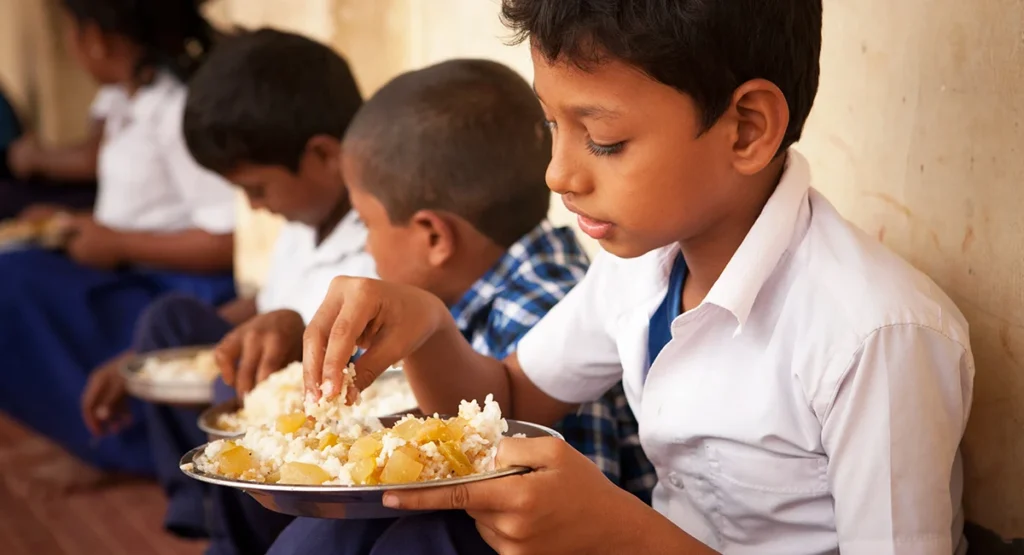
The school feeding program, particularly in countries like India, has evolved into one of the largest social safety nets for children. Every hot lunch served is a step toward educational inclusion, mental health support, and emotional well-being.
According to a report by the World Food Programme, school meals have been linked to higher attendance, lower dropout rates, and improved academic performance. But perhaps equally important is what the numbers don’t fully capture — the joy, dignity, and emotional safety these meals provide.
Imagine being a 7-year-old child who hasn’t had breakfast. You walk 3 km to school with a rumbling stomach. You sit through math and language classes with waning focus. But then comes recess — and with it, a warm, nutritious lunch.
That first bite doesn’t just fill your belly — it fills you with comfort, care, and belonging. Research by the Global Child Nutrition Foundation shows that children who receive regular school meals show reduced anxiety, more positive emotions, and better peer interaction. In short, they’re happier learners.
Nourishment, Focus & Mental Health: The Hidden Link
Nutrition is directly tied to cognitive development and emotional regulation. Iron, zinc, and B vitamins — common nutrients in mid-day meals — support memory, attention, and emotional resilience. A child who is fed is a child who can focus, dream, and participate.
A study published in The Lancet Child & Adolescent Health revealed that malnourished children are 60% more likely to exhibit behavioral or learning problems. In contrast, students in schools with well-run meal programs showed significant improvements in concentration and classroom engagement.

Underprivileged schoolchildren often face compounded disadvantages — poor housing, unsafe neighborhoods, lack of clean water — but hunger is the most immediate barrier to learning.
In a Delhi government school, a teacher shared,
“We used to lose students by 11 a.m. — they’d just walk away, too hungry to stay. Now with meals provided, they stay till the last bell, and even help clean up.”
This transformation isn’t just about calories. It’s about connection, trust, and emotional restoration.
There’s another layer to this story. The success of school feeding programs empowers women too. From sourcing to cooking, mid-day meal programs often employ local women, giving them dignified income, community respect, and agency.
In villages where women rarely had financial independence, these kitchen roles have become gateways. Several NGOs, including One Hand For Happiness, have introduced models where mothers of students are trained and employed as mid-day cooks, turning every meal into a symbol of community upliftment.
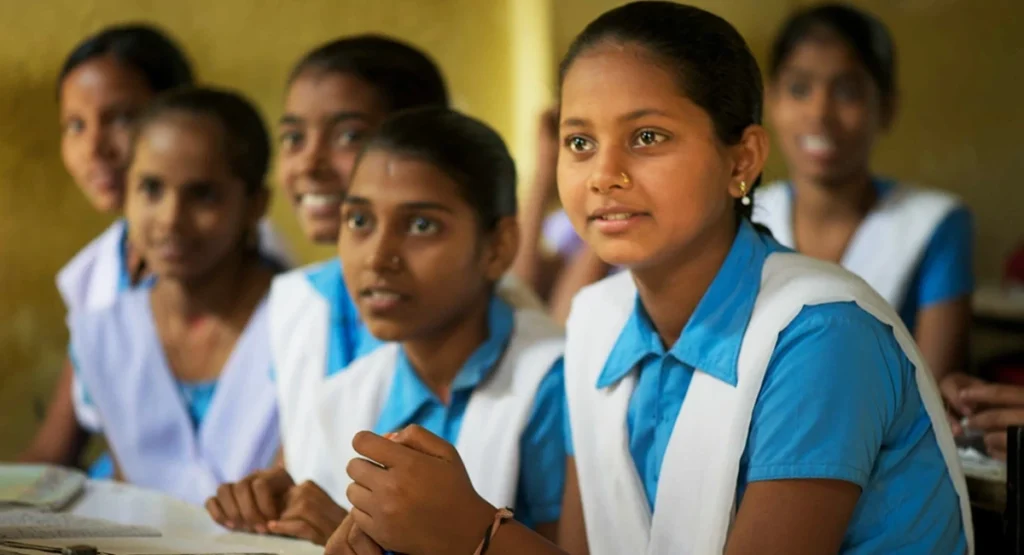
In Jharkhand’s Dumka district, school attendance among girls in the 11–14 age group had dropped below 45%. After a school feeding initiative was introduced — pairing meals with take-home rations for families — girl attendance rose to 74% within one year. Why?
Because food negotiated respect. Families began seeing school as valuable not just for education, but for daily sustenance and future livelihood. And for girls who were once kept home for chores or labor, school became the healthiest place they could be — emotionally and physically.
Happiness isn’t frivolous in education — it’s foundational. Children in food-insecure homes experience chronic stress, which leads to elevated cortisol levels, sleep issues, and behavioral challenges. A consistent, nutritious mid-day meal provides a daily reset, helping children feel calm, focused, and supported.
School meals have even been correlated with lower depression rates in adolescents, according to a UNICEF report on school health programs.
Mid-day meals also create routine — a rhythm of safety. For many, it’s the only predictable moment of their day.
When feeding becomes a shared experience — when children laugh, serve each other, or wait in line for dal-chawal — they’re learning emotional intelligence, empathy, and connection.
One child said it best:
“Lunch is when we feel equal. Everyone eats the same food. No one is poor during lunch.”
That is the unspoken power of school feeding — creating a culture of inclusion and dignity, where underprivileged students don’t feel different, but part of a larger, caring community.
The intersection of education, nourishment, and women empowerment is a potent force for transformation. Here’s how the cycle works:
When NGOs step in to provide not just meals but books, uniforms, school bags, and sanitary care, they amplify this cycle. One Hand For Happiness, for instance, has seen that combining mid-day meals with mentorship, life skills, and basic needs kits boosts school retention rates and child happiness indexes in even the most resource-poor zones.
Here’s what small actions can lead to:
When a child smiles at lunch, they are not just expressing contentment — they are receiving permission to dream.
In the eyes of a laughing, well-fed 9-year-old, there’s no poverty, only possibility.
And in the work of quiet NGOs and women-led food programs, there’s a future being cooked one meal at a time.
Let’s honor that. Let’s invest in that.
Emotional well-being, academic growth, and gender equity — three pillars supported by one hot, nutritious school lunch. The mid-day feeding program is more than a public health intervention; it’s a human connection strategy.
As we continue to strive for an equitable world, let’s remember: a meal is never just a meal — it’s warmth, it’s a smile, it’s a shot at a better life.
Let’s keep feeding that hope, one plate at a time.


Leave A Comment