
In the bustling streets and quiet alleys of India’s urban slums and rural belts, school bells ring daily—but not all children respond with enthusiasm. For millions of underprivileged kids, the classroom offers more than learning; it offers a warm, dependable meal—sometimes the only one they’ll have that day.
This humble plate—often rice, lentils, and vegetables—does more than fill stomachs. It fuels concentration, improves school attendance, and becomes a powerful motivator for children and their families to prioritize education.
The mid-day meal scheme, introduced as a government initiative, has evolved into a critical intervention at the crossroads of child nutrition, academic performance, and community empowerment, especially for women. Supported by compassionate citizens and NGOs like One Hand for Happiness, this movement ensures that hunger no longer stands in the way of a child’s dreams.

Poverty and malnutrition are deeply intertwined with poor educational outcomes. According to UNICEF, more than 33% of Indian children under 5 are underweight, and stunting affects nearly 35%—alarming figures that directly impact school readiness and cognitive development.
For children from under-resourced communities, learning on an empty stomach is an everyday reality. Hunger leads to:
A growing body of research links nutrition and cognition, showing that well-fed children perform significantly better across subjects and are more likely to remain in school.
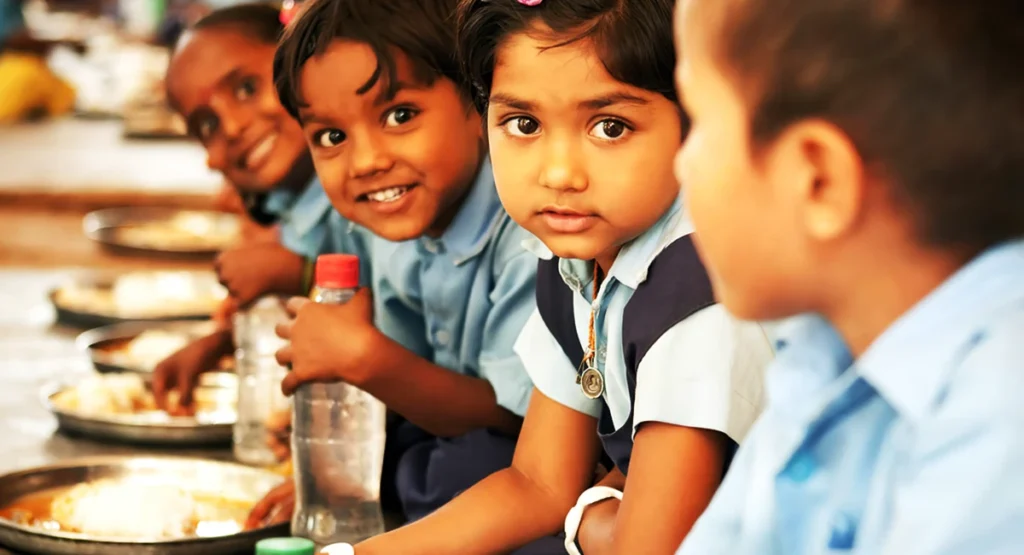
India’s mid-day meal program, the largest school lunch initiative in the world, serves over 100 million children in primary and upper primary schools. What began as a way to boost enrollment has now become a tool to combat inequity, hunger, and illiteracy.
The typical meal includes:
These meals aim to provide at least 450–700 calories and 12–20 grams of protein—crucial for growing minds and bodies.
Simran, 11, lives in a makeshift home in a resettlement colony outside Noida. Her mother works as a domestic helper, and her father is a daily wage laborer. Meals were uncertain—until Simran began attending a government school supported by a community-driven mid-day meal initiative.
“I like going to school now because we eat together,” Simran says, smiling. “I want to become a teacher.” Her attendance has improved, and she’s now reading at grade level for the first time.
One Hand for Happiness, an NGO working in underprivileged areas of Delhi NCR and Noida, contributes to such life-changing outcomes by supporting nutritious school meals, uniforms, and books for children like Simran. Their work demonstrates how compassion and community can overcome structural barriers.
Numerous studies back the logic that healthy children are better learners:
This shows that food for thought isn’t just a metaphor—it’s a proven educational tool.
In many underprivileged communities, girls are still expected to shoulder domestic chores or drop out early for marriage. But when school offers not just learning but a guaranteed nutritious meal, families are more inclined to let their daughters study.
By enabling girls to remain in school longer, mid-day meals play a quiet yet critical role in promoting gender equality and breaking intergenerational cycles of poverty.
Perhaps one of the most inspiring dimensions of this initiative is how women are woven into its execution and evolution.
In many schools, mothers and local women are employed as cooks and helpers. This creates:
In slum communities of Noida and Delhi, One Hand for Happiness supports skill-building for these women—offering training in nutrition, safe cooking practices, and budgeting. This transforms them from food preparers into empowered leaders of community well-being.
When mothers see the benefit of education—especially when coupled with a meal—they become vocal supporters of their children’s schooling. They encourage attendance, demand accountability, and even lead neighborhood awareness drives around school retention and nutrition.
A meal is a start—but for long-term impact, children also need:
Many NGOs across India, including One Hand for Happiness, provide this integrated support. For instance:
Together, these elements work like gears in a machine—amplifying the effect of mid-day meals on academic performance.
Imagine this: a classroom where every child is present, alert, and engaged. Where the day begins with reading, is fueled by a hot meal, and ends with dreams of a better tomorrow.
That’s the future India must continue to strive for.
And to get there, mid-day meals must evolve too:
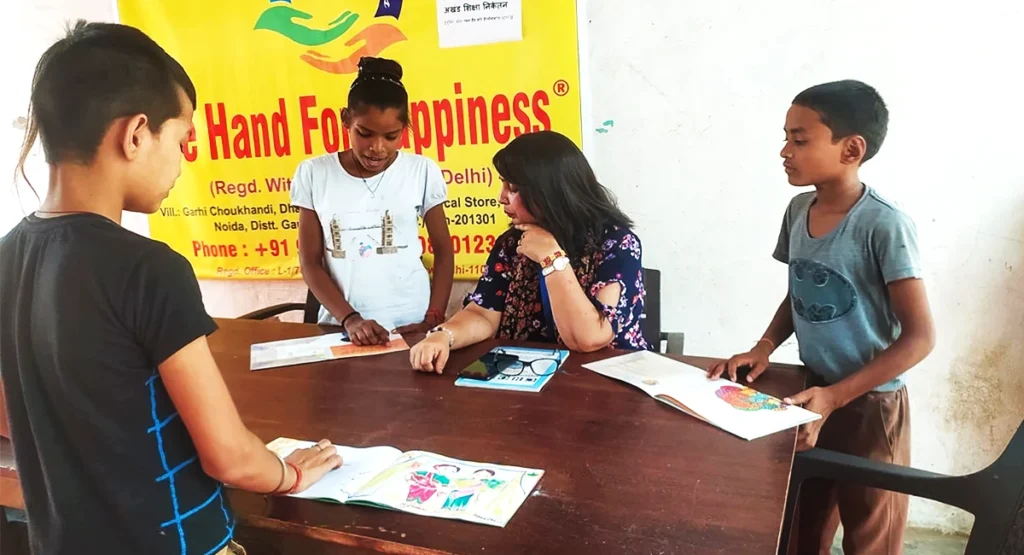
You don’t need to run a school or fund an entire program to make a difference. Here are small, actionable ways to contribute:
Each contribution creates a ripple. Each act of kindness nourishes more than a body—it nourishes ambition, hope, and dignity.
At first glance, a school meal may seem simple. But for the children who receive it, it’s a message: You matter. Your education matters. Your dreams are worth feeding.
When mid-day meals are paired with educational support and women-led community engagement, we don’t just address hunger—we build resilient, informed, and empowered communities.
As the nation continues its journey toward inclusive development, let us remember that a nourished mind is the strongest foundation for a just and thriving society.
And sometimes, all it takes is one plate of dal-chawal to spark a revolution.


Leave A Comment