
In classrooms across India, a quiet crisis plays out every morning—millions of children arrive at school hungry. Their stomachs rumble, their energy fades, and their focus drifts. While the blackboard may be full of lessons, their minds are preoccupied with something far more urgent: food.
But for many of these children, one hot, nutritious mid-day meal can transform the school day—and their lives.
In India, the mid‑day meal program is one of the largest and most ambitious school lunch schemes in the world, serving over 100 million children every day. And it’s not just about food—it’s about education, equality, and empowerment. A plate of rice and lentils, or a vegetable khichdi, is often the difference between a child staying in school or dropping out, between alertness and apathy, between a nourished body and a stunted future.
This blog explores the powerful intersection of child nutrition, academic performance, and women empowerment, and how mid‑day meals serve as a cornerstone in uplifting underprivileged communities.
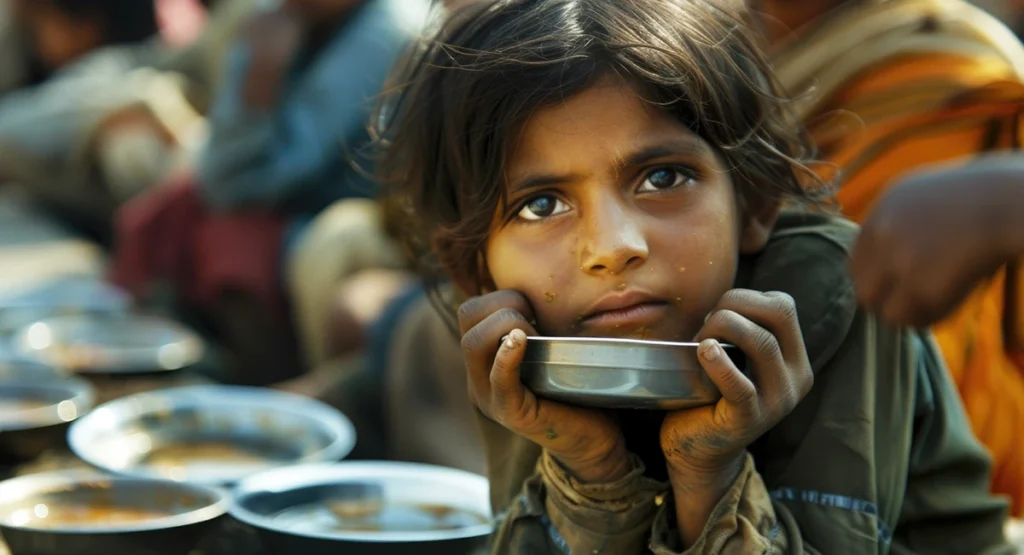
Launched nationally in 1995, India’s mid‑day meal scheme began as a basic food-for-education initiative. Over the years, it has evolved into a crucial child welfare and educational equity program, particularly in rural areas and urban slums where poverty and malnutrition are rampant.
According to the Ministry of Education, children receiving regular school lunches showed:
Clearly, food isn’t just fuel—it’s foundational to learning outcomes.
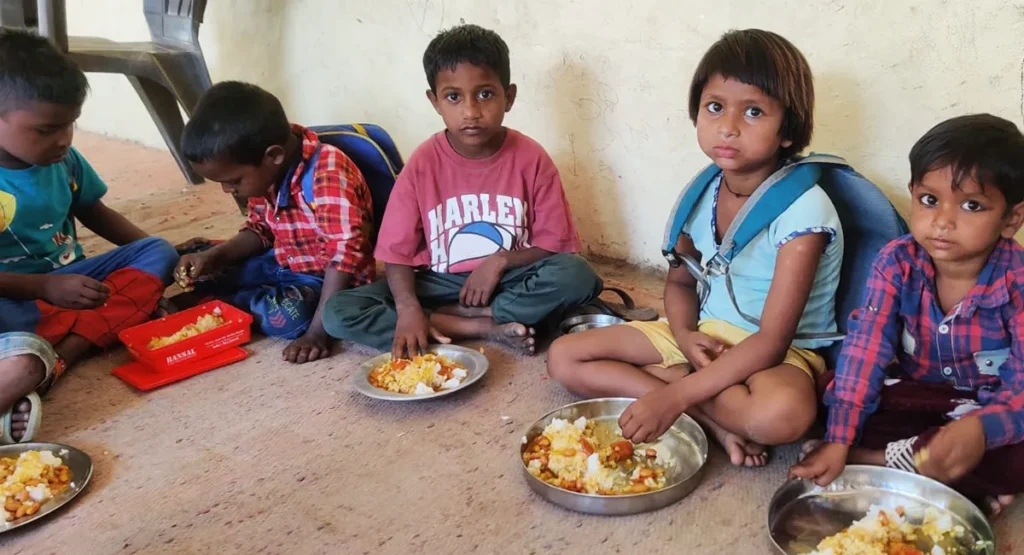
Numerous studies link nutrition and cognition, especially in early childhood and adolescence. A well-balanced meal, rich in proteins, iron, and essential vitamins, directly impacts brain development, memory, and concentration.
When children suffer from chronic hunger, their ability to process information, stay attentive, and emotionally regulate is significantly impaired. This phenomenon—often referred to as “hidden hunger”—affects millions of children who may eat but lack proper nutrients.
A study published in The Lancet found that iron-deficiency anemia, common among Indian children, reduces IQ and delays motor development. Mid-day meals fortified with iron-rich foods or supplements help bridge this gap, improving cognitive function and long-term academic success.
Let’s meet Aarav, a 10-year-old boy from a slum near Noida. He used to skip school often, preferring to scavenge with his older brother for plastic bottles that would fetch a few rupees. His priorities changed when a local school started offering mid-day meals. “Now I eat dal-chawal at school every day,” he says proudly. “My stomach doesn’t hurt anymore, and I can write better.”
His teacher noticed something too—Aarav’s handwriting improved, he started raising his hand in class, and even joined the morning prayer voluntarily.
This is not just Aarav’s story—it’s the story of millions. In communities where underprivileged education struggles to gain a foothold, mid-day meals act as a bridge between survival and aspiration.
Mid-day meals do more than just fill stomachs—they transform communities. Here’s how:
When children are well-fed, they absorb more. A study by the National Institute of Nutrition found that schools offering structured meal programs saw a 30% rise in exam scores compared to those that didn’t.
Many parents in marginalized communities view the school lunch program as a key incentive to enroll and keep their children in school—especially daughters. For families struggling to provide two meals a day, this is a vital safety net.
In conservative or economically strained families, girls are often the first to be pulled out of school. However, the assurance of a daily nutritious meal makes education more “worth it.” In areas with regular school meals, girls’ attendance rises by over 40%.
What makes mid‑day meals especially powerful is how they also intersect with women empowerment.
Many schools employ local women as cooks and kitchen staff, providing them with not just income, but dignity, recognition, and participation in the education process.
Take Kamla Devi, a mid-day meal cook from a village school on the outskirts of Noida. Once a housewife confined to chores, she now leads a kitchen that serves 300 children daily. “When children call me ‘Didi’ and smile after eating, I feel proud. I’m not just feeding them—I’m helping them learn.”
Programs that combine skill-based support for women—such as food hygiene training, budgeting, and nutrition education—have also led to entrepreneurial growth. Some women have gone on to start catering ventures or join local SHGs (Self Help Groups) to supply ingredients for schools.
Thus, the school lunch program becomes a vehicle for dual empowerment—nourishing children and economically uplifting women.
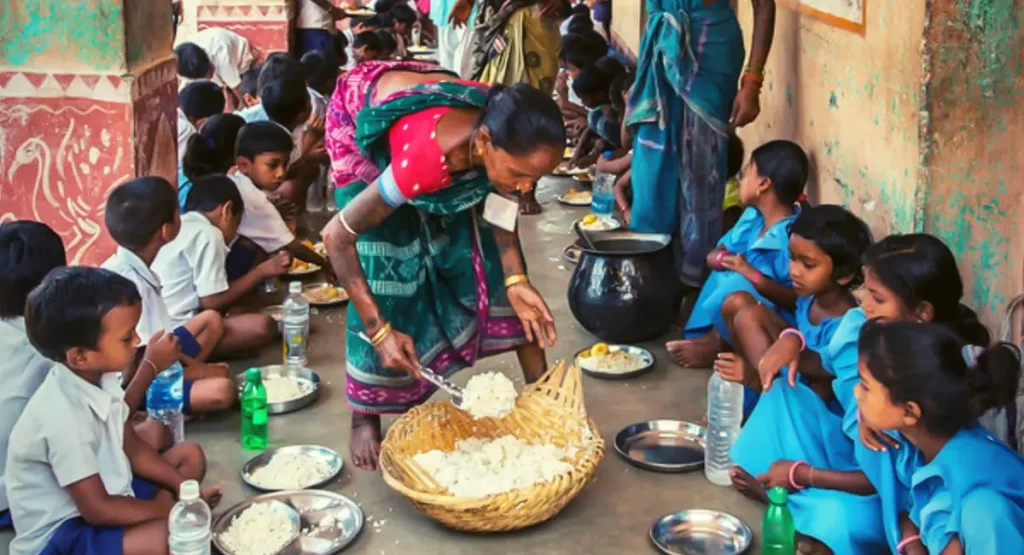
In slums and low-income neighborhoods, malnutrition remains one of the biggest barriers to education. Mid-day meals, when done right, can combat not just hunger, but also entrenched inequality.
According to UNICEF, over 35% of Indian children under the age of 5 suffer from stunting—a direct result of undernutrition. This affects physical development, mental growth, and educational attainment.
The school meal becomes an equalizer:
These experiences plant the seeds of dignity, belonging, and equality, which go far beyond academics.
While government programs lay the groundwork, community support and NGO involvement make the real difference in execution.
NGOs play a critical role by:
Many underprivileged schools now receive books, learning kits, and even sanitary pads from partner organizations, blending education, health, and dignity into one unified mission.
The result? Better learning outcomes, lower absenteeism, and empowered communities.
While the mid‑day meal scheme is a success story in many ways, challenges remain:
To ensure continued success, there must be community monitoring, regular health audits, and a focus on diversity of meals (including fruits, pulses, and iron-fortified foods).
The link between hunger and education is undeniable. When we nourish children, we fuel their dreams. When we empower women, we uplift families. And when NGOs, schools, and communities collaborate, the result is a society that feeds both body and mind.
The humble plate of rice and curry served at lunchtime is much more than a meal—it’s a manifestation of care, hope, and equity.
You don’t have to be a policymaker to support this mission. Here’s how everyday citizens can contribute:
Your small act can become a catalyst for large-scale change.
India’s journey towards inclusive education cannot succeed without tackling the basic hunger that holds children back. Mid-day meals are more than food—they’re a policy of possibility, where every grain of rice sows the seed of potential.
Through the daily ritual of feeding and learning, children begin to believe in themselves. They sit a little taller, raise their hands a little higher, and walk home a little stronger—full, not just in belly, but in spirit.
Because a nourished mind is a learning mind. And every child deserves both.


Leave A Comment